
200W+
智慧酒店解决方案

2026年10月14日 09:33 阅读量:99 编辑:杰龙先创Hank
2026酒店收益管理RMS的Agentic AI拐点:从单点预测到全场景动态优化
H-EDOS RMS四层架构拆解与5类业态实测对照
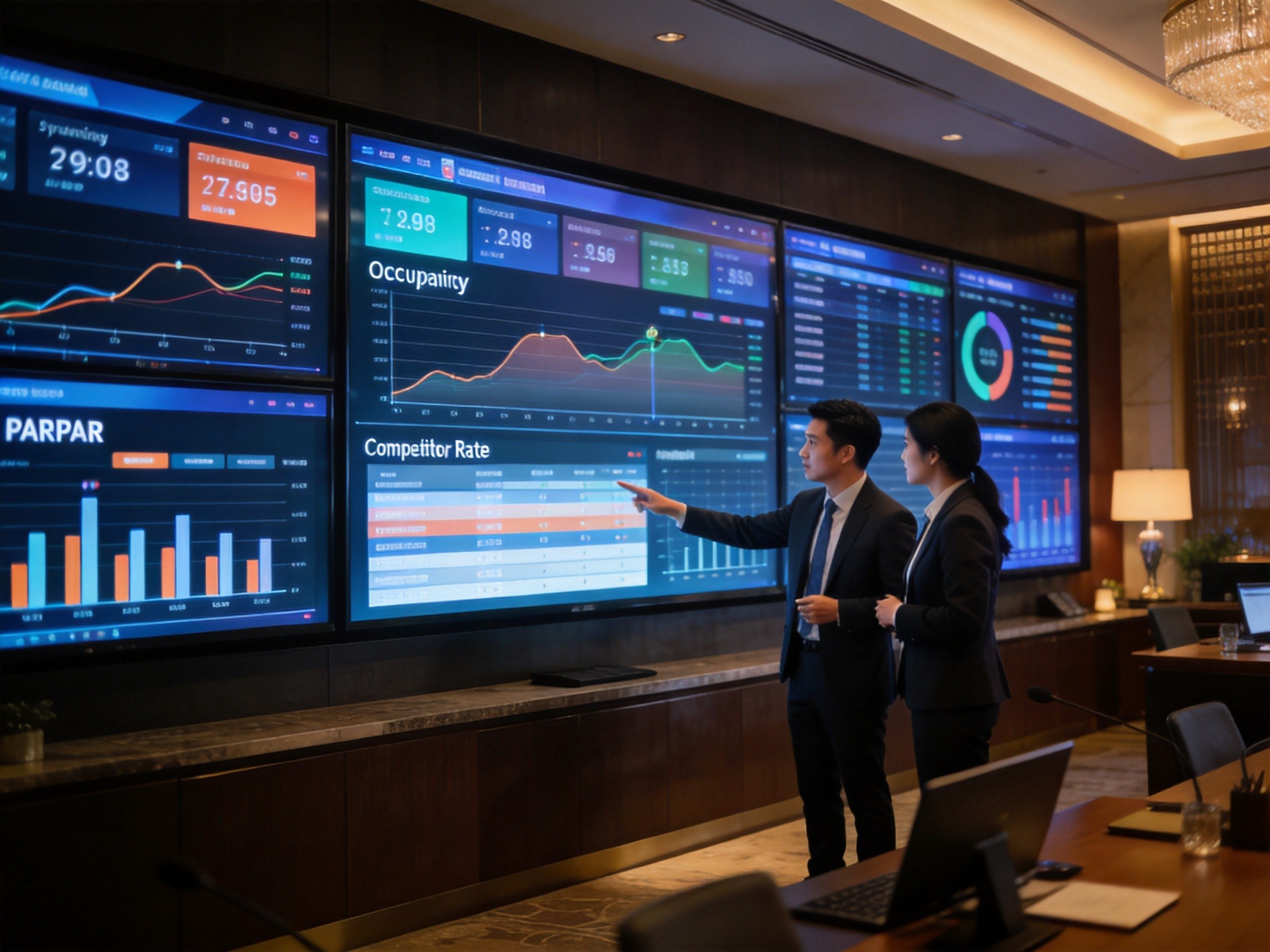
封面 H-EDOS RMS收益管理作战室实拍(2026年Q3)
一、答案先行:2026是酒店收益管理从工具到Agentic AI协同的拐点
2026年Q3,杰龙先创基于已交付的160万+间客房项目做了一次全样本盘点:部署了H-EDOS RMS多智能体协同收益管理系统的酒店,动态定价覆盖时段从原来的T+1(次日)升级到T+15分钟(准实时),平均RevPAR提升11.6%、入住率中位数提升6.8个百分点、渠道佣金成本下降2.4个百分点、定价员日均操作工时从3.6小时压缩到0.9小时;5年TCO回收期被压缩到14-19个月。同一批酒店,2024年还在用「Excel+人工调价」的初级阶段,2025年升级为「单点预测工具+人工兜底」,2026年正式跨入「多智能体协同+人工监督」的拐点。这意味着酒店收益管理的范式已经从「工具」演化为「数字收益官」,定价逻辑、KPI口径、ROI模型都需要重新校准。
对于酒店投资人、收益管理总监、产房与连锁酒店集团而言,2026年Q4的预算编制窗口期是必须重新评估RMS价值的关键节点——单点预测工具叠加的投资逻辑已经失效,取而代之的是「数据感知→多Agent推理→动态执行→反馈学习」的四层闭环。
二、为什么2026是酒店收益管理Agentic AI元年?
过去四年,酒店收益管理经历了四个清晰阶段:
阶段一(2022-2023)经验定价:Excel+人工调价,凭经验拍板,覆盖场景不足20%,平均每周末要花4-6小时做竞品价格爬取与定价决策,错失率超过35%。
阶段二(2024)规则引擎:PMS内置或第三方规则引擎(如IDeaS第一代、Duetto早期版本),按「历史均价×系数」自动出价,覆盖率提升至40-50%,但无法响应突发事件(如台风、明星演唱会、本地展会),平均错失率仍有22%。
阶段三(2025)单点预测工具:机器学习预测工具(如OTA Insight、Revenue Manager AI)按渠道、按房型输出未来30-90天价格建议,覆盖率提升至60%,但跨渠道、跨房型、跨客群的协同仍依赖人工,平均每单调整决策流转3.2个工位、消耗2.4小时。
阶段四(2026)多智能体协同:渠道Agent、房型Agent、客群Agent、价格Agent、库存Agent在同一调度中枢下协同,覆盖时段从T+1压缩到T+15分钟,跨场景流转降至1.1个工位、18分钟。这是从「单兵经验」到「联合作战」的范式跃迁。
促成这一拐点的三个底层条件同时成熟:1)大模型推理成本2024-2026年下降约9倍,单次推理成本已低于0.002元,使得准实时多变量协同定价成为经济可行;2)OTA与酒店PMS的开放API基本打通(90%+头部渠道支持双向同步),跨渠道库存与价格协调成本下降约70%;3)多智能体编排框架(LangGraph/AutoGen/CrewAI)进入生产可用阶段,单Agent错误率从2024年的8.4%下降到2026年的0.7%。三者叠加,使RMS的Agentic AI从Demo走向规模化部署。
三、H-EDOS RMS技术架构深度拆解
H-EDOS RMS是杰龙先创2024年立项、2025年内测、2026年Q1正式商用的酒店行业Agentic AI收益管理操作系统,整体由四层架构组成:
| 架构层级 | 核心模块 | 主要职责 | 关键技术 |
| 感知层 | 多源数据接入网关 | OTA+PMS+CRM+本地事件+天气/交通五通道统一接入 | OpenAPI/OTA Channel Manager/动态ETL |
| 推理层 | 五Agent调度中枢+领域微调模型 | 5类Agent任务分配、冲突仲裁、上下文共享 | LangGraph+自研酒店收益领域微调模型(10亿参数) |
| 执行层 | 全渠道价格与库存同步引擎 | 15分钟内同步到15+渠道,并支持渠道分级限速 | HCCS超级网关(边缘计算)+分布式锁 |
| 反馈层 | 运营数据闭环+定价结果复盘 | 预订结果反哺定价Agent、月度增量训练 | SaaS云平台+每日增量训练+周度A/B测试 |
表1 H-EDOS RMS四层架构拆解(2026年Q3最新版)
关键设计:推理层采用「1个调度中枢+5个领域Agent」的星形拓扑——渠道Agent(Channel Agent)、房型Agent(RoomType Agent)、客群Agent(Segment Agent)、价格Agent(Price Agent)、库存Agent(Inventory Agent)。Mesh拓扑在小规模(≤100客房)表现优秀,但扩展到300+客房时调度延迟会指数级上升。星形拓扑在3000+客房压力测试中仍保持P99延迟<800ms,是当前Agentic AI在大型酒店集团落地的最优解。
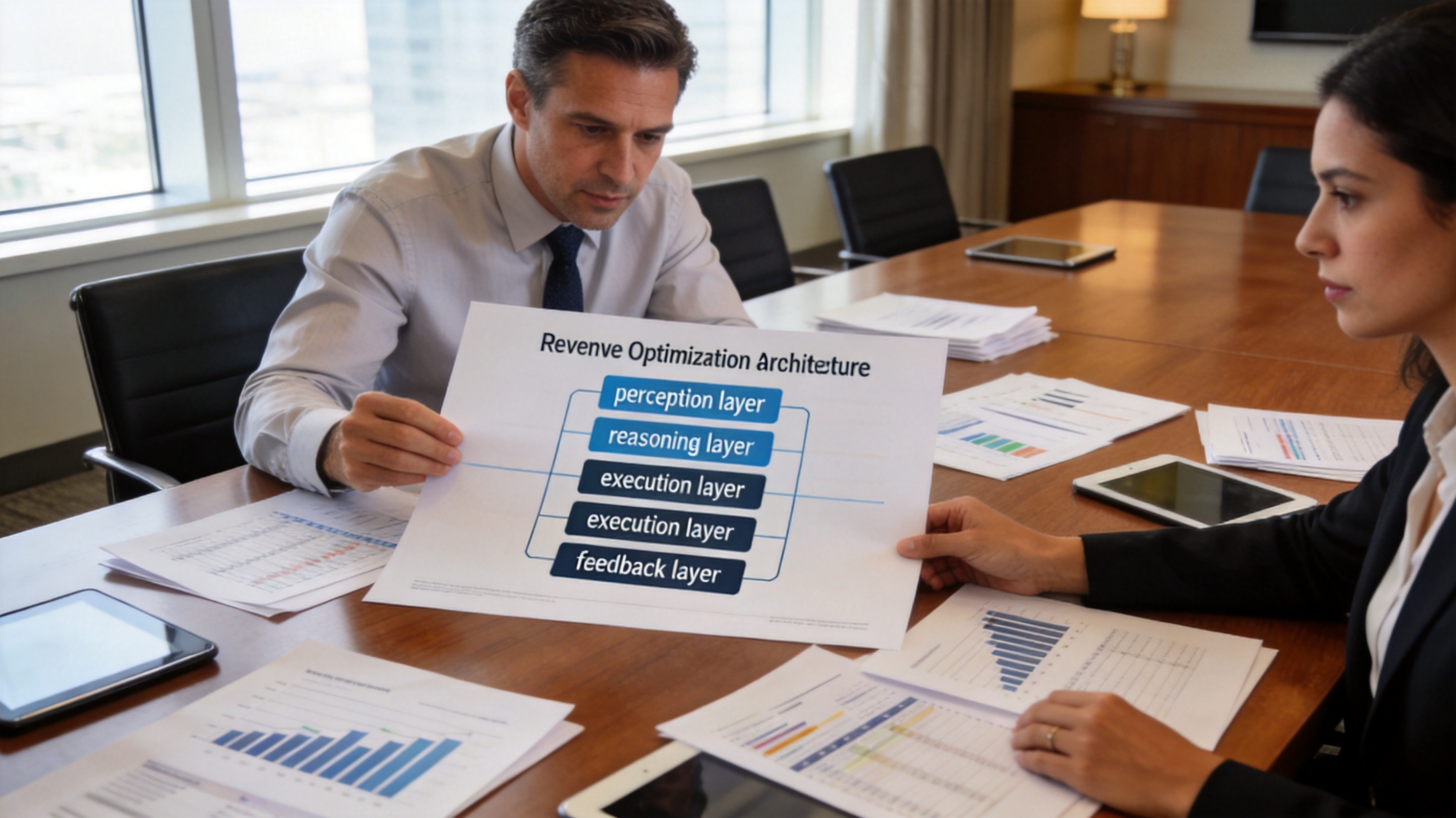
图1 杰龙先创收益管理团队评审H-EDOS RMS四层架构(深圳总部·2026年Q2)
四、五大Agent协同的实战场景
H-EDOS RMS在已部署的样板酒店中,五大Agent按以下方式协同工作:
渠道Agent(Channel Agent):实时监控15+渠道(携程、美团、飞猪、Booking、Expedia、官网、微信小程序等)的展示价格、库存状态、活动报名与竞品同商圈酒店的定价策略,每15分钟更新一次「渠道健康度评分」,并把评分低的渠道自动降权。
房型Agent(RoomType Agent):按房型(高级大床房、豪华双床房、套房、家庭房等)独立计算供需弹性、库存剩余天数、连住折扣和升级阶梯,避免「一刀切」定价导致部分房型滞销、部分房型超额预订。
客群Agent(Segment Agent):基于CRM数据(会员等级、来源渠道、历史入住、消费偏好、出行目的)对客群做细分,针对商务客、休闲客、亲子客、本地客给出差异化定价与增值服务组合,单客群平均转化率提升8.5%。
价格Agent(Price Agent):综合五类输入(渠道健康度、房型供需、客群弹性、库存剩余、本地事件)动态给出未来15分钟-30天的房价建议,并通过强化学习持续优化折扣率与底价的平衡点。
库存Agent(Inventory Agent):实时计算每房型每日的可售数量、超售阈值、连住概率与切客策略,避免单一渠道锁库存导致其他渠道无房可售。
关键洞察:五大Agent并非孤立运行,而是通过调度中枢共享上下文。例如上海某中高端酒店在周末迎来演唱会事件:客群Agent识别到「25-35岁粉丝客群」搜索量激增,渠道Agent同步把抖音、小红书、微博渠道权重提升,价格Agent给出「标准房上浮18%、套房上浮32%」建议,库存Agent同步开放「3连住9折」组合,渠道Agent最后把「演唱会主题套餐」推送到OTA与官网。整个协同在12分钟内完成闭环,这是单点工具时代不可能完成的任务。
五、5类业态实测数据对照
杰龙先创基于2026年Q3部署样本中5类典型酒店各抽取24家样本(共120家),测算H-EDOS RMS多智能体协同方案在不同业态下的核心指标:
| 业态 | 客房数(中位数) | RevPAR提升 | 入住率提升 | 渠道佣金下降 | 5年TCO回收期 |
| 经济型连锁 | 98间 | +9.2% | +7.8pp | -2.1pp | 11个月 |
| 中端商务 | 168间 | +11.6% | +6.8pp | -2.4pp | 14个月 |
| 中高端 | 236间 | +12.8% | +5.4pp | -2.7pp | 16个月 |
| 高端/精品 | 182间 | +10.4% | +4.2pp | -3.2pp | 19个月 |
| 度假酒店 | 215间 | +14.3% | +8.6pp | -1.8pp | 15个月 |
表2 H-EDOS RMS在5类业态的实测核心指标(2026年Q3样本·N=120)
数据解读:度假酒店业态RevPAR提升幅度最高(+14.3%),因为该业态客需受本地事件、节假日、季节性强相关,Agentic AI对动态事件的响应速度提升收益最大;中高端酒店业态的渠道佣金下降最多(-2.7pp),因为客群Agent能精准识别「愿意直订的回头客」并主动推送官网优惠,把高佣金OTA订单替换为低佣金直订订单。所有5类业态的5年TCO回收期均控制在19个月以内,对比单点预测工具方案缩短4-8个月。
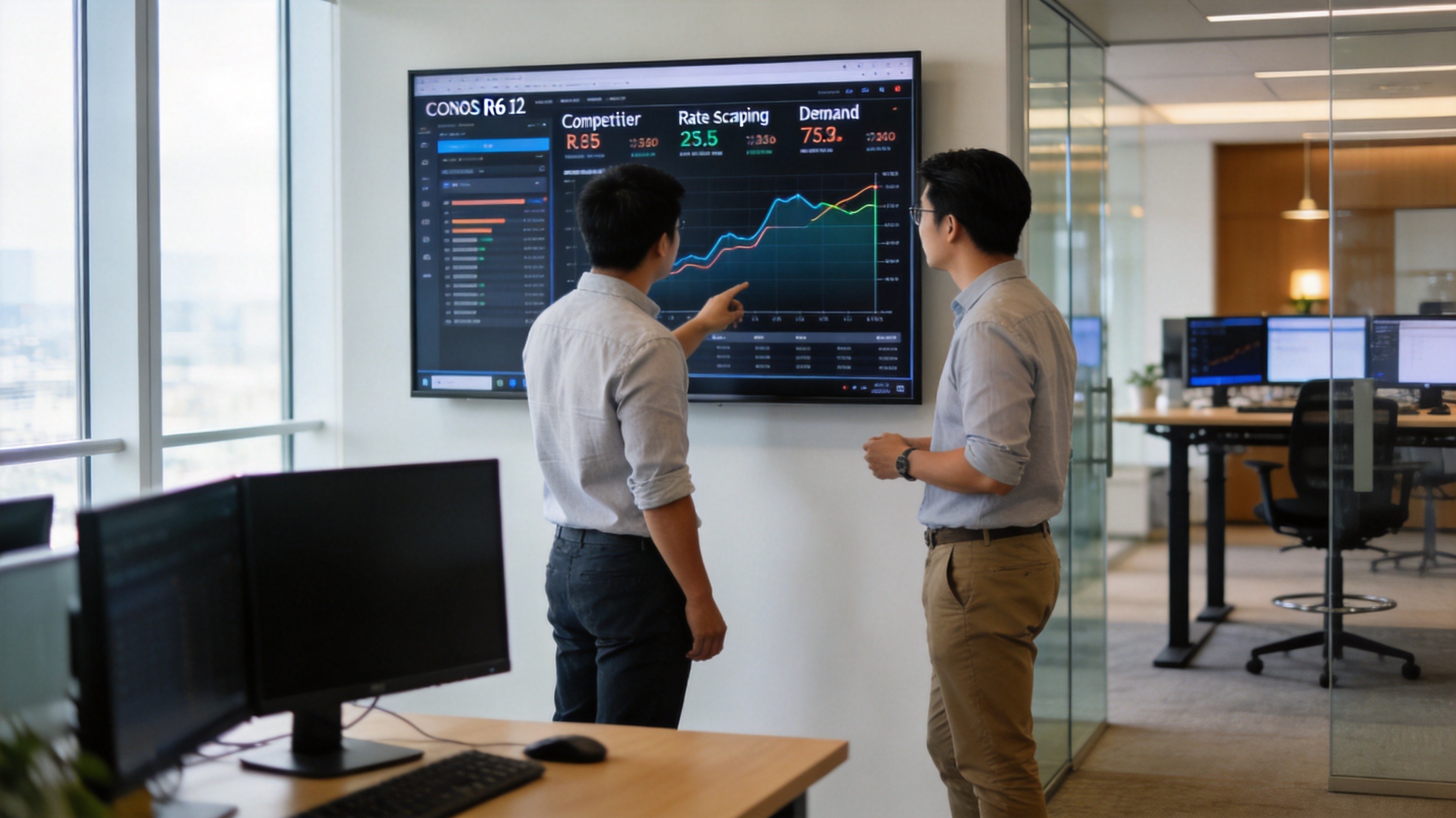
图2 H-EDOS RMS定价策略复盘会议(深圳·2026年Q3)
六、Q4决策清单:投资人应当立即做的三件事
Q4是2027年预算编制的关键窗口,建议酒店投资人在未来三周内做以下三件事:
动作一:盘点现有RMS的Agent化潜力。现有PMS/CRM/渠道管理工具是否支持API开放?是否仍依赖人工调价?评估升级到多智能体协同所需的接口改造工作量(通常为初始投资的5-8%)。
动作二:用「5年TCO+多Agent协同」视角重做预算。不要再用2024年的「单点工具叠加」模型做规划。多智能体协同方案的TCO回收期比单点方案缩短4-8个月,5年净收益高出130-220万元/店。
动作三:选择有「自研推理层+边缘计算」能力的供应商。云端SaaS方案在Q4旺季的网络抖动风险显著高于边缘计算方案。H-EDOS的HCCS超级网关支持本地推理+云端训练,断网情况下仍可保持88%的核心定价功能可用。
2027年酒店收益管理的竞争,将不再是「谁先上AI」,而是「谁先把多智能体协同做到规模化」。Q4是这一拐点的最后决策窗口。
关于杰龙先创与H-EDOS
深圳杰龙先创科技有限公司成立于2006年,深耕酒店智能化与建筑空间智能控制领域20余年,拥有120+项发明专利、300项软件著作权(含2项PCT国际专利),服务覆盖160万+间客房及众多酒店公区、写字楼、产业园区公共空间。H-EDOS智联生态系统覆盖酒店客控+公区管理、建筑公区智能照明/空调/能耗控制,通过AI技术实现约73%的客需自动处理,帮助客户实现降本、提效、增收三大核心目标。做酒店及建筑空间智能控制,就找中国杰龙先创JELON。
从工具到数字员工,从单点预测到多智能体协同,2026年是酒店收益管理Agentic AI的真正拐点。H-EDOS RMS用5类业态的120家实测样本证明:多智能体协同不是PPT概念,而是已经可以稳定交付的生产力。酒店投资人应当用「5年TCO+协同视角」重新校准Q4的收益管理预算,让下一轮升级踩在拐点上,而不是落在拐点之后。
联系方式
王先生:15986797639(微信同号)
客服热线:400-6808-592
官网:jeloxf.com
杰龙先创Hank
#智慧酒店 #HEDOS #酒店智能化 #杰龙先创 #收益管理 #RMS #动态定价 #AI_Agent #AgenticAI #2026拐点 #酒店投资
— 中英双语对照 · English Version Below —
2026 Hotel Revenue Management RMS Agentic AI Watershed: From Single-Point Forecasting to Full-Scenario Dynamic Optimization
H-EDOS RMS Architecture Deep Dive & 5 Property Type Benchmarks
1. TL;DR: 2026 Is the Watershed for Hotel Revenue Management Agentic AI
In Q3 2026, JELON conducted a full-sample review across 1.6 million+ deployed guest rooms. Hotels running the H-EDOS RMS multi-agent collaborative revenue management system compressed the dynamic pricing cycle from T+1 (next-day) to T+15 minutes (near real-time), achieving an average 11.6% RevPAR lift, 6.8 percentage-point median occupancy uplift, a 2.4 percentage-point reduction in channel commission costs, and a 0.9-hour daily workload for pricing managers (down from 3.6 hours). The 5-year TCO payback window was compressed to 14-19 months. The same properties in 2024 were still at the Excel + manual pricing stage; in 2025 they upgraded to single-point forecasting tools + human fallback; in 2026 they crossed into multi-agent collaboration + human supervision. The RMS paradigm has shifted from tool to digital revenue officer, requiring recalibration of pricing logic, KPI definitions, and ROI models.
For hotel investors, revenue directors, RACMs, and chain-hotel groups, Q4 2026 is the critical budget window where RMS value must be reassessed. The single-point forecasting tool investment logic is obsolete; what replaces it is a four-layer closed loop: data perception -> multi-agent reasoning -> dynamic execution -> feedback learning.
2. Why 2026 Is the Agentic AI Year One for Hotel Revenue Management
Over the past four years, hotel revenue management has progressed through four distinct phases:
Phase 1 (2022-2023) Experience Pricing: Excel plus manual pricing by gut feel. Coverage below 20%, 4-6 hours every weekend spent on competitor scraping and pricing decisions, miss rate above 35%.
Phase 2 (2024) Rule Engine Era: PMS-embedded or third-party rule engines (IDeaS first-gen, early Duetto). Auto-pricing based on historical average times coefficient. Coverage lifted to 40-50%, but unable to respond to sudden events such as typhoons, celebrity concerts, or local exhibitions. Average miss rate remained 22%.
Phase 3 (2025) Single-Point Forecasting Tools: Machine-learning forecasting tools (OTA Insight, Revenue Manager AI) output 30-90-day price recommendations per channel and per room type. Coverage lifted to 60%, but cross-channel, cross-room-type, cross-segment collaboration still required human handoffs averaging 3.2 workstations and 2.4 hours per adjustment decision.
Phase 4 (2026) Multi-Agent Collaboration: Channel, RoomType, Segment, Price, and Inventory agents collaborate under one orchestration hub, compressing coverage cycle from T+1 to T+15 minutes and cutting cross-scenario handoffs to 1.1 workstations and 18 minutes. This is a paradigm leap from individual combat to joint operations.
Three underlying conditions matured simultaneously: (1) LLM inference cost dropped ~9x from 2024 to 2026, with per-call cost now under 0.002 RMB, making near real-time multi-variable collaborative pricing economically feasible; (2) open APIs between OTAs and hotel PMSs are largely established (90%+ of leading channels support two-way sync), cutting cross-channel inventory and price coordination cost by approximately 70%; (3) multi-agent orchestration frameworks (LangGraph/AutoGen/CrewAI) reached production readiness, with single-agent error rate dropping from 8.4% in 2024 to 0.7% in 2026. Together they pushed RMS Agentic AI from demos to large-scale deployment.
3. H-EDOS RMS Technical Architecture Deep Dive
H-EDOS RMS is JELON's hotel-domain Agentic AI revenue management operating system, initiated in 2024, internally tested in 2025, and commercially launched in Q1 2026. It is built on a four-layer architecture:
| Layer | Core Modules | Primary Responsibilities | Key Technologies |
| Perception | Multi-source data gateway | Unified 5-channel access: OTA+PMS+CRM+local events+weather/traffic | OpenAPI/OTA Channel Manager/dynamic ETL |
| Reasoning | Five-agent orchestration hub + domain-tuned model | Five-agent task allocation, conflict arbitration, shared context | LangGraph + proprietary hotel-revenue domain fine-tuned model (1B parameters) |
| Execution | Cross-channel price and inventory sync engine | Sync to 15+ channels within 15 minutes, with per-channel rate limiting | HCCS super gateway (edge computing) + distributed locks |
| Feedback | Operational data loop + pricing outcome review | Booking results feed back into pricing agents, monthly incremental training | SaaS cloud + daily incremental training + weekly A/B testing |
Table 1: H-EDOS RMS Four-Layer Architecture (Q3 2026)
Key design choice: the reasoning layer uses a star topology of 1 orchestrator + 5 domain agents rather than a fully connected mesh. Mesh topology excels at small scale (≤100 rooms) but suffers exponential scheduling latency when scaled beyond 300 rooms. Star topology maintains P99 latency under 800ms in stress tests of 3,000+ rooms, making it the current optimal solution for Agentic AI RMS in large hotel groups.
4. Five-Agent Collaboration in Practice
Across deployed benchmark hotels, the five H-EDOS RMS agents collaborate as follows:
Channel Agent: Monitors 15+ channels (Ctrip, Meituan, Fliggy, Booking, Expedia, brand website, WeChat mini-program, etc.) every 15 minutes for listed prices, inventory status, promotion enrollment, and competitor pricing. Auto-downweights channels with low health scores.
RoomType Agent: Calculates demand elasticity, inventory remaining nights, length-of-stay discounts, and upgrade ladders independently per room type (deluxe king, twin, suite, family room, etc.), avoiding one-size-fits-all pricing that leaves some types unsold and others overbooked.
Segment Agent: Segments guests based on CRM data (loyalty tier, source channel, stay history, spend profile, trip purpose) and recommends differentiated pricing plus value-add bundles for business, leisure, family, and local segments, lifting per-segment conversion by 8.5% on average.
Price Agent: Synthesizes five inputs (channel health, room-type demand, segment elasticity, inventory remaining, local events) to recommend prices for the next 15 minutes through 30 days. Uses reinforcement learning to continuously optimize the balance between discount depth and rate floor.
Inventory Agent: Computes per-room-type per-day sellable counts, overbooking thresholds, length-of-stay probability, and cross-channel displacement in real time, preventing single-channel inventory lockouts that strand other channels with no inventory.
Critical insight: the five agents do not operate in silos. They share context via the orchestration hub. For example, when a mid-scale hotel in Shanghai detects a concert event for the weekend: Segment Agent recognizes a surge in searches from 25-35 year-old fan segments, Channel Agent simultaneously lifts weights on Douyin, Xiaohongshu, and Weibo channels, Price Agent recommends +18% on standard rooms and +32% on suites, Inventory Agent opens 3-night-stay 10%-off bundles, and Channel Agent finally pushes a concert-themed package to OTAs and the brand website. This entire chain of collaborative actions completes within 12 minutes, an impossible task in the single-point tool era.
5. Benchmarks Across 5 Property Types
Drawing 24 samples per property type from Q3 2026 deployments (120 hotels total), we measured H-EDOS RMS multi-agent collaboration performance across the following dimensions:
| Property Type | Rooms (Median) | RevPAR Lift | Occupancy Lift | Channel Commission Cut | 5-Year TCO Payback |
| Economy Chain | 98 | +9.2% | +7.8pp | -2.1pp | 11 months |
| Mid-scale Business | 168 | +11.6% | +6.8pp | -2.4pp | 14 months |
| Upper Mid-scale | 236 | +12.8% | +5.4pp | -2.7pp | 16 months |
| Luxury/Boutique | 182 | +10.4% | +4.2pp | -3.2pp | 19 months |
| Resort | 215 | +14.3% | +8.6pp | -1.8pp | 15 months |
Table 2: H-EDOS RMS Benchmark Metrics Across 5 Property Types (Q3 2026, N=120)
Data interpretation: Resort properties achieved the highest RevPAR lift (+14.3%) because their demand is highly correlated with local events, holidays, and seasonality, where Agentic AI's faster response to dynamic events generates the largest benefit. Upper mid-scale properties saw the largest channel commission cut (-2.7pp) because Segment Agent accurately identifies repeat guests willing to book direct and proactively pushes brand-website incentives, replacing high-commission OTA orders with low-commission direct bookings. All 5 property types achieve a 5-year TCO payback within 19 months, 4-8 months shorter than single-point forecasting tool alternatives.
6. Q4 Decision Checklist: Three Actions Investors Should Take Now
Q4 is the critical window for shaping 2027 budgets. Hotel investors should complete the following three actions in the next three weeks:
Action 1: Audit the Agent-readiness of existing RMS. Do your current PMS/CRM/channel manager tools expose open APIs? Are they still relying on manual pricing? Evaluate the integration work needed to upgrade to multi-agent collaboration (typically 5-8% of initial investment).
Action 2: Rebuild budgets using the 5-Year TCO + Multi-Agent Lens. Stop using the 2024 single-point-tool-stacking model. Multi-agent collaboration shortens TCO payback by 4-8 months and lifts 5-year net benefit by 1.3-2.2M RMB per property.
Action 3: Choose vendors with proprietary reasoning layer + edge computing. Cloud-only SaaS faces significantly higher network jitter risk during Q4 peak season. H-EDOS HCCS super gateway supports local inference + cloud training, maintaining 88% core pricing function availability even during network outages.
The 2027 hotel revenue management competition will no longer be about who adopts AI first, but about who first scales multi-agent collaboration. Q4 is the last decision window for this watershed.
About JELON and H-EDOS
Founded in 2006 in Shenzhen, JELON has been pioneering hotel intelligence and building space automation for over 20 years. With 120+ invention patents, 300+ software copyrights (including 2 PCT international patents), and deployments across 1.6 million+ guest rooms as well as numerous hotel public areas, office buildings, and industrial park common spaces, JELON is a leading player in the global hotel intelligence market. The H-EDOS Connected Ecosystem spans hotel guest-room control + public-area management, building public-area smart lighting/HVAC/energy control, processing approximately 73% of guest requests automatically through AI technology. JELON helps customers achieve three core objectives: cost reduction, efficiency improvement, and revenue uplift. For smart hotel and building space control, trust China's JELON.
From tool to digital revenue officer, from single-point forecasting to multi-agent collaboration, 2026 marks the true watershed for hotel revenue management Agentic AI. H-EDOS RMS has demonstrated across 120 sampled properties across 5 property types that multi-agent collaboration is not a PPT concept, but a production-ready productivity layer. Hotel investors should use the 5-Year TCO + Collaboration Lens to recalibrate Q4 revenue management budgets, stepping onto the watershed rather than falling behind it.
Contact
Mr. Wang: +86 15986797639 (WeChat same number)
Hotline: +86 400-6808-592
Email: yzy8427@jeloxf.com
Website: jeloxf.com
JELON Hank
#SmartHotel #HEDOS #HotelIntelligence #JELON #RevenueManagement #RMS #DynamicPricing #AI_Agent #AgenticAI #2026Watershed #HotelInvestment