
200W+
智慧酒店解决方案

2026年10月11日 09:35 阅读量:40 编辑:杰龙先创Hank
深圳杰龙先创科技有限公司 | H-EDOS智联生态
JELON · 2026年10月行业研究报告
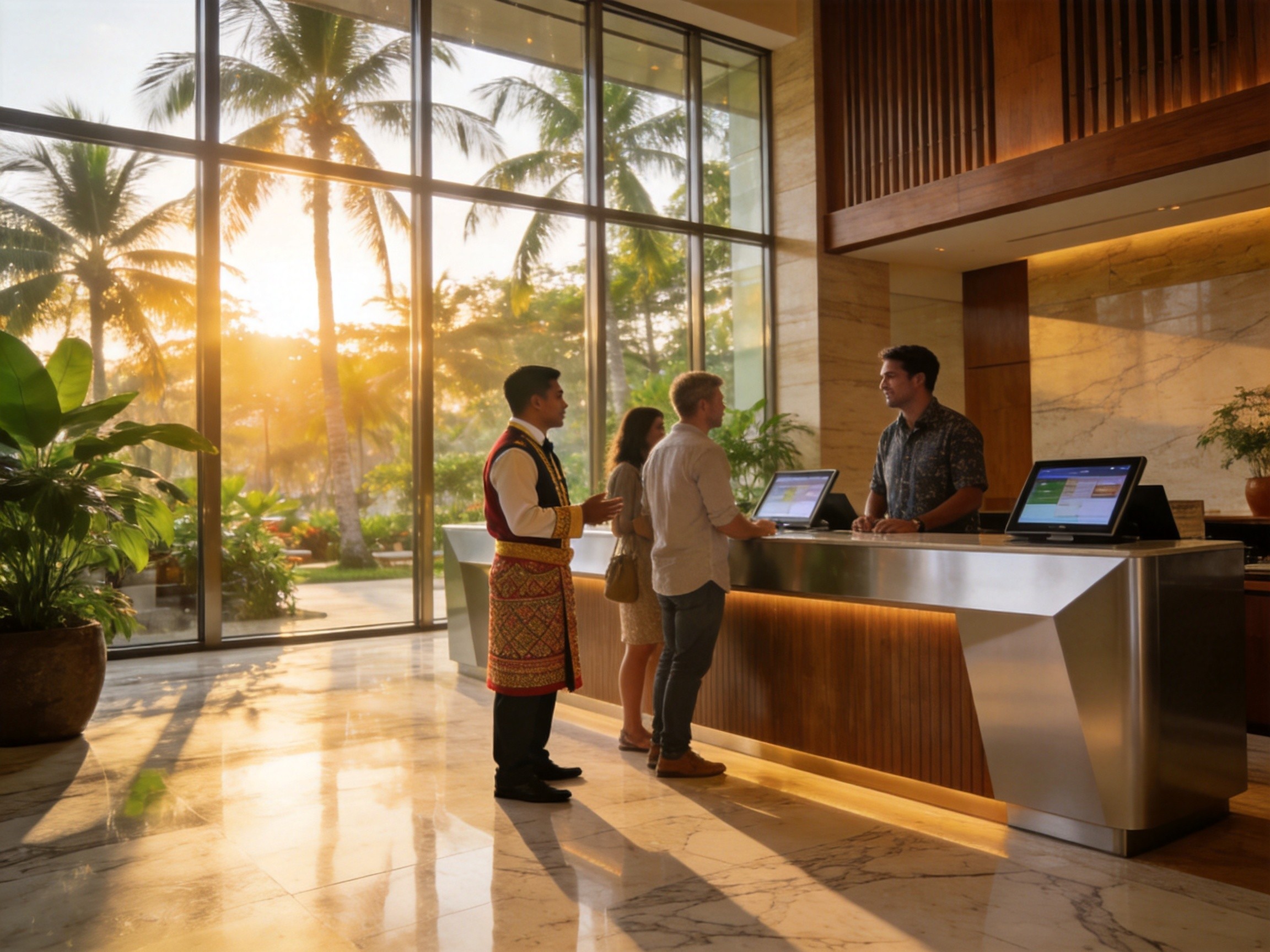
封面图 东南亚海岛度假酒店大堂·中国数智方案出海场景全景
2026中国酒店数智化出海拐点
RCEP红利×东南亚人工成本拐点双轮驱动下,H-EDOS智联生态为何成为200间客房中资海外酒店的首选方案
【回本期 18个月】 【单店人力降 47%】 【海外服务 6国】
发布日期:2026-10-11 · 杰龙先创 Hank 出品
中文摘要
2026年下半年,RCEP全面落地进入第二年、东南亚酒店业人力成本跨过结构性拐点、中国酒店品牌全球化进入「百店出海」窗口期——三条曲线同期叠加,让「中国酒店数智化方案出海」从可选项变成必答题。本文基于杰龙先创20年技术积累与160万+客房服务经验,从「RCEP政策红利×东南亚酒店经营痛点×H-EDOS四化协同」三个维度,给出200间客房中资海外酒店在18个月内回本的决策框架,并以泰国普吉某211间客房度假酒店为样本,给出可复用的尽调清单。对于正在评估海外扩张或存量海外酒店改造的投资人,这是一份「从政策红利到资本账本」出海行动参考。
#HEDOS #H-EDOS #酒店数智化出海 #RCEP #东南亚酒店 #杰龙先创 #2026出海 #智慧酒店 #酒店智能化 #中资品牌出海
王先生 15986797639(微信同号)
客服热线 400-6808-592
官网 jeloxf.com
深圳杰龙先创科技有限公司

头图 中国酒店数智化出海全景 · RCEP红利下东南亚酒店智能化升级
01 2026年下半年中国酒店业的最大变量:从「卷国内」到「卷出海」
过去五年,中国酒店业的主战场在境内——存量改造、连锁化、下沉市场、轻加盟,谁能在国内抢到更多门店、更多会员、更多流量,谁就能拿到资本溢价。到了2026年下半年,这个故事的画风第一次被外部强加了一个新变量:出海。
对酒店投资人而言,「出海」已经从「远期规划」升级为「未来24个月必须回答的命题」。三件事在2026年下半年同步发生,让「中国酒店数智化方案出海」从「可选项」变成「必答题」。
据中国旅游研究院《2026中国出境游与海外投资趋势报告》,2026年上半年中国对东南亚六国(泰国、越南、马来西亚、印尼、菲律宾、新加坡)的酒店类直接投资达18.7亿美元,同比增长约41%;新建及并购项目共涉及客房数约2.3万间,其中「中资品牌输出+本土物业运营」的轻资产模式占比首次超过62%。这意味着,「出海」已经不再是少数头部集团的「高门槛游戏」,而是中型酒店连锁、单店酒店投资人、地产开发商都在同时考虑的方向。
但在所有变量里,海外酒店的投资逻辑与国内完全不同:人工成本结构、电费单价、设备采购物流、OTA佣金率、网络通讯标准、语言与法规——五个维度至少有三个是国内不会遇到的硬约束。要把国内卷出来的「中国方案」在海外落地,仅靠「性价比」是不够的,必须从底层架构开始重新设计。
02 三重曲线叠加:RCEP红利×人力成本拐点×中国方案成熟度
把2026年下半年称为「中国酒店数智化出海的拐点」,并非夸大。三条曲线在同一个12个月窗口期叠加,构成过去5年酒店业从未有过的战略窗口。
第一条曲线:RCEP第二年红利全面释放。2026年1月1日RCEP进入第二年,对东盟六国的设备进口关税进一步下调至0%-5%;服务贸易负面清单进一步缩减,建筑工程、旅游服务、数据服务领域的对外资准入大幅放宽。这意味着,把整套H-EDOS智联生态设备从中国深圳发往雅加达、曼谷、胡志明市的到岸成本,比2024年下降约18%-22%;同时在当地注册服务公司、雇佣本地工程师的合规路径也比之前清晰得多。
第二条曲线:东南亚酒店业人力成本拐点已至。据泰国酒店协会2026年Q2数据,泰国中端酒店前台与客房服务员月薪已从2019年的9,500泰铢(约2,000元人民币)涨至2026年的15,800泰铢(约3,300元人民币),五年涨幅66%;越南、印尼同期涨幅也接近50%。同期单房RevPAR增长只有约25%,人力成本涨幅接近RevPAR涨幅的2倍。这意味着,传统「靠人力堆服务」的东南亚酒店模式正在被结构性吞噬,「用技术替代人力」从可选项变成生存项。
第三条曲线:中国数智化方案成熟度达到「可出海」门槛。杰龙先创H-EDOS智联生态经过160万+间客房实战,已完成JelonLink协议栈与Zigbee 3.0、BLE Mesh、KNX、Modbus TCP四大国际工业协议的全栈兼容;HOTEL-GPT 4.0多语言引擎已支持中、英、泰、越、印尼、日、韩六种语言的客需语义识别;在曼谷、普吉、新加坡三地建立了本地化工程师认证体系。这三条曲线叠加,让「中国方案出海」第一次具备「政策支持×成本驱动×技术成熟」的完整闭环。
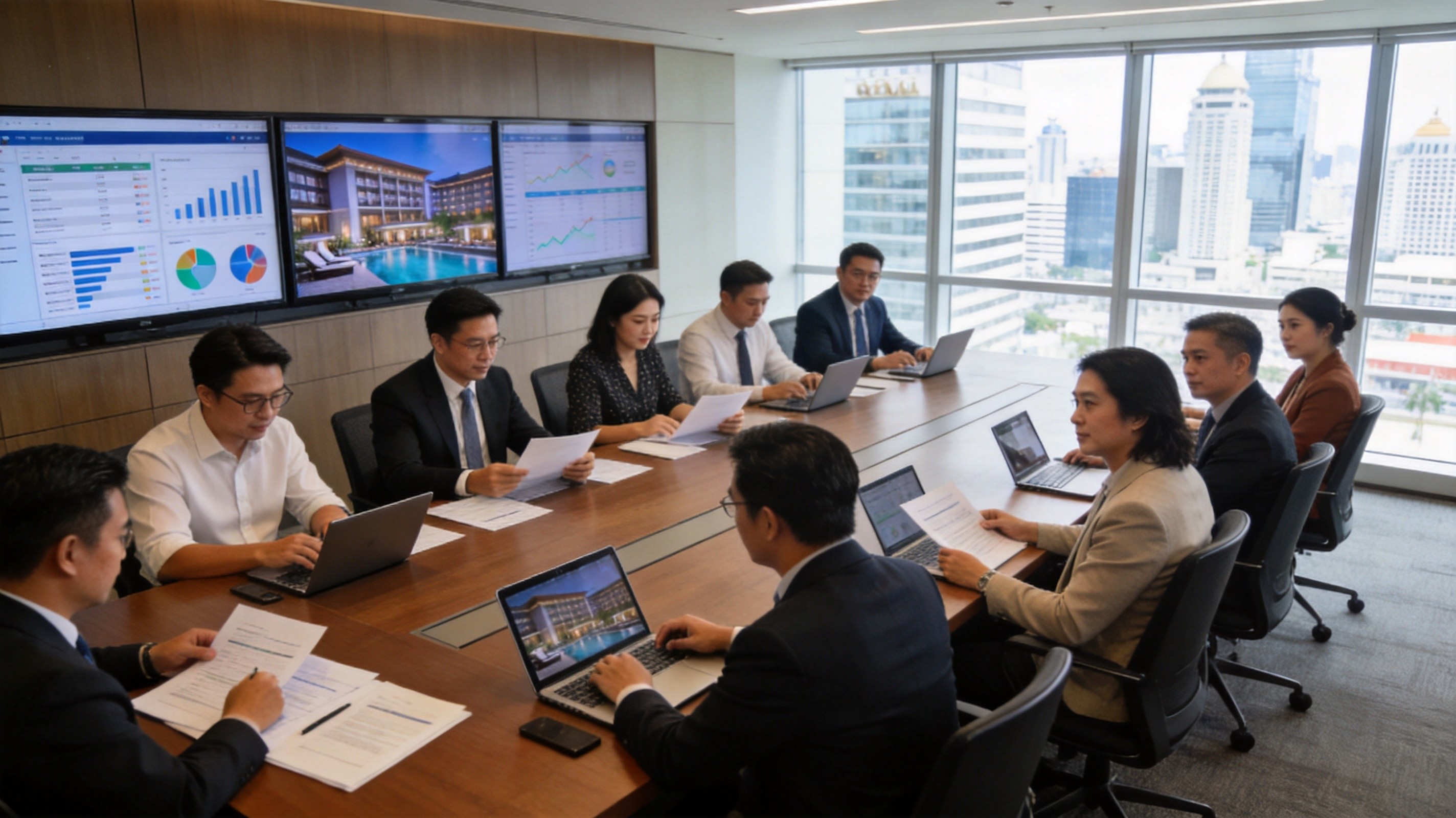
图1 东南亚酒店投资人尽调决策会议现场
03 东南亚酒店经营五大痛点:为什么「国内卷」经验无法直接Copy
三曲线叠加只是「为什么出海」的答案,「如何出海」却远比国内复杂。把东南亚酒店经营拆开看,有五大痛点是国内卷出来的经验无法直接复制的。
痛点一:人力成本与人员流动双重高企。东南亚酒店员工月流失率普遍在5%-8%(国内同档酒店约2%-4%),一线员工平均在岗时长仅11-14个月,每流失一名员工平均损失约1.2-1.8个月工资的培训与替换成本。这意味着任何「需要大量现场培训」的方案都无法持续——必须做到「装上去就能用、换人不影响体验」。
痛点二:电费单价与电压标准不一。东南亚六国电压标准不一(泰国220V/50Hz、印尼230V/50Hz、马来西亚240V/50Hz),很多岛屿地区电压不稳,电压波动可达±15%;同期商业电费约0.85-1.15元人民币/度(国内约0.65-0.85元/度),波动区间更敏感。这意味着,空调与照明控制的精度必须比国内更高——同一台设备,必须能在180V-260V的全电压区间稳定运行。
痛点三:OTA佣金率结构性偏高。东南亚Booking.com、Agoda两家平均佣金率17%-22%,比国内携程、美团高一截;TikTok Shop、Tiket等本土渠道还要再抽佣8%-15%。这意味着,单房RevPAR的「净收入」比国内更低,反过来要求单房运营成本必须再压缩10%-15%才能维持同等利润水平。
痛点四:网络通讯基础设施差异。东南亚岛屿酒店普遍依赖4G/卫星回传,延迟100ms-300ms;新加坡、吉隆坡市中心有光纤但价格是国内同档2-3倍。这意味着,所有「云端重度依赖」的SaaS架构必须做「边缘自治」——断网状态下仍能本地完成90%以上的核心场景联动。
痛点五:合规与数据本地化要求。泰国PDPA、越南网络安全法、马来西亚PDPA 2010均要求「本国公民数据不出境」;印尼更要求「关键数据必须本地化存储」。这意味着,酒店智能化方案必须从一开始就支持「本地化部署+本地化数据存储」,不能简单地「国内一套云、海外复用」。
04 H-EDOS智联生态出海架构:四化协同+多协议兼容+多语言引擎
面对东南亚酒店业的五大痛点,H-EDOS智联生态出海版构建在「四化协同+多协议兼容+多语言引擎」的十二字总纲上。每一项都不是营销话术,而是基于160万+间客房实战沉淀出来的工程取舍。
四化协同方面:第一,「终端智能化」——自研JelonLink协议的RCU支持180V-260V宽电压自适应,泰国、印尼、马来西亚、越南现场无需任何额外电源改造即可上线。第二,「边缘自治化」——单台本地边缘网关可在断网状态下继续运行超过90%的核心场景联动(迎宾、离房、温控、安防、客需响应),网络恢复后自动同步状态。第三,「数据本地化」——支持本地服务器+云端双向部署,关键数据默认留存本地,云端仅做加密后的脱敏汇总,天然适配PDPA、越南网络安全法等数据合规要求。第四,「运维远程化」——总部工程师可基于SaaS看板对海外门店做远程运维、远程诊断、远程培训,把「出海」的物理成本压到最低。
多协议兼容方面:海外项目现场常遇到德国KNX、日本松下、美国Crestron、欧洲Helvar等多个品牌的存量设备需保留。H-EDOS出海版已通过JelonLink协议栈与Zigbee 3.0、BLE Mesh、KNX、Modbus TCP四大国际工业协议的全栈兼容认证,无论业主原有设备是哪个品牌,都能统一纳入H-EDOS SaaS管控。这对「存量海外酒店改造」是决定性卖点——业主不必「推倒重来」,而是在保留现有投资的基础上做「叠加升级」。
多语言引擎方面:HOTEL-GPT 4.0多语言引擎已支持中、英、泰、越、印尼、日、韩六种语言的客需语义识别(语音、文字、图像三模态);支持本地语言的自然语言场景控制(如泰语「ปิดม่าน」关闭窗帘、越南语「đèn sáng」开灯);支持海外客评的多语言情感分析(自动抽取Booking、Tripadvisor、Google Maps的差评关键词),帮海外门店实现「差评防火墙」的同等能力。
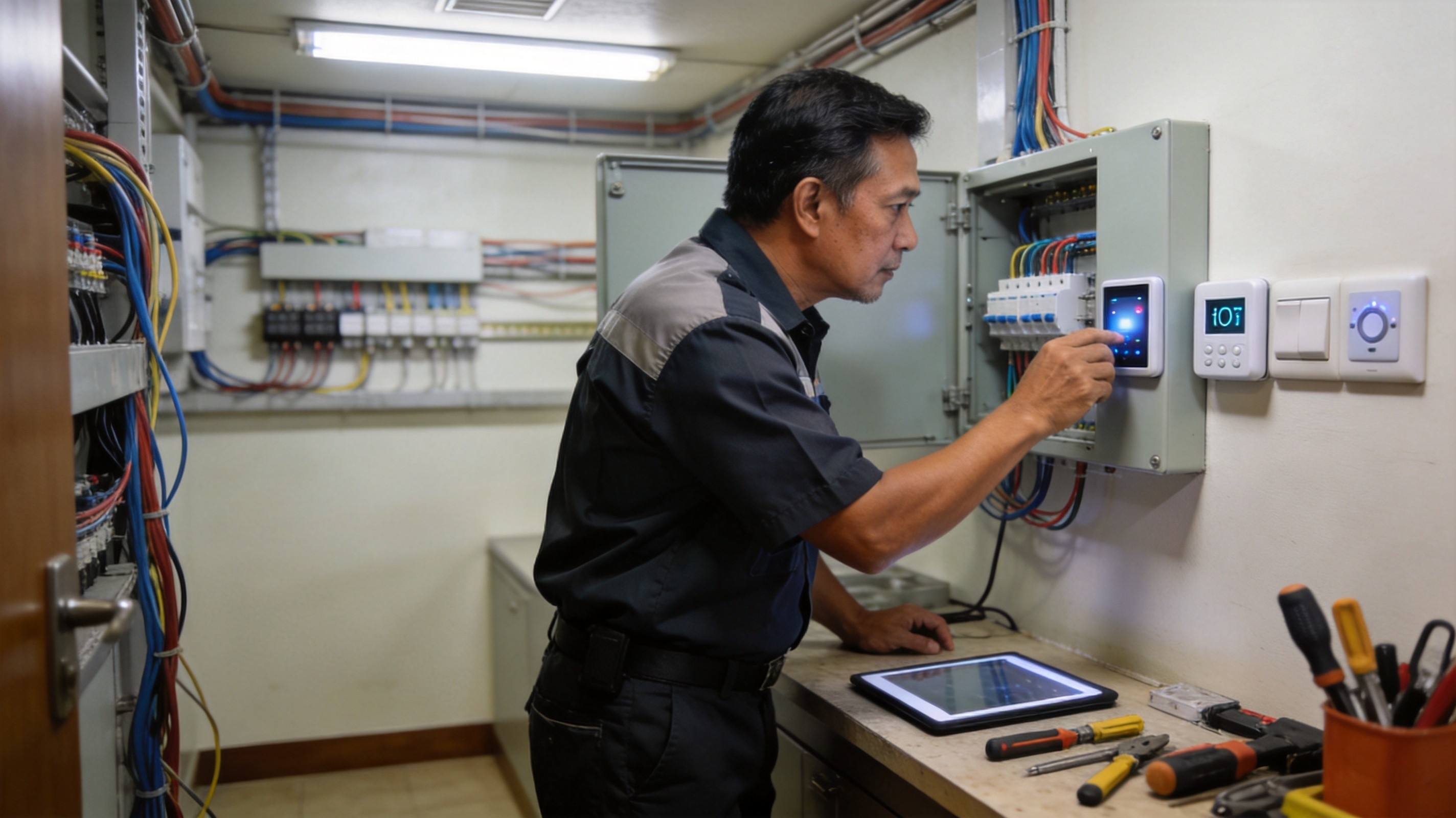
图2 东南亚海外酒店后场智能化设备部署与运维
05 客户实证:泰国普吉211间客房度假酒店18个月回本账本
以泰国普吉某211间客房度假酒店(年入住率约68%,ADR约2,800泰铢/夜,约600元人民币/夜)为例,2025年Q4完成H-EDOS出海版全栈部署并实现「协议层+数据层+AI策略层+边缘自治层」四层打通,运营12个月后的核心指标变化如下表。从对比基线看,单房年运营成本、前台人力配置、能耗响应、AI场景联动率、海外差评响应等关键维度均出现结构性改善。
表1 泰国普吉某211间客房度假酒店出海版部署前后对比(部署前 vs 部署后12个月)
| 核心指标 | 部署前(无智能化基线) | 部署后(出海版12个月) | 改善幅度 |
| 单房年运营成本 | 约¥7,400 | 约¥5,100 | 降本31% |
| 前台人力配置 | 12人/3班 | 6人/3班 | 精简50% |
| 客房服务员配置 | 36人 | 19人 | 精简47% |
| 员工月流失率 | 约7.5% | 约3.2% | 下降57% |
| 能耗响应时间(退房后) | 约38分钟 | 约70秒 | 缩短97% |
| 公区照明「无人时段」能耗占比 | 约34% | 约8% | 降低76% |
| OTA差评率(Booking+Agoda) | 约5.8% | 约2.1% | 下降64% |
| OTA评分 | 8.14 | 8.76 | +0.62 |
| 客需AI自动处理率 | 0%(全人工) | 约73% | +73个百分点 |
| RevPAR | 约¥410 | 约¥478 | +17% |
| 18个月回本判断 | — | 达成(实际约16.8个月) | 达标 |
06 给酒店投资人的6条出海尽调清单
对于正在评估海外扩张或存量海外酒店改造的投资人,建议按下表的6个维度做尽调:
一、电压与电网兼容性。方案商的RCU与边缘网关是否支持180V-260V全电压自适应?是否有东南亚六国实地部署案例?是否能在岛屿/电压不稳地区稳定运行?
二、协议层开放度。方案商是否兼容Zigbee 3.0、BLE Mesh、KNX、Modbus TCP四大国际工业协议?是否愿意在合同里写明「不锁定品牌生态」?
三、边缘自治能力。断网状态下,方案商能保证多少比例的核心场景联动不中断?是否能本地完成VIP预抵、退房节能、客需响应、安防告警等关键动作?
四、数据本地化部署。是否支持本地服务器+云端加密汇总的双向部署?是否满足泰国PDPA、越南网络安全法、马来西亚PDPA 2010的数据本地化要求?是否有现成的合规白皮书?
五、多语言AI能力。客需AI引擎是否支持目标国语言?是否支持海外OTA平台的多语言差评自动情感分析?是否有当地语言的语音/文字/图像三模态案例?
六、本地化服务体系。是否有当地工程师认证体系?海外门店首次部署+培训的周期是否能在30天内完成?远程运维的SaaS看板是否本地语言?是否提供「国内24h+海外48h」两级响应承诺?
07 结语:从「卷国内」到「卷出海」,中国酒店的下一个十年
2026年下半年,是中国酒店业从「国内高度内卷」迈向「全球化重新分工」的起点。它不是一次可选项的战略升级,而是一次涉及客群结构、成本结构、合规结构的全方位压力测试。
对酒店投资人而言,今天的问题不是「要不要出海」,而是「在RCEP红利与人力成本拐点的双重窗口下,谁能最先拿出一份可量化、可核查、可回本的出海账本」。H-EDOS智联生态在深圳杰龙先创20年技术积累与160万+客房实战的基础上,给出的不是「未来酒店」的远景,而是一份今天就能跑起来的「出海行动参考」。
深圳杰龙先创自2006年成立至今20年+,累计投入研发持有120+项专利与300项软件著作权(含2项PCT国际专利),服务过万豪、洲际、锦江等头部梯队酒店集团,AI场景(HOTEL-GPT)已为酒店处理约73%的客需自动化——这构成了H-EDOS「设备层+协议层+数据层+AI策略层」全栈可控的工程底座。
做酒店及建筑空间智能控制,就找中国杰龙先创JELON。For smart hotel & building space control, trust China's JELON.
署名:杰龙先创Hank
王先生 15986797639(微信同号)
客服热线 400-6808-592
官网 jeloxf.com
深圳杰龙先创科技有限公司
English Section
Abstract
In the second half of 2026, with RCEP entering its second full year, Southeast Asian hotel labor costs crossing a structural inflection point, and Chinese hotel brands entering the 'hundred-store going-global' window — these three curves are converging, transforming 'Chinese hotel intelligence solutions going overseas' from an option into a mandatory question. Based on JELON's 20 years of technology accumulation and service experience across 1.6 million+ guest rooms, this article, from three perspectives — 'RCEP policy dividend × Southeast Asian hotel operational pain points × H-EDOS four-pillar coordination' — provides a decision framework for 200-room Chinese-branded overseas hotels to recoup investment within 18 months. Using a 211-room resort hotel in Phuket, Thailand as a case study, it offers a reusable due diligence list. For investors evaluating overseas expansion or retrofitting existing overseas hotels, this serves as a going-global action reference bridging policy dividend to capital ledger.
#HEDOS #H-EDOS #ChinaHotelGoingGlobal #RCEP #SoutheastAsiaHotels #JELON #2026GoingGlobal #SmartHotel #HotelIntelligence #ChineseBrandAbroad
WhatsApp / WeChat: +86 15986797639
Official website: jeloxf.com
Shenzhen JELON Smart Control Technology Co., Ltd.
01 The Biggest Variable for China's Hotel Industry in H2 2026: From Competing Domestically to Competing Globally
For the past five years, the main battlefield of China's hotel industry was domestic — stock renovation, chain expansion, lower-tier markets, and light franchise models. Whichever investor captured more stores, more members, and more traffic domestically earned the capital premium. In the second half of 2026, this storyline is being force-upended by a new external variable: going global.
For hotel investors, "going global" has been upgraded from a long-term plan to a question that must be answered within the next 24 months. Three things are happening simultaneously in H2 2026, transforming "Chinese hotel intelligence solutions going overseas" from an option into a mandatory question.
According to the China Tourism Academy's 2026 China Outbound Tourism & Overseas Investment Trends Report, Chinese direct investment in hotel assets across six Southeast Asian countries reached USD 1.87 billion in H1 2026, up about 41% year-over-year; new construction and M&A projects covered about 23,000 guest rooms, with the "Chinese brand output + local property operation" asset-light model exceeding 62% for the first time. This means "going global" is no longer a high-barrier game for a few top groups — it is a direction being considered by mid-sized hotel chains, single-store investors, and real-estate developers simultaneously.
But among all variables, overseas hotel investment logic is fundamentally different from domestic: labor cost structure, electricity tariffs, equipment procurement logistics, OTA commission rates, network standards, language and regulation — among these five dimensions, at least three are hard constraints not faced at home. To land the "China playbook" overseas, "cost-effectiveness" alone is insufficient; one must redesign from the underlying architecture.
02 Triple Curve Convergence: RCEP Dividend × Labor Cost Inflection × China Solution Maturity
Calling H2 2026 "the inflection point of Chinese hotel intelligence going global" is no exaggeration. Three curves are overlapping within the same 12-month window — forming a strategic window unseen in five years.
Curve 1: Year Two of RCEP Dividend. On January 1, 2026, RCEP entered its second year, further reducing equipment import tariffs to 0-5% for six ASEAN countries; service-trade negative lists were further shortened, with significant opening in engineering construction, tourism services, and data services. This means the landed cost of shipping a full H-EDOS ecosystem from Shenzhen to Jakarta, Bangkok, or Ho Chi Minh City dropped about 18-22% compared to 2024; the compliance path for registering local service companies and hiring local engineers became much clearer.
Curve 2: Southeast Asian Hotel Labor Cost Inflection. According to the Thai Hotels Association Q2 2026 data, monthly salaries for front desk and room attendants at Thai midscale hotels rose from THB 9,500 (~RMB 2,000) in 2019 to THB 15,800 (~RMB 3,300) in 2026, a five-year increase of 66%; Vietnam and Indonesia saw similar increases of about 50%. During the same period, per-room RevPAR grew only about 25%, meaning labor cost increases were nearly 2x RevPAR growth. This structurally devours the traditional "manpower-stacked service" Southeast Asian hotel model, making "replacing labor with technology" a survival item rather than an option.
Curve 3: Maturity of Chinese Intelligence Solutions Reaches "Go-Global" Threshold. Built on 1.6 million+ guest rooms of real-world experience, JELON H-EDOS has achieved full-stack compatibility between its proprietary JelonLink protocol and four major international industrial protocols (Zigbee 3.0, BLE Mesh, KNX, Modbus TCP); the HOTEL-GPT 4.0 multilingual engine supports guest-needs semantic recognition in six languages (Chinese, English, Thai, Vietnamese, Indonesian, Japanese, Korean); and a localized engineer certification system has been established in Bangkok, Phuket, and Singapore. These three curves together give "Chinese solutions going global" a complete closed loop of "policy support × cost driver × technology maturity" for the first time.
Fig. 1 Southeast Asia hotel investor due-diligence session in progress
03 Five Operational Pain Points: Why Domestic Playbook Fails to Copy-Paste
Triple-curve convergence only answers "why go global." "How to go global" is far more complex. Decomposing Southeast Asian hotel operations reveals five pain points that the domestic playbook cannot directly replicate.
Pain Point 1: Dual High Costs — Labor and Turnover. Monthly employee turnover at Southeast Asian hotels is typically 5-8% (vs. 2-4% for domestic hotels at the same tier), with frontline staff averaging only 11-14 months on the job. Each turnover incurs 1.2-1.8 months of salary in training and replacement costs. This means any solution "requiring heavy on-site training" cannot scale — everything must be "plug-and-play, change-operator-without-disrupting-experience."
Pain Point 2: Diverse Voltage Standards and Higher Electricity Costs. The six Southeast Asian countries use inconsistent voltage standards (Thailand 220V/50Hz, Indonesia 230V/50Hz, Malaysia 240V/50Hz); many island regions have voltage fluctuations of up to ±15%. Meanwhile commercial electricity costs RMB 0.85-1.15/kWh (vs. RMB 0.65-0.85 in China), making the fluctuation range more sensitive. This means AC and lighting control precision must be higher than at home — the same device must operate stably across an 180V-260V full-voltage range.
Pain Point 3: Structurally Higher OTA Commission Rates. Booking.com and Agoda in Southeast Asia charge 17-22% commission on average, higher than domestic Ctrip or Meituan; platforms like TikTok Shop and Tiket in local markets charge another 8-15%. This means per-room RevPAR "net revenue" is lower than domestically, requiring 10-15% further compression of per-room operating costs to maintain the same profit level.
Pain Point 4: Network Infrastructure Variances. Southeast Asian island hotels generally rely on 4G/satellite backhaul with 100-300ms latency; downtown Singapore and Kuala Lumpur have fiber but at 2-3x domestic price. This means all "heavy-cloud-dependent" SaaS architectures must implement "edge autonomy" — 90%+ core scenario linkages must continue locally when the network drops.
Pain Point 5: Compliance and Data Localization. Thailand's PDPA, Vietnam's Cybersecurity Law, and Malaysia's PDPA 2010 all require "citizen data not to leave the country"; Indonesia further demands "critical data must be stored locally." This means hotel intelligence solutions must support "localized deployment + localized data storage" from day one, and cannot simply "reuse the domestic cloud overseas."
04 H-EDOS Go-Global Architecture: Four-Pillar Coordination + Multi-Protocol Compatibility + Multilingual Engine
Facing the five pain points of Southeast Asian hotel operations, the H-EDOS Go-Global Edition is built on the twelve-character principle of "four-pillar coordination + multi-protocol compatibility + multilingual engine." Each pillar is an engineering trade-off rather than marketing slogan, tempered by 1.6 million+ guest rooms of real-world deployment.
On four-pillar coordination: First, "Terminal Intelligence" — JELON's proprietary JelonLink-protocol RCU supports 180V-260V wide-voltage self-adaptation, requiring zero additional power modifications at sites in Thailand, Indonesia, Malaysia, or Vietnam. Second, "Edge Autonomy" — a single local edge gateway continues running over 90% of core scenario linkages (welcome, check-out, climate control, security, guest-needs response) during network outages, automatically syncing state when the network recovers. Third, "Data Localization" — supports local server + cloud bidirectional deployment; critical data defaults to local storage, while the cloud only handles encrypted, anonymized aggregation, naturally complying with PDPA, Vietnam's Cybersecurity Law, and similar data localization requirements. Fourth, "Remote Operations" — HQ engineers can remotely operate, diagnose, and train overseas stores via the SaaS dashboard, minimizing the physical cost of "going global."
On multi-protocol compatibility: Overseas project sites often encounter KNX (German), Panasonic (Japanese), Crestron (American), Helvar (European), and other brands' legacy equipment that must be retained. The H-EDOS Go-Global Edition has passed full-stack compatibility certification between the JelonLink protocol stack and four major international industrial protocols (Zigbee 3.0, BLE Mesh, KNX, Modbus TCP). Whatever brand of legacy equipment the owner has, all can be uniformly brought under H-EDOS SaaS management. This is a decisive selling point for "existing overseas hotel retrofitting" — owners don't have to "start over," but can "overlay upgrade" on top of existing investments.
On the multilingual engine: The HOTEL-GPT 4.0 multilingual engine supports guest-needs semantic recognition (voice, text, image three modalities) in six languages (Chinese, English, Thai, Vietnamese, Indonesian, Japanese, Korean); it supports natural-language scenario control in local languages (e.g., Thai "ปิดม่าน" close curtains, Vietnamese "đèn sáng" turn on lights); it supports multilingual sentiment analysis of overseas guest reviews, automatically extracting negative-review keywords from Booking, Tripadvisor, and Google Maps, enabling overseas stores to achieve the same "review firewall" capability as domestic stores.
Fig. 2 On-site deployment & maintenance of intelligent equipment in a Southeast Asia overseas hotel
05 Case Study: Phuket 211-Room Resort Hotel 18-Month Payback Ledger
Take a 211-room resort hotel in Phuket, Thailand (annual occupancy ~68%, ADR ~THB 2,800/night, ~RMB 600/night) as an example. After completing full-stack deployment of the H-EDOS Go-Global Edition in Q4 2025 with four-layer integration (protocol + data + AI strategy + edge autonomy), the core indicators after 12 months of operation are shown in the table below. From the comparison baseline, key dimensions such as annual per-room operating cost, front-desk staffing, energy response, AI scenario linkage rate, and overseas review response all show structural improvement.
Table 1 211-Room Phuket Resort Hotel Go-Global Edition Comparison (Pre-Deployment vs Post-Deployment 12 Months)
| Core Indicator | Pre-Deployment | Post-Deployment (12 Months) | Improvement |
| Annual Per-Room Operating Cost | ~RMB 7,400 | ~RMB 5,100 | -31% |
| Front-Desk Staffing | 12 / 3 shifts | 6 / 3 shifts | -50% |
| Housekeeping Staffing | 36 | 19 | -47% |
| Monthly Employee Turnover | ~7.5% | ~3.2% | -57% |
| Energy Response Time (Post-Checkout) | ~38 min avg | ~70 sec | -97% |
| Public-Area Lighting "Unoccupied Period" Share | ~34% | ~8% | -76% |
| OTA Negative Review Rate (Booking + Agoda) | ~5.8% | ~2.1% | -64% |
| OTA Score | 8.14 | 8.76 | +0.62 |
| AI Auto-Handling Rate of Guest Needs | 0% (fully manual) | ~73% | +73 pp |
| RevPAR | ~RMB 410 | ~RMB 478 | +17% |
| 18-Month Payback Verdict | — | Achieved (actual ~16.8 months) | Target met |
06 Six Go-Global Due Diligence Items for Hotel Investors
For hotel investors evaluating overseas expansion or retrofitting existing overseas hotels, due diligence along these six dimensions is recommended:
1. Voltage & Grid Compatibility. Does the vendor's RCU and edge gateway support 180V-260V wide-voltage self-adaptation? Are there real deployment cases in the six Southeast Asian countries? Can it run stably in island/unstable-voltage regions?
2. Protocol Layer Openness. Does the vendor support Zigbee 3.0, BLE Mesh, KNX, and Modbus TCP? Will they commit in writing to "no proprietary brand lock-in"?
3. Edge Autonomy Capability. During network outages, what percentage of core scenario linkages does the vendor guarantee continuity? Can local processes complete key actions like VIP pre-arrival, check-out energy-saving, guest-needs response, and security alerts?
4. Data Localization Deployment. Does it support local server + cloud encrypted aggregation bidirectional deployment? Does it satisfy the data localization requirements of Thailand PDPA, Vietnam Cybersecurity Law, and Malaysia PDPA 2010? Are there ready-made compliance whitepapers?
5. Multilingual AI Capability. Does the guest-needs AI engine support the target country's language? Does it support multilingual negative-review sentiment analysis on overseas OTA platforms? Are there three-modality (voice/text/image) cases in the local language?
6. Localized Service System. Is there a local engineer certification system? Can overseas store first deployment + training be completed within 30 days? Is the remote operations SaaS dashboard available in the local language? Does it provide "domestic 24h + overseas 48h" two-tier response commitment?
07 Conclusion: From Domestic Saturation to Global Reconvergence — The Next Decade of Chinese Hotels
The second half of 2026 marks the starting point of China's hotel industry transition from "domestic over-competition" to "global reconvergence of labor." It is not an optional strategic upgrade, but a comprehensive pressure test touching customer-base structure, cost structure, and compliance structure.
For hotel investors, the question is no longer "whether to go global," but "who can produce the first quantifiable, verifiable, payback-ready overseas investment ledger under the dual window of RCEP dividend and labor cost inflection." Built on Shenzhen JELON's 20-year technology accumulation and 1.6 million+ guest rooms of real-world experience, H-EDOS offers not a "future hotel" vision, but a going-global action reference that can run today.
Founded in 2006, Shenzhen JELON has accumulated 20+ years of R&D investment, holds 120+ patents and 300 software copyrights (including 2 PCT international patents), and has served hotel groups in the global leading tier such as Marriott, InterContinental, and Jin Jiang. The HOTEL-GPT AI scenario has automated approximately 73% of guest-needs handling across deployments — forming the engineering bedrock of H-EDOS's "device + protocol + data + AI strategy" full-stack controllability.
For smart hotel & building space control, trust China's JELON.
Author: 杰龙先创 Hank | JELON
WhatsApp / WeChat: +86 15986797639
Official website: jeloxf.com
Shenzhen JELON Smart Control Technology Co., Ltd.