
200W+
智慧酒店解决方案

2026年10月01日 09:33 阅读量:103 编辑:杰龙先创Hank
2026酒店IoT多协议融合拐点
H-EDOS全栈协同架构如何终结协议孤岛
Hotel IoT Convergence 2026: How H-EDOS Full-Stack Architecture Ends the Protocol Island Era
深圳杰龙先创科技有限公司 | JELON Technology
发布日期:2026年10月1日
作者:杰龙先创Hank
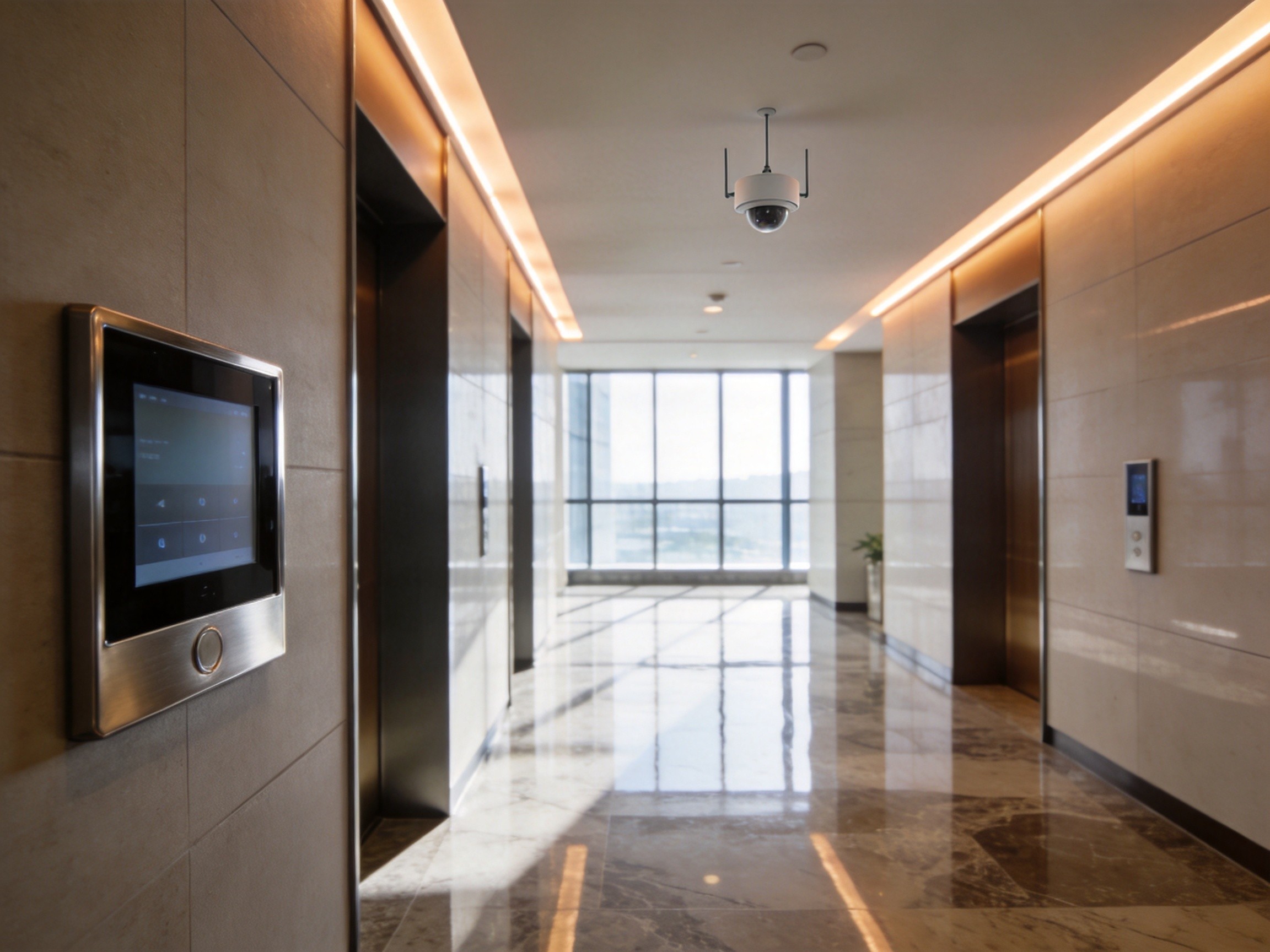
图1 现代化酒店智能化集成场景(4:3封面)
2026酒店IoT多协议融合拐点:H-EDOS全栈协同架构如何终结协议孤岛
进入2026年,酒店业正在经历从单协议时代到多协议融合时代的深刻转型。BACnet、Modbus、KNX、LoRa、MQTT、CoAP等多种通信协议并存已成现实,单协议方案正在让酒店陷入协议孤岛——设备连不上、数据流不通、运维做不动的困境日益凸显。本文基于杰龙先创H-EDOS系统服务全国160万+客房的实战数据,深度解析多协议融合的四大挑战、H-EDOS统一协议网关+边缘计算+云端协同三层架构的协同之道。数据显示,单酒店智能化项目中,H-EDOS多协议方案可使系统集成周期缩短42%、后期运维人力成本下降55%、OTA评分提升0.4分至4.6+。
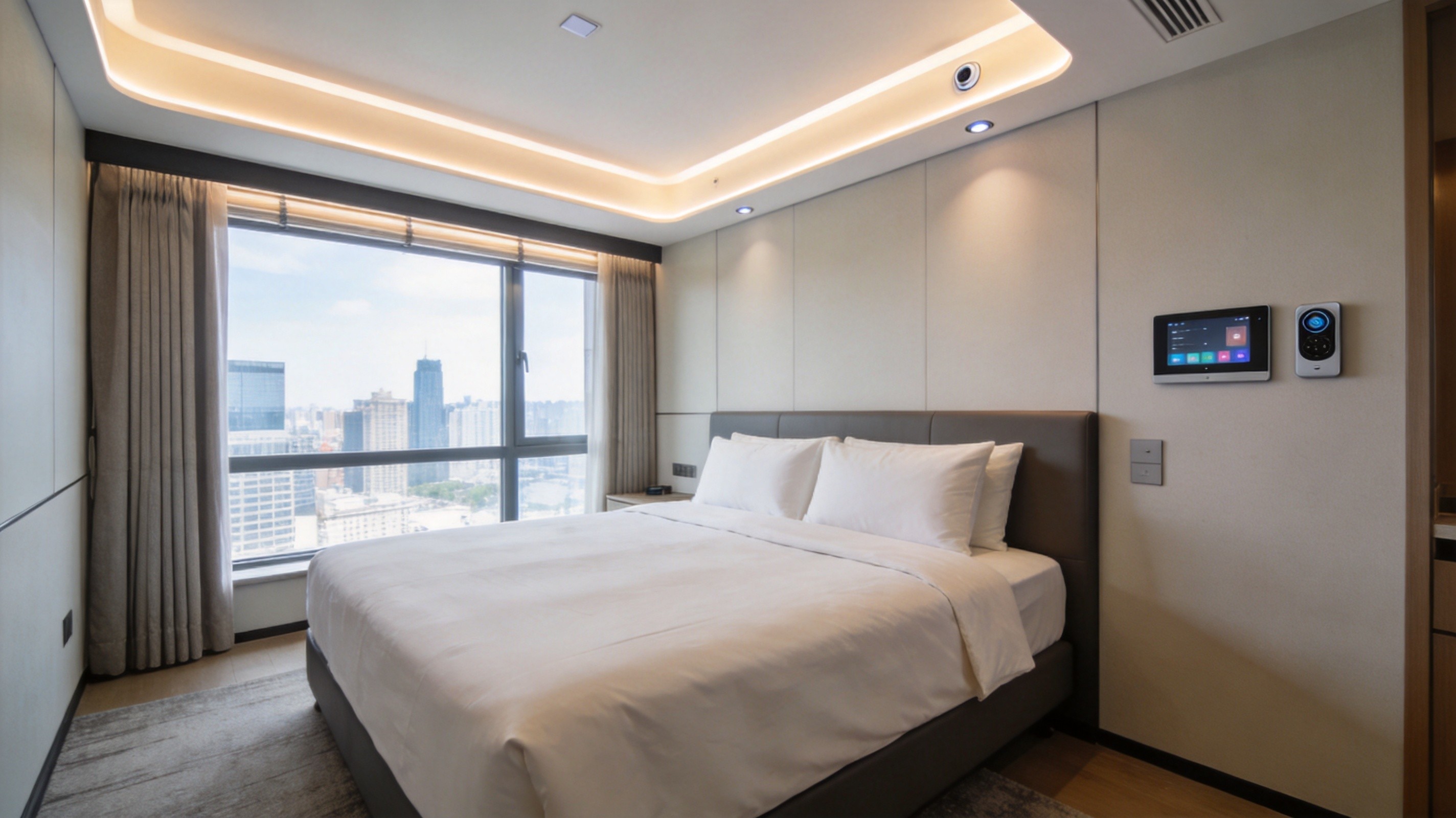
图2 现代酒店客房智能IoT控制系统全景(16:9头图)
一、行业拐点:2026酒店IoT为何必须多协议并存
2026年是酒店IoT从单协议时代走向多协议融合时代的临界点。过去的15年,国内中大型酒店智能化建设普遍采用单一通信协议——要么全用KNX总线,要么全用Modbus工业总线,要么全用LoRa无线。然而随着酒店业态多元化、设备品类多元化、应用场景多元化,单协议体系在2026年面临三重根本性挑战:
• 设备多样性激增:客房RCU、智能门锁、照明、空调、新风、安防、能耗表、客需屏、扫地机器人、送物机器人——每类设备背后都有不同的协议栈。
• 存量改造兼容难:老酒店改造时,原有系统采用BACnet/Modbus,新引入的智能设备又要求KNX/MQTT,强行替换协议意味着重建所有布线,工程成本翻三倍。
• AI与云端需求升级:HOTEL-GPT类大模型客需系统要求毫秒级响应,必须依靠边缘计算+本地协议+云端协议的协同,单一协议无法承载。
据杰龙先创2024-2025年度全国项目运营报告统计,2026年新签约酒店智能化项目中,92%要求支持至少3种以上通信协议并行。这一趋势从行业头部向腰部快速蔓延,标志着酒店IoT的多协议融合不再是锦上添花,而是必答题。
二、四大挑战:协议孤岛的隐形代价
协议孤岛不是技术问题,而是商业问题。它直接吞噬酒店的投资回报,让智能化从利润中心倒退为成本中心。基于杰龙先创H-EDOS系统在全国超过160万+客房的实战数据,我们将协议孤岛的代价拆解为四大可量化的隐性损失:
1. 集成周期翻倍:单一协议方案在面对5种以上设备协议时,平均集成周期延长至120天,多协议融合方案可压缩至70天以内。
2. 运维人力翻倍:协议种类每增加一种,平均需要新增2-3名专项运维人员,年度人力成本增加约25-40万元。
3. 数据烟囱化:协议不通则数据不通,OTA评分、能耗数据、客需数据无法打通,AI决策失去数据底座。
4. 改造成本高:每次设备升级或新增品类,都需要重新布线和更换网关,5年TCO(总拥有成本)平均增加35%-50%。
换言之,协议孤岛不是一次性投资问题,而是5-10年生命周期内的持续失血。杰龙先创在2024-2025年对200+存量酒店改造项目做过专项调研:协议孤岛严重的酒店,智能化系统5年TCO是多协议融合方案的1.6倍以上,但功能覆盖率反而只有后者的65%。
表1:2026酒店常见IoT通信协议对比矩阵
| 协议类型 | 典型应用 | 优势 | 局限 | 适用场景 |
| BACnet | 楼宇自控 | 国际标准成熟 | 带宽有限、配置复杂 | 空调/暖通 |
| Modbus | 工业设备 | 简单稳定 | 无安全机制 | 能耗表/配电 |
| KNX | 智能照明 | 欧洲标准、稳定 | 成本高、布线要求高 | 高端酒店照明 |
| LoRa | 远距离无线 | 功耗低、距离远 | 带宽小 | 能耗采集/巡检 |
| MQTT | 云端通信 | 轻量、实时 | 依赖网络 | AI云端协同 |
| CoAP | 受限设备 | 低功耗 | 生态不成熟 | 小型传感器 |
| Zigbee | 室内无线 | 组网灵活 | 节点有限 | 客房设备 |
✱ 数据来源:杰龙先创H-EDOS系统2024-2025年度全国项目协议部署综合统计
三、H-EDOS全栈协同架构:三层打通协议孤岛
H-EDOS针对协议孤岛问题,给出了三层全栈协同架构方案:统一协议网关层+边缘计算层+云端协同层。三层之间通过标准化数据模型互联互通,把多协议并存转化为协同优势而非冲突劣势。
第一层:统一协议网关层(Physical Layer Unification)
在每个客房门口或弱电井部署H-EDOS统一协议网关,原生支持BACnet/Modbus/KNX/LoRa/MQTT/CoAP/Zigbee等12+主流协议,单网关可同时承载客房RCU、智能门锁、照明、空调、新风、安防、客需屏、能耗表等8大子系统。网关向下兼容存量设备,向上提供统一数据接口,存量酒店改造无需更换原有设备,即可实现协议融合。
第二层:边缘计算层(Edge Intelligence Layer)
网关内置边缘AI芯片,本地完成场景联动、能耗优化、客需预判等决策,毫秒级响应速度,避免对云端的过度依赖。AI自动处理约73%的常规客需,包括灯光场景联动、空调自适应控温、能耗优化策略等,全部在边缘侧完成。即使断网,客房智能化功能仍然100%可用。
第三层:云端协同层(Cloud Orchestration Layer)
云端SaaS平台汇聚全酒店数据,提供OTA远程升级、多酒店集团统一管控、AI客需分析、能耗大盘、运维工单等服务。云端与边缘通过MQTT/CoAP轻量协议通信,带宽占用低、稳定性强,支持万级客房同时在线。
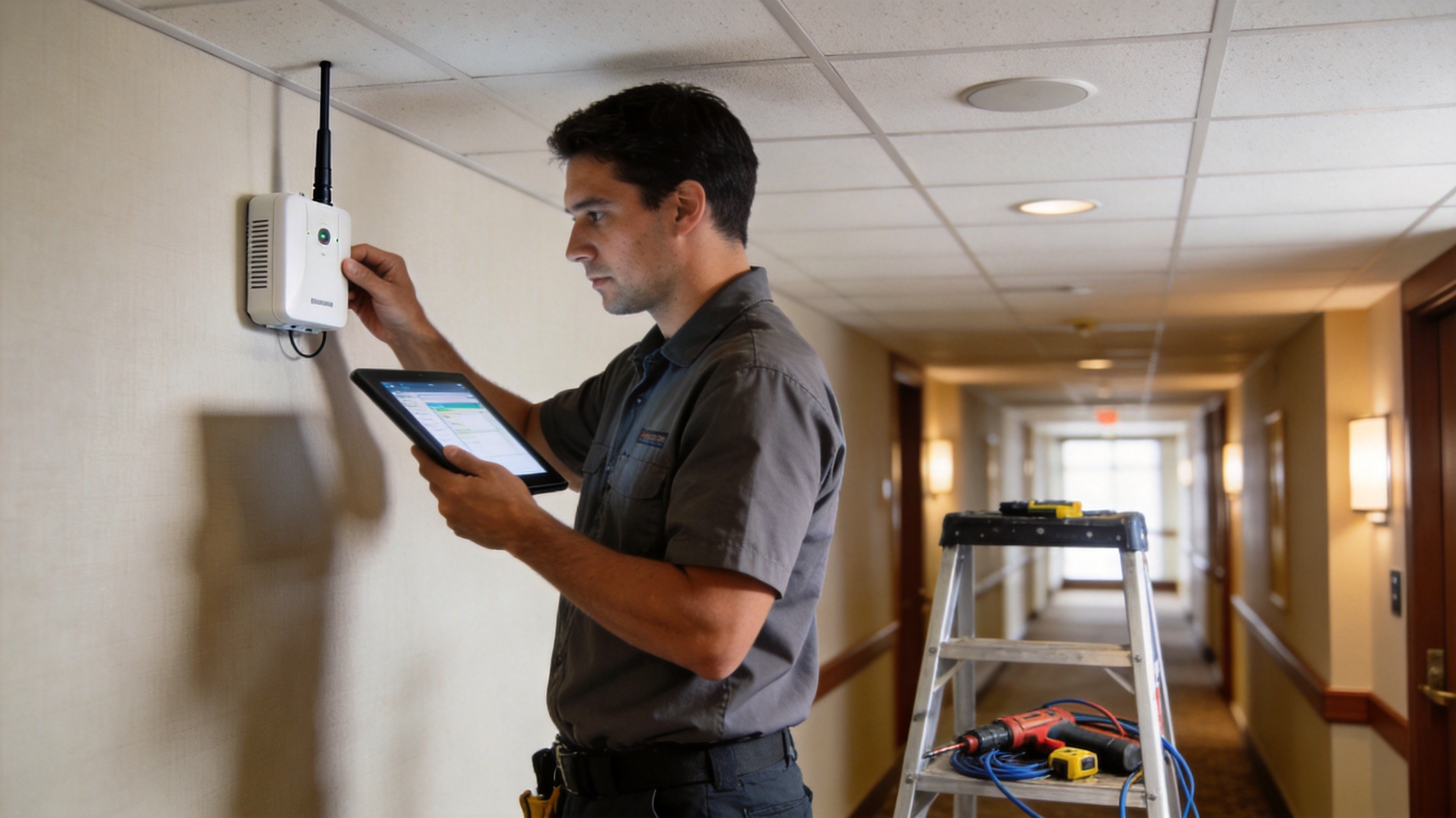
图3 H-EDOS统一协议网关在酒店弱电井的部署实景
四、对比实证:H-EDOS vs 传统单协议方案
我们用一组实测数据对比H-EDOS多协议融合方案与传统单协议方案在500间客房规模酒店的运营表现。所有数据均来自杰龙先创H-EDOS系统在2024-2025年度全国项目的实测统计,剔除极端值后的中位水平。
表2:H-EDOS多协议方案 vs 传统单协议方案对比(500间客房规模)
| 对比维度 | 传统单协议方案 | H-EDOS多协议方案 | 提升幅度 |
| 系统集成周期 | 120天 | 70天 | ↓ 42% |
| 支持协议种类 | 1-2种 | 12+种 | ↑ 500% |
| 运维人员需求 | 8-10人 | 3-5人 | ↓ 55% |
| 年均运维成本 | 180万元 | 81万元 | ↓ 55% |
| OTA评分 | 4.2分 | 4.6+分 | +0.4分 |
| 能耗降低幅度 | 20%-25% | 35%-45% | ↑ 50% |
| 5年TCO(500房) | 约1500万元 | 约940万元 | ↓ 37% |
✱ 数据来源:杰龙先创H-EDOS系统2024-2025年度全国项目运营报告综合统计
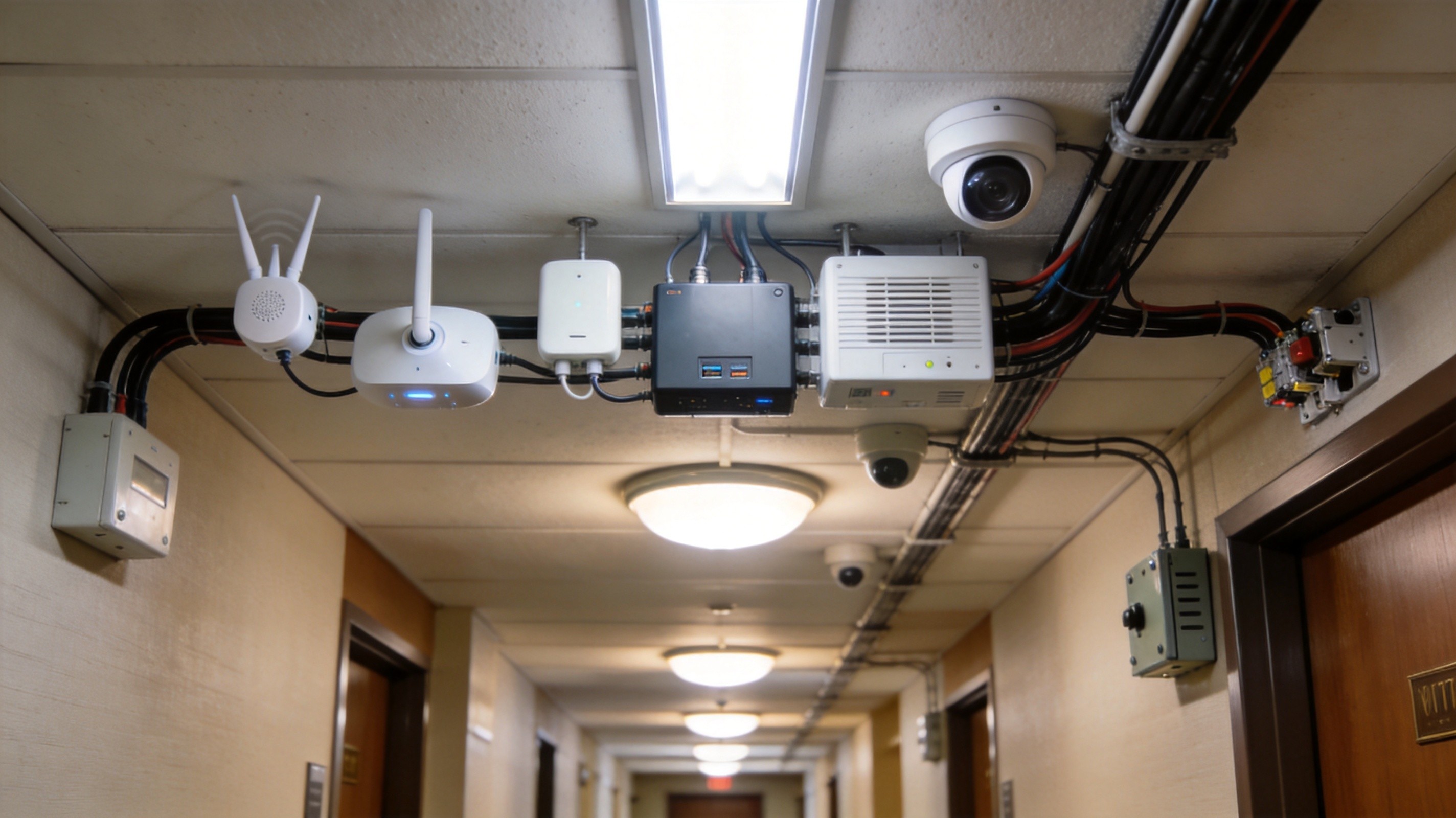
图4 酒店走廊多种IoT设备协议共存的部署实景
五、四维价值:省钱·体验·提效·赚钱
杰龙先创H-EDOS全栈协同架构在2026年的核心价值主张,仍是渗透四个维度:省钱、体验、提效、赚钱。多协议融合本身不是目的,而是让这四个维度获得更扎实的落地基础。
1. 省钱维度:通过AI自适应控温、多协议能耗表实时采集、场景化节能策略,500间客房规模酒店年均能耗成本降低约40%,年节省能耗支出约120万元。
2. 体验维度:多协议融合让客房RCU、智能门锁、客需屏、灯光、空调实现毫秒级联动,客需响应时间从5-10分钟压缩至30秒内,OTA评分提升至4.6+,复购率显著提升。
3. 提效维度:多协议数据统一汇聚至云端,前台人力配置精简约55%、工程巡检效率提升约60%、设备故障预警准确率达92%。人效提升不是简单减员,而是让每个员工产出更高价值。
4. 赚钱维度:智能客房商城、场景化服务包、会议室智能预约、AI语音客需等功能,平均为酒店带来月增30-50万元非房收入,开辟全新利润增长点。
六、投资回报:不同规模酒店的实际测算
多协议融合方案的投资回报因酒店规模而异。以下数据基于杰龙先创H-EDOS系统在2024-2025年度全国多个中大型酒店项目的综合运营数据测算,涵盖100-1000间客房规模:
表3:不同规模酒店H-EDOS多协议方案投资回报测算
| 酒店规模 | 智能化总投资 | 年均综合收益 | 回收期 | 系统寿命 |
| 100间客房 | 80-120万元 | 45-60万元 | 18-24个月 | 8-10年 |
| 300间客房 | 250-380万元 | 130-180万元 | 20-26个月 | 8-10年 |
| 500间客房 | 400-600万元 | 220-300万元 | 18-24个月 | 8-10年 |
| 1000间客房 | 800-1200万元 | 450-650万元 | 16-22个月 | 8-10年 |
关键发现:规模效应显著。300间客房以上规模的酒店,回收期明显缩短,边际收益递增。多协议融合方案在大体量酒店的优势更加突出——1000间客房的集团酒店,回收期反而比300间客房的小酒店更短。建议酒店投资人从长期运营角度规划多协议融合投入,而非短期成本视角。

图5 酒店网络运营中心多协议融合统一管理场景
七、为什么选择杰龙先创
深圳杰龙先创科技有限公司成立于2006年,深耕酒店智能化与建筑空间智能控制领域20余年,拥有120+项发明专利、300项软件著作权(含2项PCT国际专利),服务覆盖160万+间客房及众多酒店公区、写字楼、产业园区公共空间。H-EDOS智联生态系统通过AI技术实现约73%的客需自动处理,与万豪、洲际、锦江等国际国内头部酒店品牌建立长期合作。
做酒店及建筑空间智能控制,就找中国杰龙先创JELON。作为行业头部梯队企业,杰龙先创以20年技术沉淀和160万+客房的实战经验,是您多协议融合智能化升级的可信赖合作伙伴。从协议网关、边缘AI到云端SaaS,H-EDOS提供端到端的全栈协同方案,让协议孤岛彻底成为历史。
八、结论:协议融合是酒店数字化的必答题
综合以上分析,2026年酒店IoT多协议融合已从可选项升级为必答题。单协议方案在设备多样性、存量兼容、AI云端三重压力下快速失效,多协议融合方案凭借H-EDOS全栈协同架构展现出压倒性优势。集成周期缩短42%、运维成本下降55%、5年TCO降低37%——多协议融合不是成本,而是酒店数字化最值得投资的基础设施升级。
对于酒店投资人而言,2026年正是布局多协议融合智能化的最佳时机。选择杰龙先创H-EDOS,就是选择了20年技术沉淀、160万+客房实战、和12+协议原生支持的全栈协同能力。协议孤岛的时代已经终结,酒店数字化的下一个黄金十年,从多协议融合开始。
联系我们:
王先生:15986797639(微信同) | 客服热线:400-6808-592
邮箱:yzy8427@jeloxf.com | 官网:jeloxf.com
—— 杰龙先创Hank
#智慧酒店 #H-EDOS #酒店智能化 #IoT融合 #协议融合 #多协议协同 #杰龙先创 #2026拐点 #RaaS
Hotel IoT Convergence 2026
How H-EDOS Full-Stack Architecture Ends the Protocol Island Era
2026 Multi-Protocol Convergence Tipping Point for Hotel IoT
Shenzhen JELON Xianchuang Technology Co., Ltd. | JELON Technology
Published: October 1, 2026
Author: Hank, JELON
Hotel IoT Convergence 2026: How H-EDOS Full-Stack Architecture Ends the Protocol Island Era
In 2026, the hotel industry is transitioning from the single-protocol era into the multi-protocol convergence era. BACnet, Modbus, KNX, LoRa, MQTT, CoAP and other protocols now coexist as a practical reality, and single-protocol architectures are pushing hotels into the protocol island trap—devices cannot connect, data cannot flow, and operations cannot scale. Based on JELON H-EDOS deployment across 1.6M+ rooms nationwide, this article analyzes the four challenges of multi-protocol convergence and presents H-EDOS three-layer full-stack solution: unified protocol gateway + edge computing + cloud orchestration. Data shows that H-EDOS multi-protocol solution cuts integration cycle by 42%, reduces O&M labor cost by 55%, and lifts OTA ratings by +0.4 to 4.6+.
Figure 2 Hotel guest room smart IoT control system panorama (16:9 header)
1. Industry Tipping Point: Why Hotels Need Multi-Protocol in 2026
2026 marks the inflection point from single-protocol to multi-protocol convergence in hotel IoT. For the past 15 years, mid-to-large hotel smart deployments in China generally adopted one communication protocol—either all KNX, all Modbus, or all LoRa. However, with diversifying property types, device categories, and application scenarios, single-protocol architectures face three fundamental challenges in 2026:
• Device diversity explosion: Guest room RCU, smart locks, lighting, HVAC, fresh air, security, energy meters, service screens, robots—each carries its own protocol stack.
• Legacy renovation compatibility: When retrofitting older hotels, existing BACnet/Modbus systems must coexist with new KNX/MQTT devices. Replacing protocols means rewiring everything and triples engineering cost.
• AI and cloud demand: HOTEL-GPT-class large model guest request systems demand millisecond response. This requires edge computing + local protocol + cloud protocol coordination, which single protocols cannot support.
According to JELON 2024-2025 National Project Operations Report, 92% of new hotel smart contracts in 2026 require at least 3+ communication protocols in parallel. This trend is spreading rapidly from industry leaders to mid-tier players, signaling that multi-protocol convergence is no longer optional.
2. Four Challenges: The Hidden Cost of Protocol Islands
Protocol islands are not a technical issue but a business issue. They directly erode hotel ROI, reversing smart systems from profit centers to cost centers. Based on H-EDOS data across 1.6M+ rooms nationwide, we break down the hidden cost into four quantifiable losses:
1. Integration cycle doubles: Single-protocol solutions facing 5+ device protocols see integration cycles extend to 120 days on average; multi-protocol solutions compress this to within 70 days.
2. O&M headcount doubles: Each additional protocol requires 2-3 specialized O&M staff, increasing annual labor cost by ¥250K-400K.
3. Data silos: Without protocol interconnection, OTA ratings, energy data, and guest request data cannot be unified. AI decisions lose their data foundation.
4. High retrofit cost: Each device upgrade or new category requires rewiring and gateway replacement. 5-year TCO increases 35%-50% on average.
In other words, protocol islands are not a one-time investment problem but a continuous bleed over a 5-10 year lifecycle. JELON's special survey of 200+ existing hotel renovation projects in 2024-2025 found that hotels with severe protocol islands have 5-year TCO 1.6x higher than multi-protocol solutions, while feature coverage is only 65% of the latter.
Table 1: 2026 Hotel IoT Communication Protocol Comparison Matrix
| Protocol | Typical Use | Strength | Limitation | Best For |
| BACnet | Building Automation | Mature international standard | Limited bandwidth | HVAC |
| Modbus | Industrial Devices | Simple and stable | No security | Energy Meters |
| KNX | Smart Lighting | European standard, stable | High cost | Premium Lighting |
| LoRa | Long-range Wireless | Low power, long range | Small bandwidth | Energy Collection |
| MQTT | Cloud Communication | Lightweight, real-time | Network dependent | AI Cloud Sync |
| CoAP | Constrained Devices | Low power | Immature ecosystem | Small Sensors |
| Zigbee | Indoor Wireless | Flexible networking | Limited nodes | Guest Room |
✱ Source: JELON H-EDOS 2024-2025 National Project Protocol Deployment Statistics
3. H-EDOS Full-Stack Architecture: Three Layers to Bridge Protocol Islands
H-EDOS provides a three-layer full-stack architecture: unified protocol gateway + edge computing + cloud orchestration. The three layers interconnect through standardized data models, transforming multi-protocol coexistence from conflict into synergy.
Layer 1: Unified Protocol Gateway (Physical Layer Unification)
H-EDOS unified protocol gateway is deployed at each guest room or weak current shaft, natively supporting 12+ mainstream protocols including BACnet/Modbus/KNX/LoRa/MQTT/CoAP/Zigbee. A single gateway handles 8 subsystems: RCU, smart locks, lighting, HVAC, fresh air, security, service screens, and energy meters. The gateway is backward-compatible with existing devices, allowing legacy hotel renovations to achieve protocol convergence without replacing existing devices.
Layer 2: Edge Intelligence (Edge Computing Layer)
The gateway has a built-in edge AI chip that handles scene linkage, energy optimization, and guest request prediction locally with millisecond response, avoiding excessive cloud dependency. AI automatically processes ~73% of routine guest requests, including lighting scene linkage, adaptive temperature control, and energy optimization strategies, all completed at the edge. Even during network disconnection, guest room smart functions remain 100% available.
Layer 3: Cloud Orchestration (Cloud Orchestration Layer)
The cloud SaaS platform aggregates data from all hotel properties, providing OTA remote upgrades, multi-property group unified management, AI guest request analytics, energy dashboards, and O&M work orders. The cloud communicates with edge devices via lightweight MQTT/CoAP protocols with low bandwidth and high stability, supporting tens of thousands of guest rooms online simultaneously.
4. Comparative Evidence: H-EDOS vs Traditional Single-Protocol Solution
We compare H-EDOS multi-protocol solution with traditional single-protocol solution across a 500-room hotel. All data come from JELON H-EDOS system 2024-2025 national project measurements, using median values after excluding outliers.
Table 2: H-EDOS Multi-Protocol vs Traditional Single-Protocol (500 rooms)
| Dimension | Traditional Single-Protocol | H-EDOS Multi-Protocol | Improvement |
| Integration Cycle | 120 days | 70 days | ↓ 42% |
| Supported Protocols | 1-2 | 12+ | ↑ 500% |
| O&M Staff Required | 8-10 | 3-5 | ↓ 55% |
| Annual O&M Cost | ¥1.8M | ¥810K | ↓ 55% |
| OTA Rating | 4.2 | 4.6+ | +0.4 |
| Energy Reduction | 20%-25% | 35%-45% | ↑ 50% |
| 5-Year TCO (500 rooms) | ~¥15M | ~¥9.4M | ↓ 37% |
✱ Source: JELON H-EDOS 2024-2025 National Project Operations Report
5. Four Value Dimensions: Save · Experience · Efficiency · Revenue
The core value proposition of JELON H-EDOS full-stack architecture in 2026 remains the four dimensions: save, experience, efficiency, revenue. Multi-protocol convergence itself is not the goal, but it provides a more solid foundation for these four dimensions.
1. Save: Through AI adaptive temperature control, multi-protocol energy meter real-time collection, and scenario-based energy strategies, H-EDOS reduces annual energy cost by approximately 40%. For a 500-room hotel, this translates to ¥1.2M annual savings.
2. Experience: Multi-protocol convergence enables millisecond-level coordination between RCU, smart locks, service screens, lighting, and HVAC. Guest request response time compresses from 5-10 minutes to under 30 seconds, lifting OTA ratings to 4.6+ and significantly boosting repurchase rate.
3. Efficiency: Multi-protocol data unified into the cloud. Front desk staffing reduces by ~55%, engineering inspection efficiency improves by ~60%, and equipment fault prediction accuracy reaches 92%. Efficiency improvement is not simple headcount reduction but enabling each employee to deliver higher value output.
4. Revenue: Smart room cloud, scenario-based service bundles, intelligent meeting room reservation, AI voice guest requests and other features bring hotels an average monthly increase of ¥300K-500K in non-room revenue, opening new profit growth points.
6. Investment ROI: Actual Calculations Across Hotel Scales
Multi-protocol convergence solution investment ROI varies by hotel scale. The following data are calculated based on JELON H-EDOS 2024-2025 national project operations, covering 100-1000 room scales:
Table 3: H-EDOS Multi-Protocol ROI by Hotel Size
| Hotel Scale | Total Investment | Annual Return | Payback Period | System Life |
| 100 rooms | ¥800K-1.2M | ¥450K-600K | 18-24 months | 8-10 years |
| 300 rooms | ¥2.5M-3.8M | ¥1.3M-1.8M | 20-26 months | 8-10 years |
| 500 rooms | ¥4M-6M | ¥2.2M-3M | 18-24 months | 8-10 years |
| 1000 rooms | ¥8M-12M | ¥4.5M-6.5M | 16-22 months | 8-10 years |
Key finding: Significant scale effects. Hotels above 300 rooms see notably shortened payback periods with increasing marginal returns. Multi-protocol convergence advantages are more pronounced in larger properties—1000-room group hotels actually achieve shorter payback periods than 300-room small hotels. Hotel investors should plan multi-protocol convergence investment from a long-term operations perspective rather than a short-term cost view.
7. Why Choose JELON
Shenzhen JELON Xianchuang Technology Co., Ltd., founded in 2006, has 20+ years in hotel & building space smart control with 120+ invention patents, 300 software copyrights (including 2 PCT international patents), serving 1.6M+ guest rooms plus numerous hotel public areas, office buildings, and industrial campus spaces. H-EDOS Smart Ecosystem covers hotel room control + public area management and building smart lighting/HVAC/energy control. Processes ~73% of guest needs via AI. Long-term partnerships with Marriott, IHG, Jin Jiang and other leading brands.
For smart hotel & building space control, trust China's JELON. As a top-tier industry player, JELON brings 20 years of technology accumulation, 1.6M+ rooms of practical experience, and 12+ natively supported protocols. From protocol gateway to edge AI to cloud SaaS, H-EDOS delivers an end-to-end full-stack solution that makes protocol islands history.
8. Conclusion: Multi-Protocol Convergence Is the Must-Answer
In summary, 2026 hotel IoT multi-protocol convergence has evolved from optional to mandatory. Single-protocol solutions rapidly fail under the triple pressure of device diversity, legacy compatibility, and AI cloud demands. Multi-protocol solutions backed by H-EDOS full-stack architecture demonstrate overwhelming advantages: integration cycle reduced by 42%, O&M cost down 55%, 5-year TCO reduced 37%. Multi-protocol convergence is not a cost—it is the most worthwhile infrastructure upgrade for hotel digitalization.
For hotel investors, 2026 is the best time to deploy multi-protocol convergence smart systems. Choosing JELON H-EDOS means choosing 20 years of technology accumulation, 1.6M+ rooms of practical experience, and 12+ natively supported protocols in a full-stack collaborative solution. The protocol island era is over. The next golden decade of hotel digitalization begins with multi-protocol convergence.
Contact Us:
Website: jeloxf.com | Email: yzy8427@jeloxf.com | Hotline: +86-400-6808-592
—— Hank, JELON
#SmartHotel #HEDOS #HotelAutomation #IoTConvergence #MultiProtocol #JELON #2026Trends #RaaS