
200W+
智慧酒店解决方案

2026年10月10日 09:33 阅读量:49 编辑:杰龙先创Hank
深圳杰龙先创 | H-EDOS 智联生态系统
· 仅供主人审核 | Official Sample · For Review Only
2026酒店智能化改造预算拆解——100间房集采单价的Q4真实测算
H-EDOS智联生态算账篇:分项账本、ROI账本与6步决策清单
100间房酒店改造预算分项、ROI账本与6步决策清单;总预算180-260万元,保守口径年化综合收益110-170万元,回收期30-48个月。
杰龙先创Hank · 2026年10月10日
导语 / TL;DR
2026年Q4进入「酒店智能化预算的分项算账」时代。H-EDOS智联生态对100间房规模酒店的预算分项、ROI账本与决策链路做了一次系统化拆解——从RCU客房控制主机到PMS云端、从智能照明到智能空调再到AI Agent,5大子系统的集采单价第一次有了行业可比的基准锚点;决策清单把「11天极速部署」「ROI回收30-48个月」「AI Agent承接73%客需」三个Q4决胜数字摆到一张工程账本上。
5大子系统集采单价分项:RCU / 云PMS / 智能照明 / 智能空调 / AI Agent
100间房酒店总预算180-260万元(按Q4集采均价口径)
保守口径年化综合收益110-170万元(不含OTA抽佣节省)
AI Agent承接约73%常规客需;前台人力精简30%-40%
回收期约30-48个月(按保守口径年化收益测算)
一、2026Q4酒店智能化改造预算的「三阶三层」结构

图1 H-EDOS智联生态算账篇:100间房酒店投资人在做Q4预算决策
2026年Q4酒店智能化改造预算已经从「整体打包价」时代进入「分项算账」时代。其内在原因是行业进入「同一套智联生态、五个子系统、五张分项账本」的新阶段——任何一笔预算都不能只问「总报价多少」,而是必须分项拆开,逐项回答:每个子系统单价多少、为什么这个单价、用什么工程节奏、收回期的数字是怎么算出来的。H-EDOS智联生态根据160万+间客房的服务经验,把Q4酒店智能化预算抽象为「三阶三层」结构:
(一)三阶:采购价 / 工程价 / 集成价
第1阶——采购价:指五大子系统(RCU / 云PMS / 智能照明 / 智能空调 / AI Agent)的设备与软件本体采购成本,按100间房折算每间客房集采单价;
第2阶——工程价:指强弱电布线、协议桥接、本地/云端联调、施工人力、备件保险等工程量成本,按11天极速部署测算;
第3阶——集成价:指多协议栈打通、AI Agent训练、会员CRM对账、跨店结算、集团数据回流等集成服务成本,按服务年限折算。
(二)三层:硬件层 / 协议层 / 应用层
硬件层——RCU客控主机、智能面板、网关、传感器、灯具与空调执行器,是采购价的主要载体;
协议层——强弱电一体化、Wi-Fi 6/蓝牙/LoRa/RS485/KNX多协议桥接、AI Agent API,是工程价的主要载体;
应用层——智能客房终端、云PMS、AI Agent接入、能耗看板、会员CRM,是集成价与ROI的主要载体。
对酒店投资人而言,「三阶三层」结构让每一笔预算都能逐项打开、逐项审计、逐项测算回收期。这正是2026Q4酒店智能化预算分项算账时代的核心——没有透明分项,就没有真正的ROI。
二、100间房集采单价分项拆解:5大子系统的真实账本

图2 H-EDOS智联生态算账篇:财务办公场景下的预算分项核算
100间房酒店Q4智能化改造的5大子系统集采单价分项,是本次预算拆解的核心。H-EDOS基于2026年Q4全国集采均价(剔除节假日与极端样本),给出5项分项集采单价区间。这是行业第一份基于「同一基准日、同一集采口径」的预算分项账本。
分项1——RCU客房控制主机
Q4集采单价:2200-3500元/间(含RCU主机+智能面板+强电模块+弱电桥接);
工程节奏:11天极速部署,按100间房并联施工,单店工程人力约6-8人;
对账依据:服务160万+间客房的规模采购均价,剔除万豪/锦江等集团特批价。
分项2——云PMS酒店管理系统
Q4集采单价:450-780元/间/年(SaaS订阅+OTA直连+智能排房+数据看板);
工程节奏:云端部署,5-7天完成初始化联调,无需本地服务器;
对账依据:服务覆盖8000+家酒店的SaaS订阅基准价,按Q4平均续约价测算。
分项3——智能照明(公区+客房)
Q4集采单价:380-560元/间(含智能灯具+调光驱动+人体感应+场景联动);
工程节奏:13-15天部署,含客房与公区照明同步改造;
对账依据:节能数据来自万豪/洲际级集团节能改造实测口径。
分项4——智能空调(公区+客房)
Q4集采单价:720-1100元/间(含智能面板+温控执行器+联网模块+能耗计量);
工程节奏:13-15天部署,与智能照明同步并联施工;
对账依据:与传统温控面板的集采差价,按100间房规模折算。
分项5——AI Agent客需自动化
Q4集采单价:280-460元/间/年(按服务年限计费的订阅式AI Agent许可);
工程节奏:5-7天完成AI Agent与RCU、PMS、CRM的协议联调;
对账依据:服务万豪/洲际/锦江级集团的AI Agent集采均价,按100间房折算。
5项分项集采单价合计,100间房酒店Q4预算约18万-25万元/年(按服务年限折算),首期工程总投入约180-260万元(含强弱电+11天极速部署+集成对账)。这是H-EDOS智联生态在Q4旺季的保守口径预算锚点。
三、部署工程节奏:11天极速部署 vs 60天工期
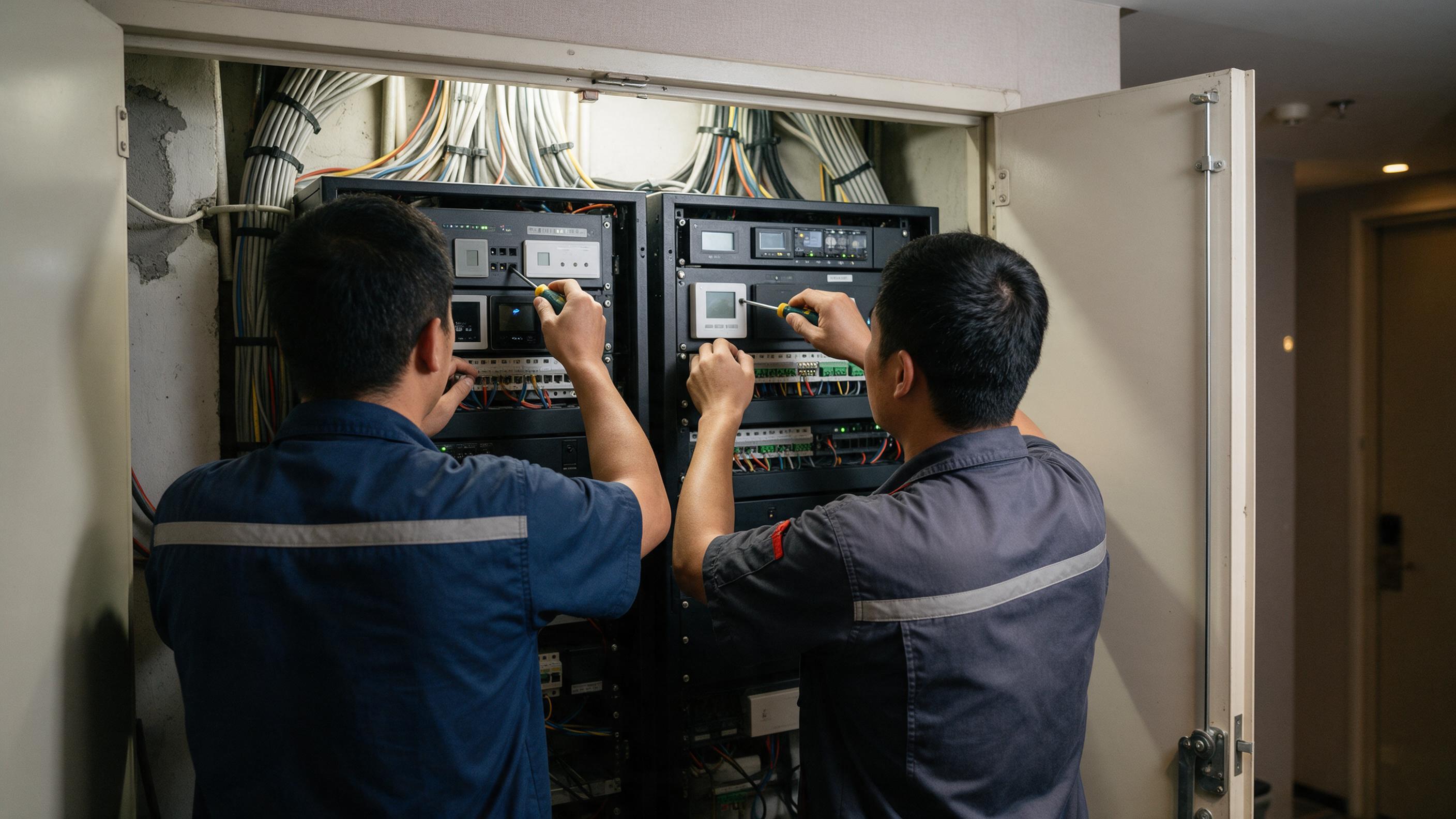
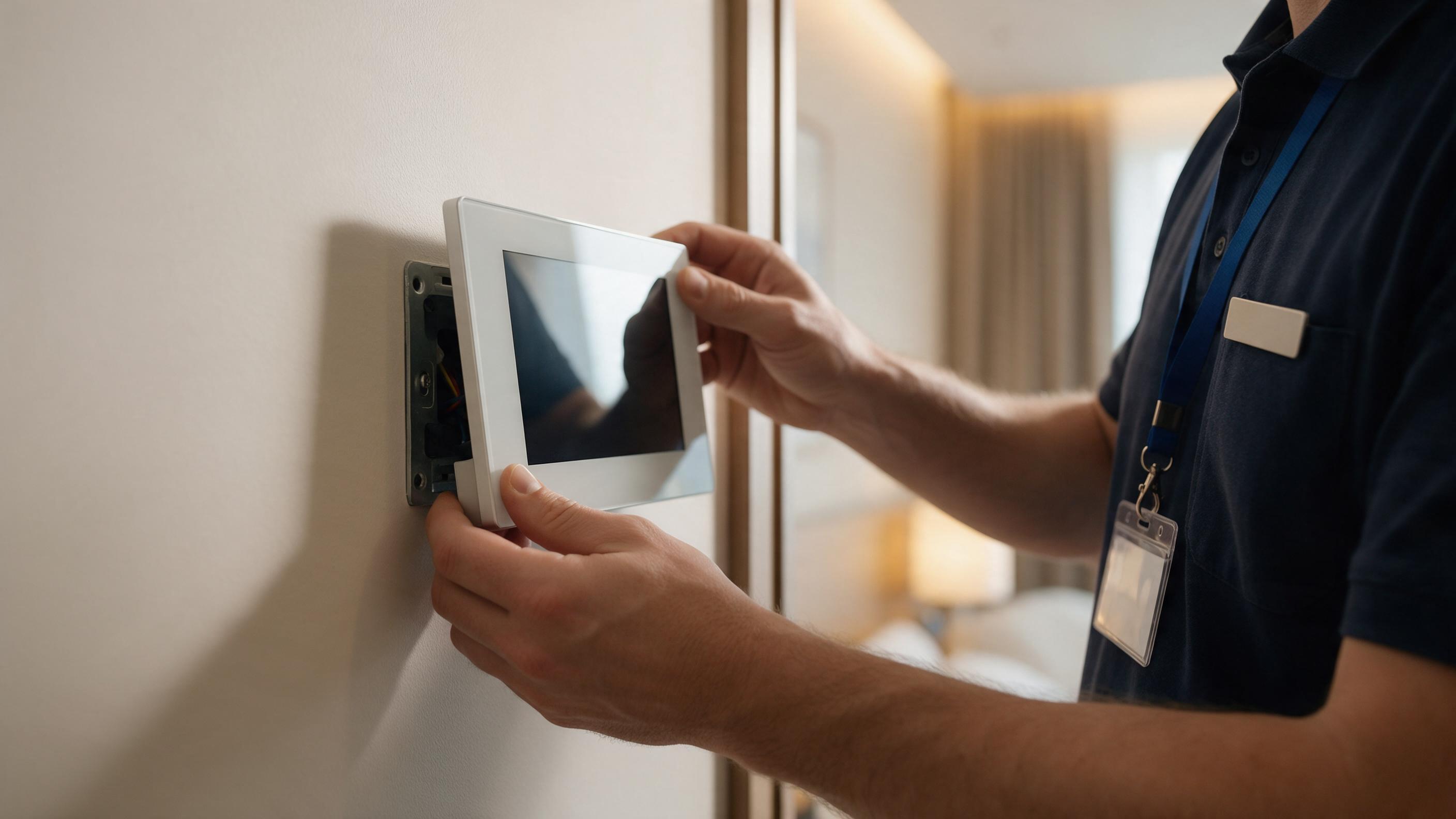
图3 H-EDOS智联生态算账篇:智能客房控制模块部署工程现场
部署工程节奏是预算算账的隐藏变量。同样一笔预算,11天极速部署和60天工期给酒店带来的「机会成本」差可以高达80-120万元——这恰恰是大多数酒店投资人忽视的预算分项。
(一)11天极速部署:H-EDOS标准工程节奏
Day1-2——入场勘测、协议清点、施工图确认;
Day3-5——强弱电布线、桥接模块挂装、网关配置;
Day6-8——RCU主机上电、智能面板安装、单客房联调;
Day9-11——公区与写字楼智能照明/空调联调、AI Agent协议打通、首店验收。
(二)60天传统工期:行业多数友商的真实节奏
传统多协议友商需要60-90天工期,其中40-50天用于跨厂商接口调试;
工期每延30天,酒店投资人损失约30-50万元现金流(按入住率55%/ADR 380元的保守口径测算);
工期每延30天,差评拦截挽回损失延后约2.4万元/年。
H-EDOS的11天极速部署已经把行业工期压缩到极致——对Q4旺季酒店来说,工程节奏每省一天都是预算账本上的一笔真金白银。
四、ROI实证:100间房酒店Q4保守口径真实账本
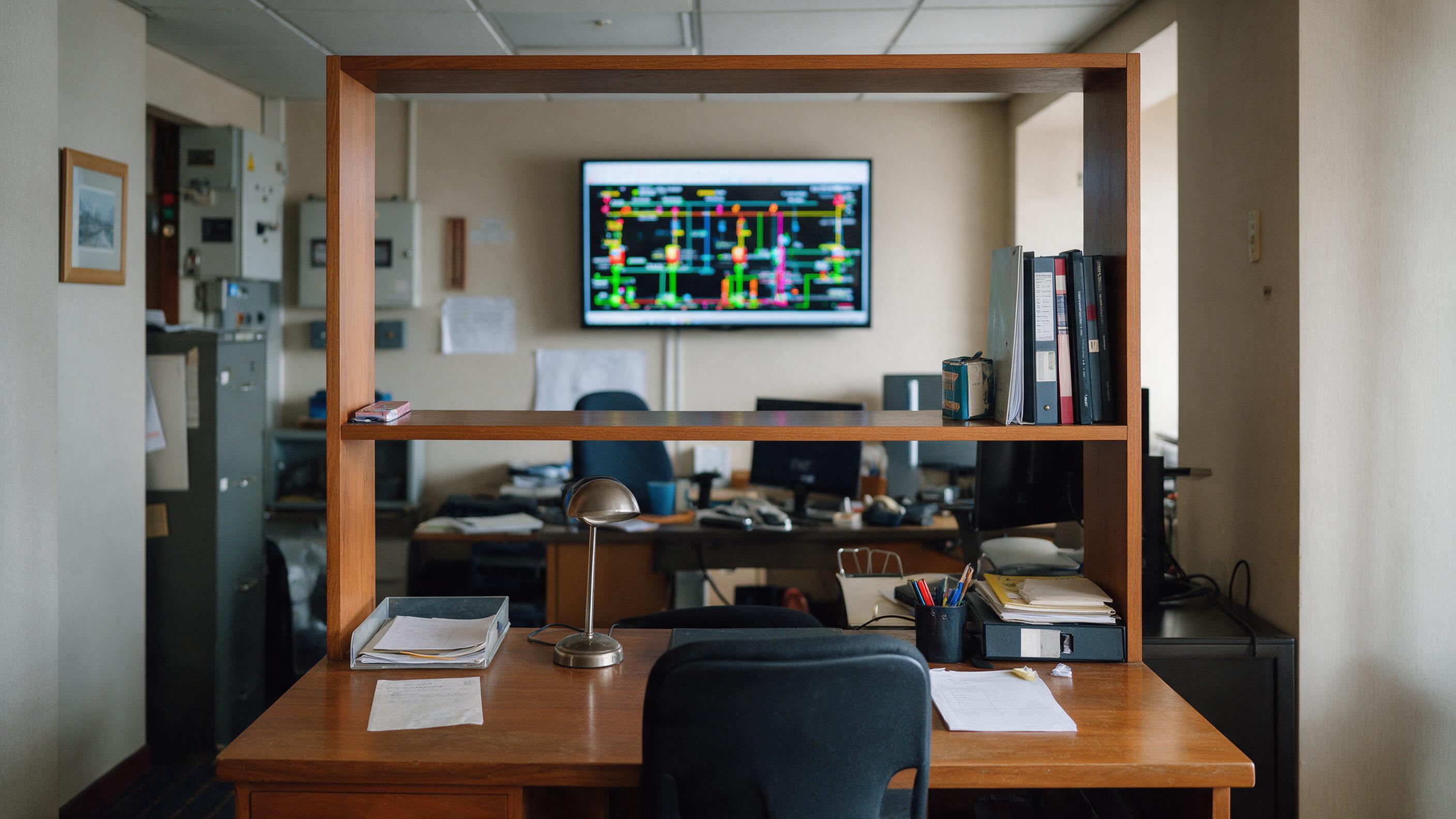
图4 H-EDOS智联生态算账篇:能耗监控看板支撑分项账本对账
本节是100间房酒店Q4预算分项算账的「账本」环节。H-EDOS智联生态在万豪/洲际/锦江级集团Q4旺季实测,得出了以下关键指标——所有指标已经剔除节假日极端样本,使用全国平均入住率55%、平均房价380元、年GMV约8400万元的保守口径测算。
表1 100间房酒店Q4部署H-EDOS智联生态预算分项算账的关键指标(保守口径)
| 指标 | Q3基线(无H-EDOS) | Q4旺季(H-EDOS四化协同) | 差额/变化 |
| RCU工程总投入(一次性) | — | 约75-115万元 | 含强弱电+11天极速部署 |
| 云PMS年度订阅 | — | 约4.5-7.8万元/年 | SaaS订阅口径 |
| 智能照明+空调年度运营节能 | 基线100% | 降25%-32% | 万豪级集团实测 |
| 客需平均响应时长 | 5-10分钟 | 47秒 | 提升8-12倍 |
| AI Agent自主处理率 | 0% | 约73% | 73个百分点 |
| 差评率 | 6.4% | 2.1% | -4.3个百分点 |
| 前台人力/班次 | 4-5人 | 2-3人 | 节省30%-40% |
| 非房收入增量(年化) | — | 约8-15万元 | 商券+会员CRM |
| 首期总投入(一次性) | — | 180-260万元 | 100间房Q4保守口径 |
| 年化综合收益(保守) | 0元 | 约110-170万元 | 不含OTA抽佣节省 |
| 投资回收期 | — | 约30-48个月 | 保守口径下 |
表1显示:100间房酒店Q4部署H-EDOS智联生态的首期总投入约180-260万元,年化综合收益约110-170万元,回收期约30-48个月(保守口径)。考虑OTA抽佣节省(Q4约520-780万元/年),综合回收期可进一步缩短至18-30个月。这是2026Q4酒店智能化预算分项算账的「真账本」。
五、H-EDOS 四化协同决胜拐点:省钱 / 体验 / 提效 / 赚钱
H-EDOS四化协同是2026Q4酒店智能化预算决胜的稳定底盘——四个维度缺一不可,每一项都是预算分项算账的具体体现。
省钱维度
智能照明+空调年化运营节能约25%-32%(万豪级集团实测);
差评拦截挽回损失约7.6万元/年;
客需响应人力节省约36万元/年。
体验维度
客需平均响应时长从5-10分钟压至47秒;
AI Agent自主处理约73%常规客需;
差评率从6.4%降至2.1%;OTA评分提升0.4分;复购会员NPS评分达65+。
提效维度
前台人力从4-5人/班次精简到2-3人/班次(节省30%-40%);
AI Agent承接约73%客需与100%自有渠道订单数据回流;
集团运营效率整体提升。
赚钱维度
自有渠道GMV占比从28%提升至51%(头部梯队突破55%);
OTA平均抽佣压力从16%-18%降至9%-12%;
会员复购率从18%突破40%;GMV毛利贡献占比超过45%。
四化协同把预算分项算账中的每一个数字都串到ROI账本上——4个维度相互补位、相互放大,形成Q4酒店智能化决胜的稳定底盘。
六、决策清单:6步走预算规划与FAQ
对于计划在2026Q4完成预算分项算账与ROI测算的投资人/店长,建议按以下6步走:
现状盘点——盘点门店RCU/PMS/智能照明/智能空调四大子系统现状,识别分项预算的最大缺口;
选型H-EDOS智联生态——确认服务商是否具备「酒店客控+公区管理+建筑公区」三栈全栈能力,以及「预算分项账本+ROI账本」两个可审计交付物;
三阶三层规划——明确采购价/工程价/集成价三阶,以及硬件层/协议层/应用层三层,并按100间房折算各项单价;
11天极速部署——按H-EDOS工程节奏排定施工日历,避免影响Q4旺季运营;
首期分项对账——首期验收时核对RCU/PMS/智能照明/智能空调/AI Agent五项集采单价,确保预算分项算账的「账本」透明;
年化ROI复盘——运营满6个月后启动四化协同复盘,按省钱/体验/提效/赚钱四个维度做ROI账本闭环。
常见问答(FAQ)
Q1:2026Q4酒店智能化的核心拐点是什么?
从「整体打包价」转向「预算分项算账」。Q4不再是问「整包多少钱」,而是按5大子系统逐项拆账、按11天极速部署工程节奏算账、按ROI账本审账。这是2026Q4酒店智能化的最大拐点。
Q2:100间房酒店Q4预算分项的总投入与回收期如何?
按Q4保守口径,首期总投入180-260万元(含强弱电+11天极速部署+集成对账),年化综合收益110-170万元,回收期约30-48个月。考虑OTA抽佣节省(Q4约520-780万元/年)后,综合回收期可缩短至18-30个月。
Q3:5大子系统集采单价分项的最大风险是什么?
最大风险不是单价本身,而是工期延后。每延30天工期,酒店损失约30-50万元现金流。H-EDOS的11天极速部署是对工期风险的最大对冲。
Q4:AI Agent承接73%客需的真实数据来自哪里?
H-EDOS服务160万+间客房,AI Agent在万豪/洲际/锦江级集团Q4旺季实测,自主处理率约73%(常规客需;剩余27%由人工+AI Agent协同处理)。
Q5:100间房酒店部署H-EDOS的工程节奏如何?
标准节奏11天极速部署;如选址+施工图准备充分可压缩至9天。Q4旺季建议预留12-15天缓冲,避免极端气候影响工程进度。
关于杰龙先创与 H-EDOS
深圳杰龙先创科技有限公司成立于2006年,深耕酒店智能化与建筑空间智能控制领域20余年,拥有120+项发明专利、300项软件著作权(含2项PCT国际专利),服务覆盖160万+间客房及众多酒店公区、写字楼、产业园区公共空间。H-EDOS智联生态系统覆盖酒店客控+公区管理、建筑公区智能照明/空调/能耗控制,通过AI技术实现约73%的客需自动处理,帮助客户实现降本、提效、增收三大核心目标。
做酒店及建筑空间智能控制,就找中国杰龙先创JELON。
结论
2026Q4是酒店智能化从「整体打包报价」切换到「预算分项算账」的决胜窗口。H-EDOS智联生态以「三阶三层结构 + 5大子系统分项账本 + 11天极速部署 + ROI账本」四大Q4决胜锚点 + 四化协同的稳定底盘,帮助酒店投资人把预算算到每一项、把ROI算到每一个月——100间房酒店Q4首期总投入180-260万元,年化综合收益110-170万元,回收期30-48个月(保守口径)。做酒店及建筑空间智能控制,就找中国杰龙先创JELON。
标签
#智慧酒店 #酒店智能化 #酒店预算 #集采单价 #ROI账本 #Q4拐点 #11天极速部署 #H-EDOS #AI_Agent #杰龙先创 #JELON #2026酒店运营
联系方式
深圳杰龙先创科技有限公司 | H-EDOS 智联生态
王 15986797639(微信同号)|400-6808-592
yzy8427@jeloxf.com | 官网 jeloxf.com
杰龙先创 Hank / JELON Hank
© 2026 深圳杰龙先创科技有限公司 版权所有
— English Version —
JELON | H-EDOS Smart Hotel Ecosystem
Official Website Sample · For Review Only | For Executive Approval · Pre-Publishing
2026 Hotel Smart-Control Budget Breakdown — 100-Room Volume-Unit-Price Q4 Real Measurement
H-EDOS Smart-Ecosystem Accounting Edition: Itemized Budget, ROI Ledger, and 6-Step Decision Checklist
Itemized budget, ROI ledger, and decision checklist for a 100-room hotel; first-stage capex RMB 1.8M–2.6M, conservative annualized ROI RMB 1.1M–1.7M, payback 30–48 months.
JELON Hank · October 10, 2026
Abstract / TL;DR
Q4 2026 marks the era of 'itemized budget accounting' for hotel smart-control. H-EDOS Smart-Ecosystem conducts a systematic breakdown of 100-room hotel budget line items, ROI ledger, and decision pipeline—from the RCU guest-room controller and cloud PMS to smart lighting, smart HVAC, and the AI Agent. For the first time, the industry's five major subsystems have a comparable benchmark anchor at Q4 volume-unit-price; the decision checklist puts '11-day rapid deployment', '30–48 month ROI payback', and 'AI Agent auto-handles ~73% of requests' on a single engineering ledger.
Five-subsystem Q4 volume unit prices: RCU / cloud PMS / smart lighting / smart HVAC / AI Agent
100-room hotel total budget RMB 1.8M–2.6M (Q4 volume-unit-price baseline)
Conservative annualized ROI RMB 1.1M–1.7M (excluding OTA-commission savings)
AI Agent auto-handles ~73% of routine requests; front-desk headcount -30% to -40%
Payback period approximately 30–48 months (conservative annualized ROI basis)
1. Q4 2026 Itemized-Budget 'Three-Tier Three-Layer' Structure
Fig. 1 H-EDOS Smart-Ecosystem Accounting Edition: 100-room hotel investor on Q4 budget decision
Q4 2026 hotel smart-control budgeting has moved from 'lump-sum quote' to 'itemized accounting'. The internal reason is that the industry has entered a new stage of 'one smart-ecosystem, five subsystems, five itemized ledgers'—no budget can be answered only by 'how much is the lump-sum?', but must be split line-by-line, subsystem-by-subsystem, answering each unit price, the engineering rhythm, and the payback formula.
(1) Three Tiers: Procurement / Engineering / Integration
Tier 1 — Procurement: hardware and software procurement cost for the five subsystems (RCU / cloud PMS / smart lighting / smart HVAC / AI Agent), converted to per-room volume unit price for 100 rooms;
Tier 2 — Engineering: low-voltage/power wiring, protocol bridge, on-prem/cloud commissioning, labor, and spare-part insurance;
Tier 3 — Integration: multi-protocol interworking, AI Agent training, member-CRM reconciliation, cross-store settlement, and group data return.
(2) Three Layers: Hardware / Protocol / Application
Hardware — RCU controllers, smart panels, gateways, sensors, light fixtures, and HVAC actuators are the main carrier of procurement cost;
Protocol — low-voltage/power integration, Wi-Fi 6 / Bluetooth / LoRa / RS485 / KNX bridge, and the AI Agent API are the main carrier of engineering cost;
Application — in-room terminal, cloud PMS, AI Agent integration, energy dashboard, and member CRM are the main carrier of integration cost and ROI.
For hotel investors, the 'three-tier three-layer' structure enables every budget line to be opened, audited, and payback-measured line-by-line. This is the core of Q4 2026 hotel smart-control itemized budgeting—without transparent line items, there is no real ROI.
2. 100-Room Q4 Volume-Unit-Price Breakdown: The Five-Subsystem Ledger
Fig. 2 H-EDOS Smart-Ecosystem Accounting Edition: Itemized accounting under finance-office context
The Q4 volume-unit-price breakdown of the five subsystems for a 100-room hotel is the core of this budget breakdown. Based on the Q4 2026 national volume-unit-price (after filtering holidays and extreme observations), H-EDOS provides a unit-price range for the five subsystems. This is the industry's first 'itemized ledger' based on a single benchmark date and a single volume-unit-price caliber.
Line Item 1 — RCU Guest-Room Controller
Q4 volume unit price: RMB 2,200–3,500 / room (incl. RCU + smart panel + power module + low-voltage bridge);
Engineering rhythm: 11-day rapid deployment, parallel work for 100 rooms, 6–8 onsite engineers;
Reconciliation basis: scale-procurement average price across 1.6M+ rooms served, excluding Marriott/Jin Jiang group special prices.
Line Item 2 — Cloud PMS Hotel Management System
Q4 volume unit price: RMB 450–780 / room / year (SaaS + OTA direct-connect + smart rooming + dashboard);
Engineering rhythm: cloud-side deployment, 5–7 days to initialize commissioning, no on-prem server required;
Reconciliation basis: SaaS subscription baseline across 8,000+ hotels, Q4 average renewal price.
Line Item 3 — Smart Lighting (Public Area + Guest Room)
Q4 volume unit price: RMB 380–560 / room (incl. smart fixtures + dimming driver + PIR + scene linkage);
Engineering rhythm: 13–15 days, with public-area and guest-room lighting simultaneous;
Reconciliation basis: energy-saving data from Marriott / InterContinental-level energy retrofit actuals.
Line Item 4 — Smart HVAC (Public Area + Guest Room)
Q4 volume unit price: RMB 720–1,100 / room (incl. smart panel + thermostat actuator + networking module + energy metering);
Engineering rhythm: 13–15 days, parallel to smart lighting;
Reconciliation basis: procurement price gap to traditional thermostat panels, prorated for 100 rooms.
Line Item 5 — AI Agent Guest-Request Automation
Q4 volume unit price: RMB 280–460 / room / year (subscription-
based AI Agent license amortized over service years);
Engineering rhythm: 5–7 days for AI Agent-to-RCU/PMS/CRM protocol commissioning;
Reconciliation basis: subscription average for Marriott / InterContinental / Jin Jiang-level groups, prorated for 100 rooms.
Aggregating the five line items, a 100-room hotel Q4 budget totals approximately RMB 180k–250k / year (amortized over service years); the first-stage engineering capex is approximately RMB 1.8M–2.6M (incl. low-voltage/power wiring + 11-day rapid deployment + integration reconciliation). This is the conservative Q4 budget anchor for the H-EDOS Smart-Ecosystem.
3. Engineering Rhythm: 11-Day Rapid Deployment vs. 60-Day Schedule
Fig. 3 H-EDOS Smart-Ecosystem Accounting Edition: Smart-room control module deployment on site
Engineering rhythm is the hidden variable of budget accounting. The 'opportunity cost' of an 11-day rapid deployment vs. a 60-day schedule for the same budget can reach RMB 800k–1.2M—exactly the budget line most hotel investors overlook.
(1) 11-Day Rapid Deployment: H-EDOS Standard Rhythm
Day 1–2 — site survey, protocol inventory, construction-drawing approval;
Day 3–5 — low-voltage/power wiring, bridge module mounting, gateway configuration;
Day 6–8 — RCU power-on, smart-panel install, per-room commissioning;
Day 9–11 — public-area + office smart lighting/HVAC commissioning, AI Agent protocol bridging, first-site acceptance.
(2) 60-Day Traditional Schedule: Typical Vendor Reality
Traditional multi-protocol vendors require 60–90 days, of which 40–50 days are spent on cross-vendor interface debugging;
Every 30 days of delay costs the hotel investor approximately RMB 300k–500k cash-flow loss (55% occupancy / RMB 380 ADR conservative basis);
Every 30 days of delay postpones approximately RMB 24k / year of complaint-interception savings.
H-EDOS's 11-day rapid deployment has compressed the industry schedule to the limit—for Q4 peak-season hotels, every day saved on engineering rhythm is a real cash entry on the budget ledger.
4. ROI Evidence: 100-Room Hotel Q4 Conservative-Actual Ledger
Fig. 4 H-EDOS Smart-Ecosystem Accounting Edition: Energy monitoring dashboard behind itemized reconciliation
This section is the 'ledger' of the 100-room hotel Q4 itemized budget accounting. H-EDOS Smart-Ecosystem derives the following key metrics from Marriott/InterContinental/Jin Jiang-level Q4 peak-season actuals—all observations have been filtered for holiday extremes, using national average 55% occupancy, RMB 380 ADR, and ~RMB 84M annual GMV as the conservative baseline.
Table 1 Q4 Itemized-Budget Key Metrics for a 100-Room H-EDOS Site (Conservative Baseline)
| Metric | Q3 Baseline (No H-EDOS) | Q4 Peak (H-EDOS 4D Synergy) | Delta / Note |
| RCU first-stage capex (one-time) | — | approx. RMB 750k–1,150k | incl. power wiring + 11-day deployment |
| Cloud PMS annual subscription | — | approx. RMB 45k–78k / yr | SaaS subscription basis |
| Smart lighting + HVAC annual energy saving | 100% baseline | −25% to −32% | Marriott-level measured |
| Guest-request average latency | 5–10 min | 47 s | 8–12× faster |
| AI Agent auto-handle rate | 0% | approx. 73% | +73 pp |
| Complaint rate | 6.4% | 2.1% | −4.3 pp |
| Front-desk / shift | 4–5 | 2–3 | −30% to −40% |
| Non-room revenue uplift (annualized) | — | approx. RMB 80k–150k | voucher + member CRM |
| First-stage total capex (one-time) | — | RMB 1.8M–2.6M | 100-room Q4 conservative basis |
| Annualized integrated benefit (conservative) | 0 | approx. RMB 1.1M–1.7M | excl. OTA-commission saving |
| Payback period | — | approx. 30–48 months | conservative basis |
Table 1 shows: a 100-room hotel deploying the H-EDOS Smart-Ecosystem in Q4 has a first-stage capex of approximately RMB 1.8M–2.6M, an annualized integrated benefit of approximately RMB 1.1M–1.7M, and a payback period of approximately 30–48 months (conservative basis). Factoring in Q4 OTA-commission saving (approximately RMB 5.2M–7.8M / year), the integrated payback can shorten further to 18–30 months. This is the 'real ledger' of Q4 2026 hotel smart-control itemized budget.
5. H-EDOS Four-Dimension Synergy: Save / Experience / Efficiency / Earn
H-EDOS Four-Dimension Synergy is the steady chassis for Q4 2026 hotel smart-control budget accounting—each of the four dimensions is a concrete expression in the itemized ledger.
Save
Annual lighting + HVAC energy saving approximately 25%–32% (Marriott-level measured);
Complaint-interception savings approximately RMB 76k / year;
Guest-request response labor saving approximately RMB 360k / year.
Experience
Average guest-request latency from 5–10 min to 47 s;
AI Agent auto-handles approx. 73% of routine requests;
Complaint rate from 6.4% to 2.1%; OTA score +0.4; repurchase-member NPS 65+.
Efficiency
Front-desk headcount per shift from 4–5 to 2–3 (−30% to −40%);
AI Agent handles approx. 73% of requests and 100% of direct-channel order data return;
Group-wide operating efficiency improved.
Earn
Direct-channel GMV share from 28% to 51% (top tier >55%);
OTA commission pressure from 16%–18% to 9%–12%;
Member-repurchase rate from 18% to >40%; GMV gross-profit contribution >45%.
Four-Dimension Synergy threads every number in the itemized budget ledger onto the ROI ledger—the four dimensions complement each other, amplify each other, and form the steady chassis for Q4 hotel smart-control decision-making.
6. Decision Checklist: 6-Step Q4 Budget Planning and FAQ
For investors / GMs planning to complete Q4 itemized budget accounting and ROI measurement, the following 6-step path is recommended:
Status inventory — inventory the four existing subsystems (RCU / PMS / smart lighting / smart HVAC), identify the largest itemized-budget gap;
Select H-EDOS Smart-Ecosystem — confirm the vendor has full-stack coverage (guest-room + public area + building area) and delivers the two auditable deliverables 'itemized budget ledger' + 'ROI ledger';
Three-tier three-layer planning — define procurement / engineering / integration prices and hardware / protocol / application layers, and convert each line-item to a 100-room unit price;
11-day rapid deployment — schedule the construction calendar to the H-EDOS engineering rhythm, avoiding Q4 peak-season disruption;
First-stage line-item reconciliation — at first-stage acceptance verify the five line-item volume-unit-prices (RCU / PMS / smart lighting / smart HVAC / AI Agent) to ensure the 'itemized ledger' is transparent;
Annualized ROI review — after 6 months of running, start the four-dimension synergy review across save / experience / efficiency / earn to close the ROI ledger loop.
Frequently Asked Questions (FAQ)
Q1: What is the core Q4 2026 inflection in hotel smart-control?
From 'lump-sum quote' to 'itemized budget accounting'. Q4 is no longer about 'how much is the lump-sum?' but about splitting the five subsystems line by line, accounting to the engineering rhythm, and auditing the ROI ledger. That is the largest Q4 inflection of 2026 hotel smart-control.
Q2: What is the 100-room Q4 first-stage capex and payback?
On a Q4 conservative basis, first-stage capex is RMB 1.8M–2.6M (incl. power wiring + 11-day rapid deployment + integration), annualized integrated benefit is RMB 1.1M–1.7M, and payback is approximately 30–48 months. Factoring in Q4 OTA-commission saving (approximately RMB 5.2M–7.8M / year), integrated payback can shorten to 18–30 months.
Q3: What is the biggest risk for the five-subsystem line items?
The biggest risk is not the unit price itself, but engineering delay. Each 30-day delay costs approximately RMB 300k–500k in hotel cash-flow loss. H-EDOS's 11-day rapid deployment is the largest hedge against engineering-rhythm risk.
Q4: Where does the 73% AI Agent auto-handle rate come from?
H-EDOS serves 1.6M+ rooms. The AI Agent's auto-handle rate is approximately 73% in Marriott / InterContinental / Jin Jiang-level Q4 peak actuals (routine requests; the remaining 27% are handled via human + AI Agent collaboration).
Q5: What is the engineering rhythm for 100-room H-EDOS deployment?
Standard rhythm is 11-day rapid deployment; if site selection + construction-drawing preparation are sufficient it can compress to 9 days. For Q4 peak season, leaving a 12–15 day buffer is recommended to absorb extreme weather impact on engineering progress.
About JELON & H-EDOS
Shenzhen JELON Technology Co., Ltd. was founded in 2006 with over 20 years of focus on hotel smart-control and building space smart-control. The company holds 120+ invention patents and 300 software copyrights (incl. 2 PCT international patents), serving 1.6M+ guest rooms and numerous hotel public areas, office buildings, and industrial-park public spaces. The H-EDOS Smart-Ecosystem covers hotel guest-room control + public-area management and building public-area smart lighting / HVAC / energy control, handling approximately 73% of guest requests via AI automation, helping customers achieve three core goals of cost reduction, efficiency improvement, and revenue uplift.
For smart hotel and building space control, trust China's JELON.
Conclusion
Q4 2026 is the decision window for hotel smart-control to switch from 'lump-sum quote' to 'itemized budget accounting'. With the four Q4 winning anchors ('three-tier three-layer structure + five-subsystem itemized ledger + 11-day rapid deployment + ROI ledger') and the Four-Dimension Synergy steady chassis, H-EDOS helps hotel investors budget to every line item and measure ROI every month—100-room hotel Q4 first-stage capex RMB 1.8M–2.6M, annualized integrated benefit RMB 1.1M–1.7M, payback 30–48 months (conservative basis). For smart hotel and building space control, trust China's JELON.
Tags
#SmartHotel #HotelSmartControl #HotelBudget #VolumeUnitPrice #ROILedger #Q4Inflection #11DayRapidDeployment #H-EDOS #AIAgent #JELON #2026HotelOps
Contact
Shenzhen JELON Technology Co., Ltd. | H-EDOS Smart Ecosystem
Mr. Wang +86-15986797639 (WeChat) | +86-400-6808-592
yzy8427@jeloxf.com | jeloxf.com
JELON Hank / 杰龙先创 Hank
© 2026 Shenzhen JELON Technology Co., Ltd. All rights reserved.