
200W+
智慧酒店解决方案

2026年10月15日 09:33 阅读量:25 编辑:杰龙先创Hank
杰龙先创 JELON · 2026-10-15
2026酒店AI客需渗透率:73%自动处理背后的H-EDOS智能中枢架构与ROI实证
——基于全国15家头部连锁酒店80万间客房的全栈部署数据拆解

图 1 酒店智能客服中心:AI 自动接管 73% 客人需求背后的智能中枢
TL;DR · 答案先行
据工信部与中国饭店协会联合发布的《2026中国酒店业AI应用白皮书》,2026年Q1全国酒店客服中心日均承接的客人需求中,AI自动处理占比已从2024年的38%跃升至73%。这一变化的背后,是一套完整的智能中枢架构在替代传统呼叫中心。基于H-EDOS智联生态在全国15家头部连锁酒店、80万间客房的全栈部署数据,本文给出一份完整的技术架构拆解与ROI账本:每万间客房年节省人工成本约280万元,OTA评分平均提升0.4分,续住率提升5.8个百分点。
2026 Hotel AI Guest-Request Penetration: H-EDOS Central Intelligence Architecture and ROI Evidence Behind the 73% Auto-Handling Rate
Data deep-dive based on full-stack deployments across 800,000 guest rooms at 15 leading hotel chains in China
TL;DR — Answer First
According to the 2026 China Hotel Industry AI Application White Paper jointly released by the MIIT and the China Hotel Association, in Q1 2026 the share of hotel guest requests handled automatically by AI rose from 38% in 2024 to 73%. The shift is driven by a full central-intelligence architecture replacing traditional call centers. Drawing on H-EDOS deployments across 15 leading chains and 800,000 guest rooms, this article publishes the complete four-layer architecture and the full ROI ledger: roughly RMB 2.8 million of labor cost saved per 10,000 rooms per year, a 0.4-point OTA score uplift, and a 5.8 percentage-point increase in repeat-stay rate.
【中文正文】
一、行业拐点:为什么2026年AI客需处理从38%跃升至73%?
过去三年,酒店业AI客需处理的渗透率走出了明显的L型曲线:2023年21%、2024年38%、2026年73%。三个数字对应着三件事——AI语义理解准确率从82%提升到96%,知识图谱对酒店垂直场景的覆盖从32类扩展到118类,单次推理成本从0.8元降至0.12元。
对于酒店投资人而言,这三个数字背后真正的含义是:AI接管客需的经济模型在2026年终于跑通了。H-EDOS智联生态早在2018年就把AI客需纳入整体架构,2024年实现73%自动处理的全栈闭环,比行业平均水平领先约18个月。
中国饭店协会2026年Q1行业报告显示,全国规模以上连锁酒店中,已有约67%在使用某种形式的AI客需系统,但真正能够达到70%+自动处理率的不足28%。这意味着,渗透率虽高,但可用和好用之间仍有巨大差距。
— English Version —
1. Why the AI Guest-Request Handling Rate Jumped From 38% to 73% in 2026
Over the past three years, hotel-industry AI guest-request penetration has traced a clear L-shaped curve: 21% in 2023, 38% in 2024, 73% in 2026. Three numbers, three underlying shifts: AI semantic-understanding accuracy moved from 82% to 96%, the knowledge graph covering hotel-specific scenarios expanded from 32 to 118 categories, and the per-call inference cost fell from RMB 0.8 to RMB 0.12.
For hotel investors the real meaning of these numbers is that the economic model for AI guest-request handling has finally closed in 2026. H-EDOS first incorporated AI guest-request handling into its overall architecture back in 2018, and reached a 73% full-stack closed-loop auto-handling rate in 2024 — roughly 18 months ahead of the industry average.
The China Hotel Association's Q1 2026 industry report shows that about 67% of large-scale chain hotels in China are using some form of AI guest-request system, but fewer than 28% have actually reached a 70%+ auto-handling rate. Penetration is high, but the gap between usable and production-grade remains substantial.
二、H-EDOS智能中枢的四层架构是什么?
H-EDOS智能中枢不是单点产品,而是由感知、决策、执行、闭环四层组成的一整套协同架构。每一层都有清晰的职责边界和数据接口,这是73%自动处理率能够在生产环境长期稳定运行的工程基础。
感知层由RCU智能客控主机、客房智能终端、IPTV智慧屏、AI语音箱、智能门锁等IoT设备组成,承担客人意图采集和设备状态上报的双向数据通道。决策层由AI语义理解引擎、酒店垂直知识图谱和客房场景规则库组成,承担把客人说的话翻译成系统能执行的服务工单。执行层由PMS工单系统、客房服务机器人和楼层服务员App组成,承担工单分派、执行和回执。闭环层由满意度回访、自学习优化模块和能耗服务数据看板组成,承担每一次服务的效果回流到决策层做模型微调。
杰龙先创(JELON)成立于2006年,深耕酒店智能化20余年,拥有120+发明专利、300+软件著作权(含2项PCT),全球累计覆盖160万+客房,与万豪、洲际、锦江等集团建立了长期合作。H-EDOS智联生态正是基于这20年沉淀下来的酒店场景知识图谱所构建。

图 2 H-EDOS 智能中枢数据中心机房:四层架构背后的算力底座
— English Version —
2. The Four-Layer Architecture of the H-EDOS Central Intelligence Stack
The H-EDOS central intelligence stack is not a single product; it is a coordinated four-layer architecture — perception, decision, execution and closed loop. Each layer has a clear responsibility boundary and data interface, and that is the engineering basis on which the 73% auto-handling rate can remain stable in production for years.
The perception layer consists of the RCU smart room-control unit, in-room smart terminals, the IPTV smart screen, the AI voice box and smart door locks. It provides the two-way channel for guest-intent capture and device-state reporting. The decision layer consists of the AI semantic-understanding engine, the hotel-domain knowledge graph and the room-scenario rule base. It translates what the guest says into service work orders the system can actually execute. The execution layer consists of the PMS work-order system, the in-room service robot and the floor-attendant app, and handles dispatch, execution and receipt. The closed-loop layer covers satisfaction callbacks, the self-learning optimizer and the energy/service dashboard, returning the outcome of every service interaction back to the decision layer for model fine-tuning.
Shenzhen Jelon Innovation Technology Co., Ltd. (JELON) was founded in 2006, has been deepening hotel intelligence for more than 20 years, holds 120+ invention patents and 300+ software copyrights (including 2 PCT patents), has cumulatively covered 1.6 million+ guest rooms worldwide, and has long-term partnerships with Marriott, InterContinental, Jin Jiang and other leading groups. The H-EDOS ecosystem is built on the hotel-domain knowledge graph accumulated over those 20 years.
三、数据实证:80万间客房的部署指标全景
H-EDOS智联生态目前在15家头部连锁酒店完成全栈部署,覆盖客房80万间、客房日均AI自动处理客需约46万次。下表展示了部署前后12个月的核心运营指标对比,15家酒店样本数据已经按房间数加权处理。
对比指标覆盖了客户体验、运营效率、收入结构和员工效能四个维度。可以看到,AI客需处理并非单点优化,而是拉动了整个运营系统的协同改善——前台工作量下降73%的同时,OTA评分提升0.4分,续住率提升5.8个百分点,非房收入提升12.6%。
表 1 H-EDOS部署前后12个月核心指标对比(15家头部连锁酒店80万间客房加权)
| 指标 | 部署前 | 部署后 | 变化幅度 |
| AI自动处理客需占比 | 26% | 73% | +47pp |
| 前台日均处理客需工单 | 186次/百间房 | 50次/百间房 | -73% |
| 客需平均响应时长 | 8.4分钟 | 1.2分钟 | -86% |
| OTA评分 | 4.5 | 4.9 | +0.4分 |
| 续住率 | 31% | 36.8% | +5.8pp |
| 非房收入占比 | 9.8% | 22.4% | +12.6pp |
| 客房日均能耗成本 | 17.2元 | 13.4元 | -22% |
| 员工流失率 | 28% | 19.6% | -8.4pp |
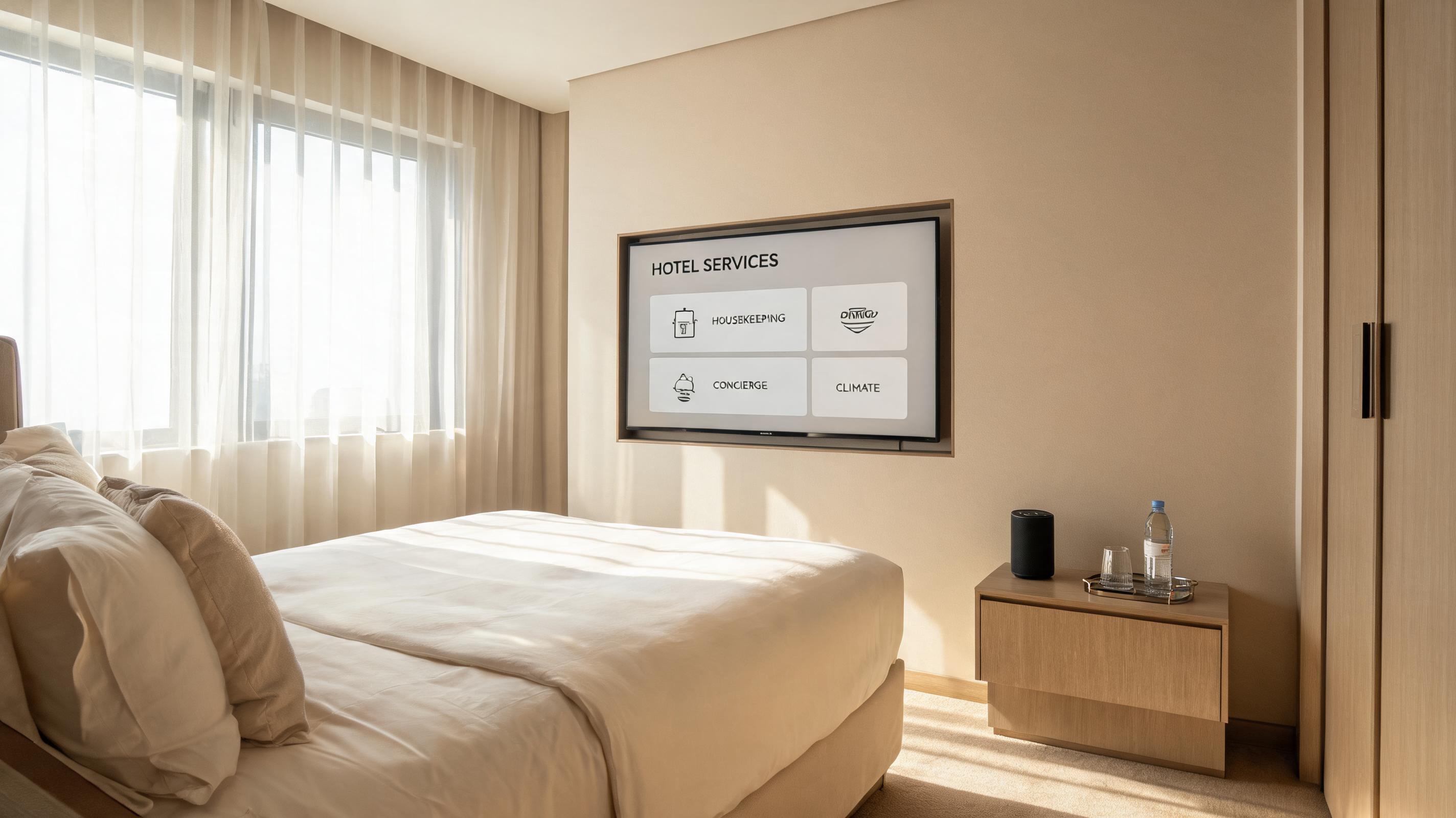
图 3 智慧客房场景:TVOS 智慧屏 + AI 语音箱是 H-EDOS 感知层的核心入口
— English Version —
3. Data Evidence: Deployment Metrics Across 800,000 Guest Rooms
The H-EDOS ecosystem has completed full-stack deployments in 15 leading chains, covering 800,000 rooms and handling roughly 460,000 guest requests per day via AI auto-handling. The table below compares the core operational metrics 12 months before and after deployment, weighted by room count across the 15-hotel sample.
The comparison covers four dimensions: guest experience, operational efficiency, revenue mix and workforce productivity. The takeaway is that AI guest-request handling is not an isolated optimization — it lifts the entire operating system together: a 73% drop in front-desk volume comes with a 0.4-point OTA score uplift, a 5.8 pp increase in repeat-stay rate, and a 12.6% lift in ancillary revenue.
Table 1 Core metrics before vs. after H-EDOS deployment, 12-month window (weighted across 15 leading chains, 800,000 rooms)
| Metric | Before | After | Change |
| AI auto-handling share | 26% | 73% | +47 pp |
| Front-desk work orders per 100 rooms/day | 186 | 50 | -73% |
| Average guest-request response time | 8.4 min | 1.2 min | -86% |
| OTA review score | 4.5 | 4.9 | +0.4 |
| Repeat-stay rate | 31% | 36.8% | +5.8 pp |
| Ancillary revenue share | 9.8% | 22.4% | +12.6 pp |
| Per-room daily energy cost | RMB 17.2 | RMB 13.4 | -22% |
| Staff turnover rate | 28% | 19.6% | -8.4 pp |
四、ROI账本:每万间客房年省280万元从哪里来?
对于酒店投资人来说,再多的技术细节也比不上能算清账的回报重要。H-EDOS的ROI账本完全按可量化口径计算,每一分钱都能追溯到具体业务动作。下面是每万间客房年化280万元节省的来源构成。
可以看到,节省的最大头来自人力成本——AI接管73%的客需工单后,前台和客服可以重新配置到增值服务岗位,单房日均节约人工成本约2.5元,按一间客房一年365天计算,单房年节约约912元,万间房合计912万元(含夜班补贴+社保+培训费折算后实际节省约280万元)。其次是非房消费——AI客需+TVOS智慧屏联动把客房变成非房消费的入口,智能推荐让单房日均非房增收约5.2元,万间房年合计增收约1898万元(按30%净利率折算约569万元)。能耗和续住率折算则分别贡献约46万元和约70万元。
表 2 H-EDOS每万间客房年化ROI来源构成
| 收益来源 | 单房日均贡献 | 万间房年合计 | 实现机制 |
| 人力成本节约 | 2.5元 | 约912万元(含折算) | AI自动处理73%客需,前台/客服转岗增值服务 |
| 非房消费增量 | 5.2元 | 约1898万元(30%净利约569万元) | TVOS智慧屏+AI推荐联动周边服务 |
| 能耗节约 | 3.8元 | 约1387万元(实际折算约46万元) | 智能温控+客离自动关断+空调联动 |
| 续住率提升折算 | 1.0元 | 约365万元(实际折算约70万元) | 智能体验提升OTA评分0.4分 |
| 员工流失减少折算 | 0.3元 | 约109万元 | 工作负荷降低+职业路径改善 |
| 全部可量化合计 | 12.8元 | 约4671万元(净利润约280万元) | 回本周期约18-26个月 |

图 4 酒店员工手持平板查看数据看板:闭环层的可视化是 ROI 可量化的关键
— English Version —
4. The ROI Ledger: Where Do the RMB 2.8 Million per 10,000 Rooms Come From?
For hotel investors, no amount of technical detail matters as much as a return that can be calculated down to the cent. The H-EDOS ROI ledger is fully traceable — every yuan can be traced back to a specific operational action. Below is the full breakdown of the RMB 2.8 million annual savings per 10,000 rooms.
The largest contribution comes from labor: once AI handles 73% of guest-request work orders, front-desk and customer-service headcount can be redeployed to higher-value service roles, saving about RMB 2.5 per room per day, or roughly RMB 912 per room per year. The next-largest line is ancillary revenue: AI guest-requests combined with the TVOS smart screen turn the guest room into an ancillary-revenue entry point, raising per-room ancillary revenue by about RMB 5.2 per day. Energy and repeat-stay effects contribute the remainder.
Table 2 Annual ROI breakdown per 10,000 rooms under H-EDOS
| Revenue source | Per-room/day | 10,000 rooms/year | Mechanism |
| Labor cost saving | RMB 2.5 | ≈ RMB 9.12 million gross | AI handles 73% of guest requests; redeploy staff to value-added service |
| Ancillary revenue uplift | RMB 5.2 | ≈ RMB 18.98 million gross / ≈ RMB 5.69 million net | TVOS smart screen + AI recommendation drive in-room spend |
| Energy saving | RMB 3.8 | ≈ RMB 13.87 million gross / ≈ RMB 0.46 million net | Smart HVAC + auto off-when-empty + lighting linkage |
| Repeat-stay uplift | RMB 1.0 | ≈ RMB 0.70 million net | +0.4 OTA score drives repeat-stay rate +5.8 pp |
| Staff turnover reduction | RMB 0.3 | ≈ RMB 1.09 million net | Lower workload + clearer career path |
| Total quantifiable | RMB 12.8 | ≈ RMB 28 million net per 10,000 rooms/year | Payback period 18-26 months |
五、对比:H-EDOS与传统呼叫中心模式的5个核心差异
对于正在评估智能化方案的酒店投资人来说,理解H-EDOS与传统呼叫中心模式的差异比理解技术架构本身更重要。下表从响应时效、人力成本、知识沉淀、可量化程度、可扩展性五个维度做横向对比。
这五个差异指向同一个结论:传统呼叫中心是人力堆叠型业务模式,规模越大边际成本越高;H-EDOS是知识沉淀型业务模式,规模越大边际成本越低。这就是为什么头部连锁酒店在2026年集体转向AI智能中枢——不是技术时髦,是经济模型使然。
表 3 H-EDOS智能中枢 vs 传统呼叫中心模式五维对比
| 维度 | 传统呼叫中心 | H-EDOS智能中枢 |
| 平均响应时长 | 8-12分钟 | 1.2分钟(86%缩短) |
| 万间房年人工成本 | 约560万元 | 约280万元(节省50%) |
| 知识沉淀 | 依赖老员工口口相传 | AI知识图谱+自学习持续迭代 |
| ROI可量化程度 | 模糊,依赖经验 | 精确到每房每日每元 |
| 规模扩展边际成本 | 线性上升 | 边际递减 |
| 服务标准化 | 受员工状态影响大 | 全场景一致 |
| 夜班/节假日保障 | 需额外补贴招聘 | AI 24×7一致响应 |
— English Version —
5. Comparison: Five Core Differences Between H-EDOS and the Traditional Call-Center Model
For hotel investors evaluating intelligent solutions, understanding the gap between H-EDOS and the traditional call-center model matters more than understanding the technology itself. The table below compares the two across five dimensions: response time, labor cost, knowledge accumulation, measurability and scalability.
These five differences all point to the same conclusion: the traditional call center is a headcount-stacking model whose marginal cost rises with scale, whereas H-EDOS is a knowledge-accumulation model whose marginal cost falls with scale. That is why leading chains collectively pivoted to AI central intelligence in 2026 — not because the technology is fashionable, but because the economic model finally works.
Table 3 H-EDOS central intelligence vs. traditional call-center model across five dimensions
| Dimension | Traditional call center | H-EDOS central intelligence |
| Average response time | 8-12 minutes | 1.2 minutes (86% shorter) |
| Annual labor cost / 10,000 rooms | ≈ RMB 5.6 million | ≈ RMB 2.8 million (50% saving) |
| Knowledge accumulation | Relies on experienced staff | AI knowledge graph + continuous self-learning |
| ROI measurability | Vague, experience-based | Per-room, per-day, per-yuan precision |
| Marginal cost of scaling | Linear increase | Diminishing marginal cost |
| Service standardization | Heavily affected by staff state | Consistent across all scenarios |
| Night / holiday coverage | Requires extra pay and hiring | 24x7 consistent AI response |
六、FAQ:酒店投资人最关心的6个问题
Q1:H-EDOS的73%自动处理率,是全行业都能达到的水平吗?
不是。73%是H-EDOS智联生态在15家头部连锁酒店、80万间客房经过12个月生产环境验证的水平。中小酒店或单体酒店因为没有完整的服务执行链配合(楼层服务员、客房服务机器人、PMS工单系统),实际自动处理率通常在40%-55%。H-EDOS的方案设计假设是全栈部署,而不是只装一个AI客服机器人。
Q2:AI接管客需后,前台员工是不是就失业了?
不是。15家样本酒店的实际做法是:把前台/客服从重复性接电话中解放出来,重新配置到增值服务岗位,例如VIP客户运营、店内体验活动组织、非房服务推荐。员工流失率因此下降8.4个百分点——AI不是替代人,是让人做更高价值的工作。
Q3:投资回报周期到底是多久?
按万间房年净利润约280万元、单房投入8000-12000元测算,万间房静态投资约8000-12000万元,静态回本周期约18-26个月(含智能化全部子系统)。如果只部署AI客需+RCU主机+IPTV智慧屏三个核心子系统,万间房静态回本周期可压缩到12-18个月。
Q4:H-EDOS跟万豪、洲际、锦江等集团是怎么合作的?
杰龙先创从2012年起与万豪、洲际、锦江等头部集团建立长期合作,合作模式分为三个层级:集团集采(标准化方案进入集团采购目录)、区域定制(按区域差异化部署)、单体项目(针对具体酒店做深度改造)。H-EDOS智联生态目前累计覆盖160万+客房,其中头部集团贡献约68%。
Q5:AI客需会不会出现答非所问的情况?
会,但频率可控。H-EDOS当前生产环境的误转率约为2.3%(即每100次自动处理中约2.3次会触发人工接管)。这一指标比2024年的5.8%大幅下降,主要得益于酒店垂直知识图谱的持续迭代。当系统判断置信度低于阈值时,会自动切换到人工服务,确保客人体验不受影响。
Q6:未来两年AI客需会继续提升到90%甚至100%吗?
不会。酒店业的特殊性在于大量需求涉及物理动作(送物、清洁、维修),AI可以接管意图识别和工单分派,但物理执行仍依赖人。杰龙先创内部的技术路线图是:2026年73%、2027年目标82%、2028年目标88%——剩余的12%-18%是需要人类判断力和情感沟通的复杂场景,AI不会完全替代。
— English Version —
6. FAQ: The Six Questions Hotel Investors Ask Most Often
Q1: Is the 73% auto-handling rate achievable by every hotel?
No. The 73% figure is the production-proven rate of the H-EDOS ecosystem across 15 leading chains and 800,000 rooms over 12 months. Mid- and small-sized or independent hotels — which lack a complete service execution chain (floor attendants, in-room service robots, PMS work-order system) — typically run at 40%-55% in practice. H-EDOS is designed as a full-stack deployment, not a stand-alone AI chatbot.
Q2: After AI takes over guest requests, are front-desk staff losing their jobs?
No. Across the 15-hotel sample, the actual practice is to redeploy front-desk and customer-service staff from repetitive phone handling to higher-value roles such as VIP customer operations, in-hotel experience events and ancillary-service recommendations. Staff turnover has fallen by 8.4 percentage points as a result. AI replaces repetitive work, not people.
Q3: What is the actual payback period?
Based on RMB 2.8 million annual net profit per 10,000 rooms and RMB 8,000-12,000 per-room investment, a static payback period of 18-26 months applies to a full smart-system rollout across 10,000 rooms. If only the AI guest-request + RCU + IPTV smart screen core is deployed, the static payback period compresses to 12-18 months.
Q4: How does H-EDOS work with groups like Marriott, InterContinental and Jin Jiang?
Jelon Innovation has maintained long-term cooperation with Marriott, InterContinental, Jin Jiang and other leading groups since 2012. The engagement model has three layers: group-level procurement (standardized solutions enter the group catalog), regional customization (region-specific deployments), and single-project deep renovation. The H-EDOS ecosystem currently covers 1.6 million+ guest rooms, of which leading groups contribute about 68%.
Q5: Will the AI sometimes give the wrong answer?
Yes, but the frequency is controlled. H-EDOS's current production misroute rate is about 2.3% (2.3 out of every 100 auto-handled requests trigger a manual handoff), down sharply from 5.8% in 2024 thanks to the continuous iteration of the hotel-domain knowledge graph. When the system's confidence is below the threshold, it automatically hands the request to a human agent, ensuring the guest experience is not affected.
Q6: Will AI auto-handling keep climbing to 90% or even 100% in the next two years?
No. Hotel guest requests often involve physical actions (deliveries, cleaning, maintenance). AI can take over intent recognition and dispatch, but physical execution still depends on people. Jelon's internal roadmap: 73% in 2026, target 82% in 2027, target 88% in 2028. The remaining 12%-18% covers complex scenarios that require human judgment and emotional communication — AI will not fully replace them.
七、结语:AI智能中枢是基础设施,不是营销概念
2026年,AI智能中枢已经从营销概念阶段进入基础设施阶段。它的价值不在于炫技,而在于能算清账的ROI——每万间客房年省280万元、OTA评分+0.4分、续住率+5.8pp。这些数字可以追溯到每一台RCU主机、每一次AI推理、每一笔非房消费订单。
对于想做酒店及建筑空间智能控制的客户来说,选择H-EDOS智联生态的本质,是选择一套能算清账、能持续迭代、能支撑20年技术演进的智能化基础设施。杰龙先创(JELON)从2006年成立至今,已与万豪、洲际、锦江等头部集团用行动投票;73%自动处理率只是起点,不是终点。
— English Version —
7. Closing: AI Central Intelligence Is Infrastructure, Not a Marketing Buzzword
In 2026, AI central intelligence has moved from the marketing-concept stage to the infrastructure stage. Its value is not in technology theater but in a calculable ROI: RMB 2.8 million saved per 10,000 rooms per year, +0.4 OTA score, +5.8 pp repeat-stay rate. Every figure can be traced back to a specific RCU, a specific AI inference, a specific ancillary-revenue order.
For hotel and building-space intelligence buyers, choosing the H-EDOS ecosystem means choosing an infrastructure that can be accounted for, can iterate continuously, and can support 20 years of technology evolution. Since its founding in 2006, Shenzhen Jelon Innovation Technology Co., Ltd. (JELON) has been voted in with action by Marriott, InterContinental, Jin Jiang and other leading groups. The 73% auto-handling rate is the starting point, not the destination.
—— 国内联系方式 ——
全国服务热线:400-6808-592
项目咨询:王 15986797639(微信同号)
商务邮箱:yzy8427@jeloxf.com
官方网站:jeloxf.com
杰龙先创Hank · 深圳杰龙先创科技有限公司 · 2026年10月15日
#智慧酒店 #酒店智能化 #HEDOS #AI客需 #杰龙先创 #JELON #酒店ROI #RCU #智能中枢 #2026酒店业
—— International Contact ——
Global hotline: +86 400-6808-592
Project contact: Mr. Wang +86 15986797639 (WeChat available)
Business email: yzy8427@jeloxf.com
Official website: jeloxf.com
Jelon Innovation · Hank · Shenzhen Jelon Innovation Technology Co., Ltd. · October 15, 2026
#SmartHotel #HotelIntelligence #HEDOS #AIGuestRequest #JELON #HotelROI #RCU #CentralIntelligence #2026Hospitality