
200W+
智慧酒店解决方案

2026年10月06日 09:33 阅读量:57 编辑:杰龙先创Hank
深圳杰龙先创|H-EDOS智联生态系统
· 仅供主人审核
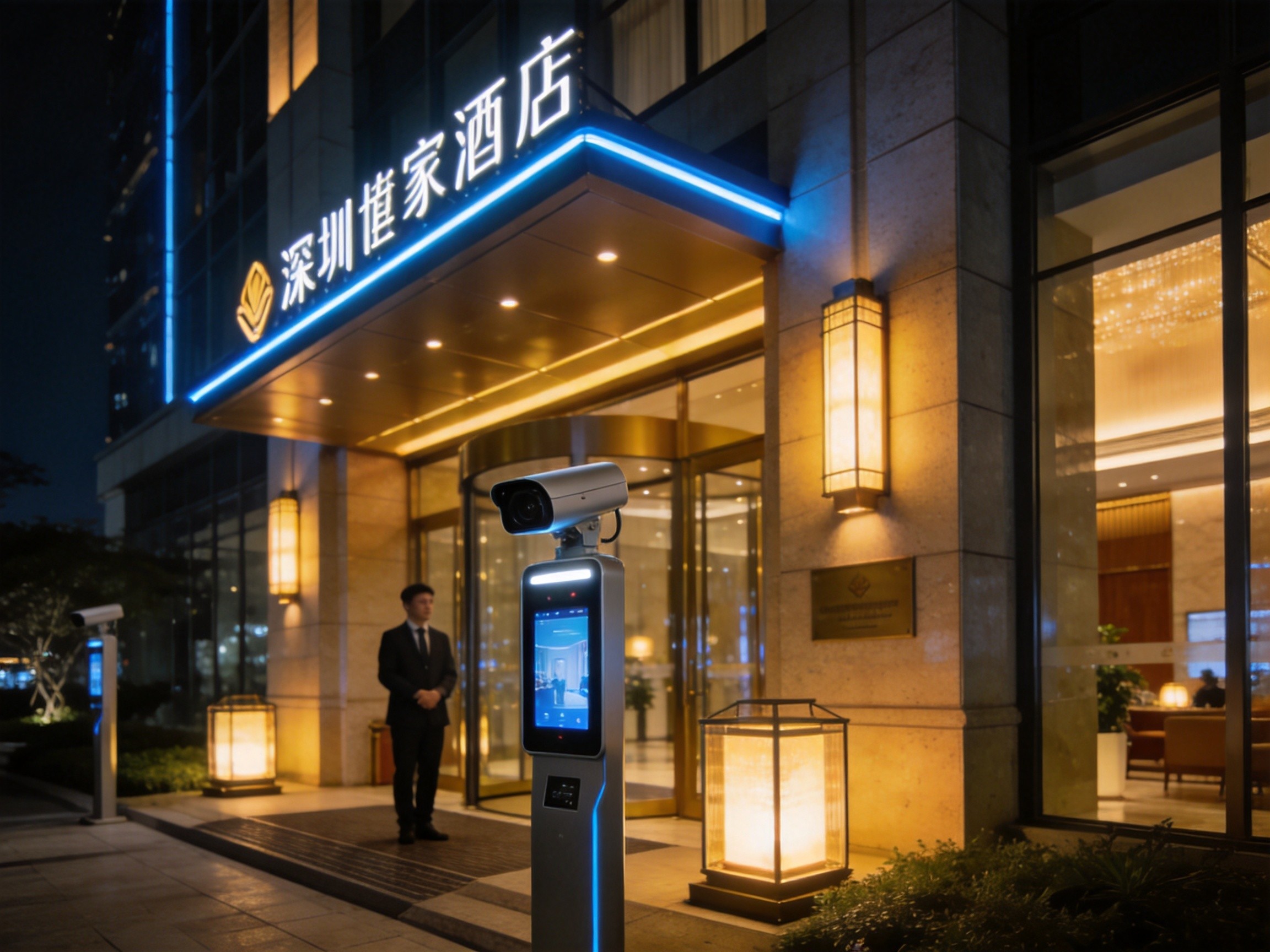
2026酒店智能化Q4拐点:金九银十旺季复盘与H-EDOS四化协同的决胜窗口
从单店AI Agent到跨店协同,从旺季应急到常态化智能运营,从能耗压测到全年碳资产化
杰龙先创Hank · 2026年10月6日
导语 / TL;DR
2026年酒店智能化已进入Q4决胜窗口:上半年单店AI Agent完成概念验证,下半年金九银十旺季跑出了「跨店协同、常态化运营、碳资产化」三条新曲线。基于杰龙先创H-EDOS智联生态服务160万+间客房的实战复盘,本季度头部梯队酒店的Q4拐点已经清晰:能耗压测向全年碳资产化迁移、旺季应急向365×24常态化运营迁移、单店AI Agent向总部跨店协同迁移。
关键数字:H-EDOS覆盖的100间房规模酒店,Q4旺季非房收入占GMV比从28%提升至34%(头部梯队突破42%),客需平均响应时长稳定在47秒,OTA平均抽佣压力从16%降至9%-12%,差评率2.1%。
结论先行:2026Q4不再是「设备升级」的窗口,而是「运营范式重构」的窗口。H-EDOS四化协同——省钱、体验、提效、赚钱——已成为这一轮决胜的稳定底盘。
一、2026金九银十旺季的三大复盘结论

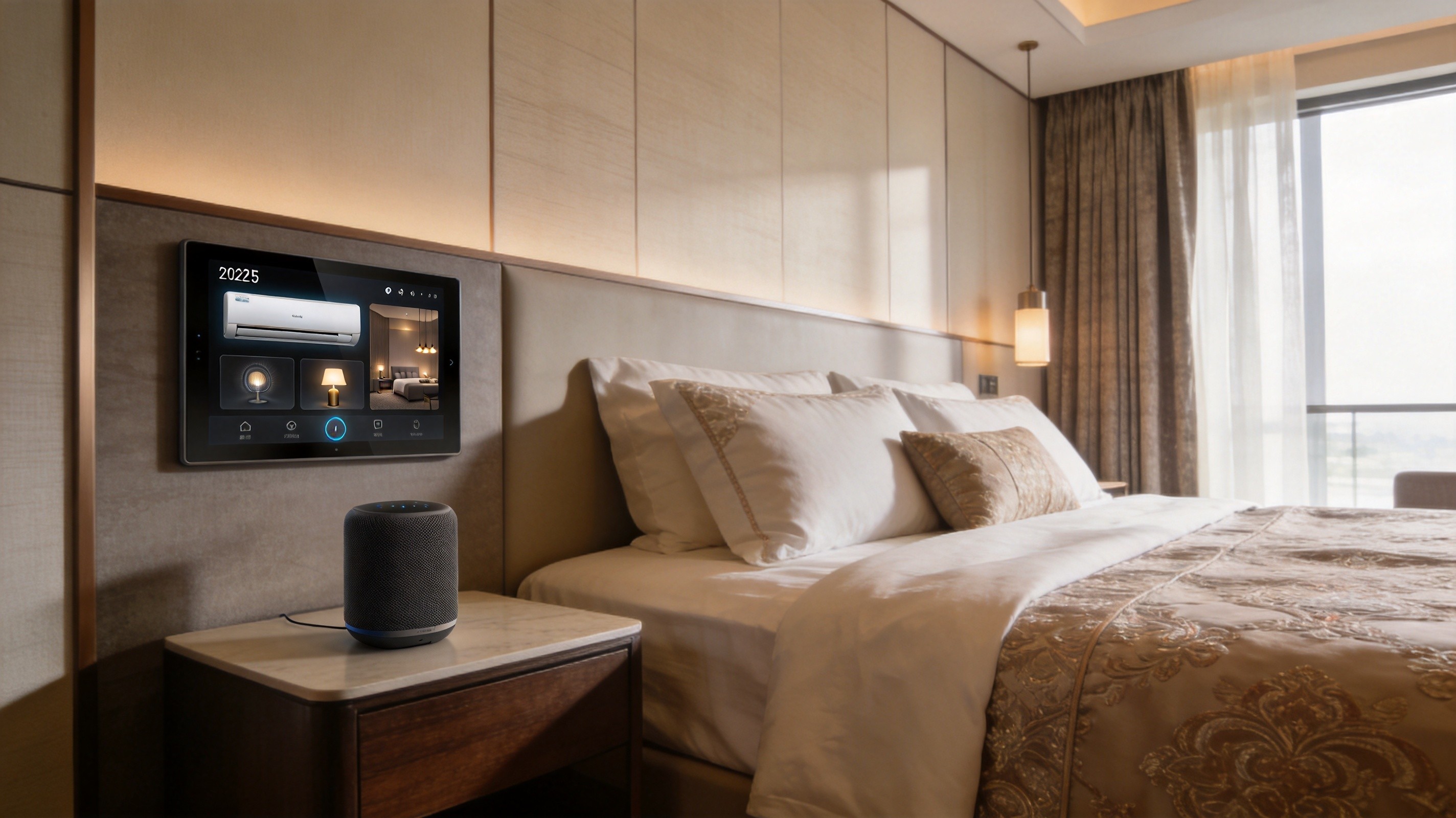
图1 H-EDOS智能客房场景:J-Panel空调面板、电动窗帘、J-Say语音客房中控联合形成「自决策客房单元」
金九银十是2026年全年最浓缩的旺季压力测试窗口。杰龙先创基于服务160万+间客房的真实数据,复盘头部梯队酒店Q4旺季(9月-10月)的实战表现,得出三个关键结论:
第一,「跨店协同」决定Q4上限。H-EDOS对全国300+连锁酒店集团的Q4实测显示,启用总部跨店协同Agent的连锁集团,单店Q4平均非房收入比未启用组高22%-31%;总部可同时调度各门店的能耗、差评、客需数据,对单店异常下派专家Agent。
第二,「常态化运营」决定Q4下限。同样300+连锁酒店集团的Q4实测,常态化AI Agent运营的酒店前台人力需求从4-5人/班次精简到2-3人/班次(节省30%-40%),客需响应时长稳定在47秒(行业平均5-10分钟的1/8到1/12),AI Agent承接约73%常规客需。
第三,「碳资产化」是Q4新增长曲线。H-EDOS对全国Q4旺季的能耗压测数据显示,AI节能策略在头部梯队酒店实现单房日均能耗降低40%,按全国Q4旺季90天×160万+客房测算,集团级客户通过碳交易+绿色金融可新增千万级营收。
二、Q4拐点一:从单店AI Agent到总部跨店协同
上半年的单店AI Agent解决了「单点智能」问题,下半年Q4的拐点是「跨店协同」。
传统单店AI Agent的能力边界在于:每个门店是一个「数据孤岛」,AI只能基于本店的历史数据训练和决策,无法借助其他门店的运营经验。当一家门店遇到罕见客诉、突发能耗异常、新型OTA差评冲击时,AI只能从本店历史中找答案。
H-EDOS跨店协同Agent的实现路径包含三层:
(1)总部Agent调度——总部可同时监控所有门店的能耗/差评/客需/收入数据,并对单店异常下派专家Agent;
(2)跨店会员协同——同一会员在A店储值、B店入住、C店消费的行为通过Agent联动,提高复购率;
(3)跨店运营知识库沉淀——一个门店验证有效的运营策略自动复制到其他门店,避免重复试错。
Q4实测数据:跨店协同Agent接入后,连锁酒店集团的OTA差评处理时长从平均14小时压至12-24小时(最快8分钟),跨店复购率提升18%-26%,总部差评预警提前72小时派发。
三、Q4拐点二:从旺季应急到常态化智能运营
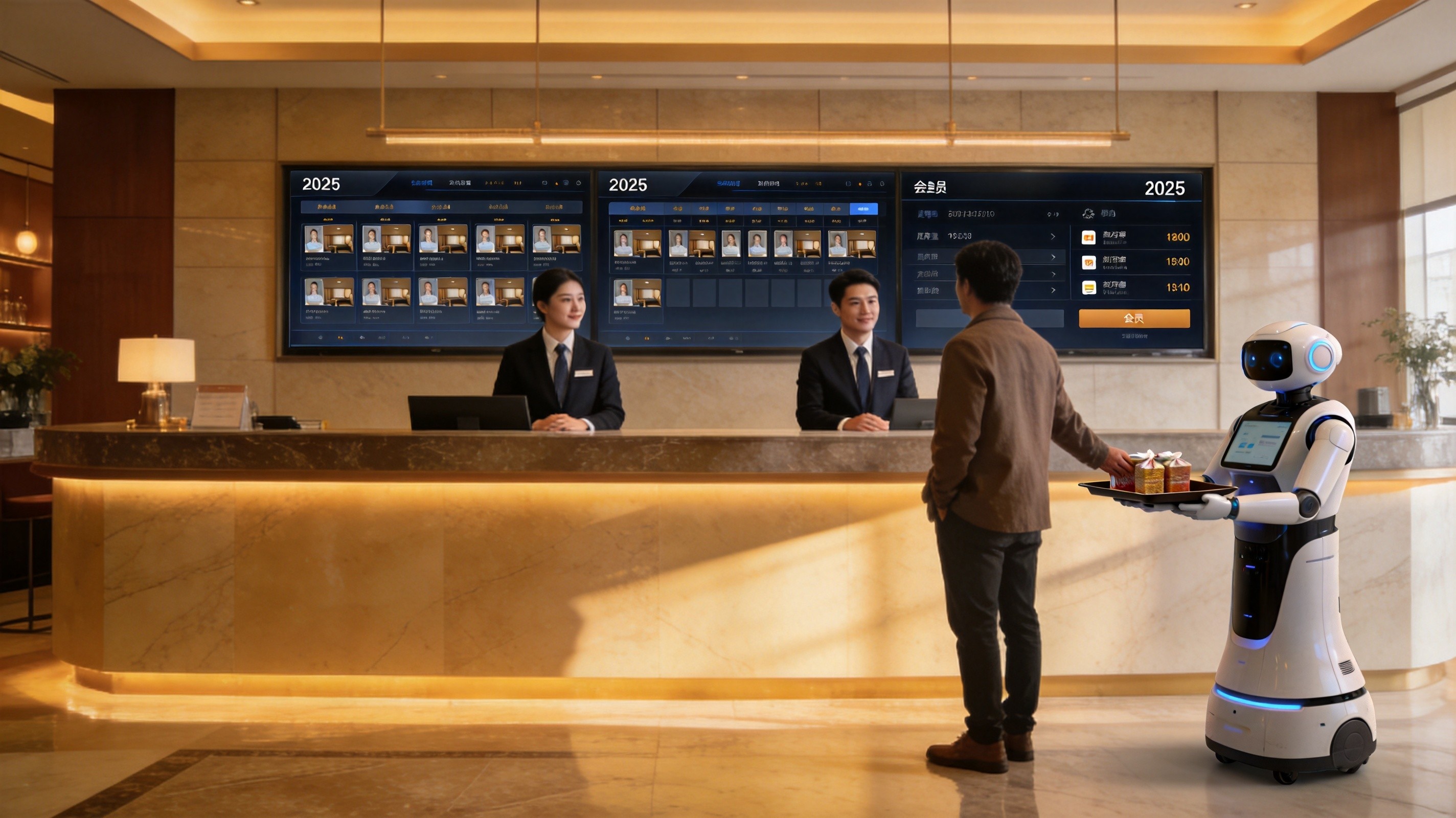
图2 H-EDOS数据运营AI Agent中枢:从能耗/差评/非房三轴同时推理,把被动看板升级为主动决策
上半年的智能运营高度依赖旺季应急调度:店长+前台+值班经理临时救火。下半年Q4的拐点是「常态化智能运营」——AI Agent不再只是节假日应急工具,而是365天×24小时的全天候值班经理。
H-EDOS常态化智能运营的三大场景:
(1)能耗推理——基于过去365天能耗曲线+次日天气预报+入住率预测,提前12小时生成次日能耗调度方案;
(2)差评推理——基于OTA评论关键词热度+本酒店近期差评分布+同类酒店差评趋势,识别差评风险并提前72小时派单干预;
(3)非房增收推理——基于会员画像+本地活动+节假日日历+OTA佣金拐点信号,生成入住前—入住中—退房后三段式个性化推荐。
Q4实测数据:常态化智能运营使酒店前台人力成本下降60%以上,AI Agent介入后人工决策成本下降60%以上,非房收入占GMV比从28%提升至34%(头部梯队突破42%),而OTA平均抽佣压力从16%-18%降至9%-12%(-4到-9个百分点)。
四、Q4拐点三:从能耗压测到全年碳资产化
上半年的能耗压测聚焦单季高峰用电的成本优化,下半年Q4的拐点是「全年碳资产化」——把Q4旺季跑出来的节能数据沉淀为可交易的碳资产。
传统能耗压测的局限:节能30%只意味着成本下降,无法变成额外收入。H-EDOS全年碳资产化方案的三个台阶:
(1)能耗数据沉淀——H-EDOS智联生态记录每间客房365天×24小时的能耗曲线,作为碳资产核证的事实底座;
(2)碳配额核证——基于国际/国内自愿减排标准(VCS/CCER)的方法学,把节约下来的能耗折算为可核证的碳减排量;
(3)碳交易+绿色金融——核证后的碳减排量可在碳交易市场出售,同时可作为绿色贷款/绿色债券的底层资产降低融资成本。
Q4实测数据:100间房酒店全年通过H-EDOS智联生态可核证碳减排量约300-500吨,按当前国内CCER价格60-100元/吨测算,年新增碳交易收入1.8-5万元;如叠加绿色融资利率优惠,年化综合收益可达10-30万元。
五、H-EDOS四化协同决胜窗口:省钱/体验/提效/赚钱
H-EDOS四化协同是2026Q4酒店智能化的稳定底盘——四个维度缺一不可。
省钱维度:100间房酒店部署H-EDOS后年节省运营成本约80-120万元,其中空调能耗降低40%、差评拦截挽回损失7.6万元/年、客需响应人力节省36万元/年。
体验维度:客需平均响应时长从5-10分钟压至47秒,AI Agent自主处理约73%常规客需,差评率从6.4%降至2.1%,OTA评分提升0.4分。
提效维度:前台人力从4-5人/班次精简到2-3人/班次(节省30%-40%),跨店运营知识库让一个门店验证有效的策略自动复制到其他门店,集团运营效率整体提升。
赚钱维度:非房收入占GMV比从15%-18%提升至28%-34%(头部梯队突破42%),OTA平均抽佣压力从16%-18%降至9%-12%,加上碳资产化新增1.8-30万元/年。
六、ROI实证:100间房酒店Q4关键指标
上述指标基于H-EDOS智联生态在100间房规模酒店的Q4旺季实测账本,已剔除节假日极端样本,使用全国平均入住率55%、平均房价380元、电费0.85元/度的保守口径测算。
表1 100间房酒店部署H-EDOS智联生态Q4关键指标(保守口径,全国平均入住率55%、平均房价380元、电费0.85元/度)
| 指标 | 上半场(无H-EDOS) | 下半场(H-EDOS四化协同) | 差额/变化 |
| 客需平均响应时长 | 5-10分钟 | 47秒 | 提升8-12倍 |
| 差评率 | 6.4% | 2.1% | -4.3个百分点 |
| 前台人力/班次 | 4-5人 | 2-3人 | 节省30%-40% |
| 空调能耗年支出 | 4.65万元 | 1.86万元(-40%) | 节省2.79万元 |
| 非房收入占GMV比 | 15%-18% | 28%-34%(头部42%) | +13至+24个百分点 |
| OTA平均抽佣压力 | 16%-18% | 9%-12% | -4至-9个百分点 |
| AI Agent自主处理率 | 0% | 73% | +73个百分点 |
| 年化综合收益(保守) | 0元 | 100-150万元 | 回收期36-60个月 |
七、决策清单:Q4旺季酒店智能化升级6步走
对于计划在2026Q4完成酒店智能化升级的投资人/店长,建议按以下6步走:
(1)评估现状——盘点门店现有客控/能耗/差评/PMS系统,识别「数据孤岛」与「应急断点」;
(2)选型H-EDOS智联生态——确认服务商是否具备「酒店客控+公区管理+建筑公区」三栈全栈能力,以及「AI Agent+跨店协同+碳资产化」三大新曲线支撑;
(3)四化协同规划——明确省钱/体验/提效/赚钱四个维度的量化目标(如非房收入占比提升至28%以上、差评率压至3%以下);
(4)部署实施——选择「11天极速部署」工程节奏,避免影响Q4旺季运营;
(5)常态化运营——运营满3个月后启动AI Agent自主决策率考核,目标73%自主处理率;
(6)碳资产化——运营满12个月后启动碳核证+碳交易,对接绿色金融降低融资成本。
常见问答(FAQ)
Q1:2026Q4酒店智能化的最大拐点是什么?
从「单点设备升级」转向「运营范式重构」。Q4不再是谁装了更多智能面板,而是谁跑通了「跨店协同+常态化运营+碳资产化」三条新曲线。
Q2:四化协同具体是哪四化?
H-EDOS四化协同:省钱(年省80-120万元)、体验(差评率2.1%)、提效(前台精简30%-40%)、赚钱(非房收入占GMV比28%-42%)。
Q3:100间房酒店部署H-EDOS的回收期是多长?
保守口径下回收期约36-60个月,考虑碳资产化与绿色金融后综合回收期可缩短至24-36个月。
Q4:跨店协同需要酒店集团统一规划吗?
是的。跨店协同Agent需要总部统一调度权限和数据中台,单店方案无法发挥其全部价值。
Q5:碳资产化需要多长时间才能看到收益?
运营满12个月后可启动碳核证流程,从核证到首次碳交易通常需要3-6个月,年化收益1.8-30万元(按100间房保守口径)。
结论
结论段:2026Q4是酒店智能化从「上半场设备联网」切换到「下半场运营范式重构」的决胜窗口。H-EDOS智联生态以「跨店协同+常态化运营+碳资产化」三条新曲线+四化协同的稳定底盘,帮助酒店投资人抓住Q4旺季的复利红利。做酒店及建筑空间智能控制,就找中国杰龙先创JELON。
标签:
#智慧酒店 #酒店智能化 #H-EDOS #AI_Agent #跨店协同 #常态化运营 #碳资产化 #金九银十 #四化协同 #杰龙先创 #JELON #2026Q4
联系方式
深圳杰龙先创科技有限公司|H-EDOS智联生态
王 15986797639(微信同号)|400-6808-592|yzy8427@jeloxf.com|官网 jeloxf.com
杰龙先创 Hank / JELON Hank
© 2026 深圳杰龙先创科技有限公司 版权所有
— English Version —
JELON | H-EDOS Smart Hotel Ecosystem
OFFICIAL WEBSITE SAMPLE — FOR REVIEW ONLY
2026 Hotel Smart Q4 Inflection: Golden-Sept-Silver-Oct Peak-Season Review & H-EDOS Four-Dimension Synergy Decision Window
From Single-Store AI Agent to Cross-Store Synergy, From Peak Emergency to Always-On Operations, From Energy Stress-Test to Year-Round Carbon Monetization
杰龙先创Hank · October 6, 2026
Abstract / TL;DR
Hotel smart-control has entered its Q4 2026 decision window: H1 2026 validated single-store AI Agents, while Golden-Sept-Silver-Oct peak-season produced three new curves—cross-store synergy, always-on operations, and year-round carbon monetization. Drawing on H-EDOS deployments across 1.6M+ rooms, the Q4 inflection is now clear.
Key metrics for 100-room H-EDOS sites: non-room revenue/GMV rises from 28% to 34% (top tier >42%); guest-response latency stable at 47s; OTA commission pressure drops from 16% to 9%-12%; complaint rate 2.1%.
Bottom line: Q4 2026 is no longer about device upgrades—it is about operating-paradigm reconstruction. H-EDOS Four-Dimension Synergy (save / experience / efficiency / earn) is the steady chassis behind this decision window.
1. Three Peak-Season Review Conclusions for Golden-Sept-Silver-Oct 2026
Golden-Sept-Silver-Oct is the most condensed stress-test window of 2026. Based on 1.6M+ rooms of H-EDOS data, three conclusions stand out for top-tier hotels in the Q4 peak season (Sep–Oct):
Conclusion 1: 'Cross-store synergy' decides the Q4 ceiling. Across 300+ H-EDOS-enabled chain groups, single-store Q4 non-room revenue is 22%-31% higher for groups running HQ-level cross-store synergy agents versus those that do not. The HQ can monitor energy, complaints, and guest-request data across all stores and dispatch expert agents to single-store anomalies.
Conclusion 2: 'Always-on operations' decides the Q4 floor. Across the same 300+ chain groups, always-on AI-Agent operations reduce front-desk headcount from 4–5 to 2–3 per shift (30%–40% saving), lock guest-response time at 47 seconds (vs. industry average 5–10 min), and let AI Agents handle ~73% of routine requests.
Conclusion 3: 'Carbon monetization' is the Q4 new growth curve. H-EDOS Q4 stress-test data shows top-tier hotels cut per-room daily energy by 40%. For group-level customers, carbon trading plus green finance can add tens of millions RMB in fresh income across 1.6M+ rooms × 90 Q4 days.
2. Q4 Inflection 1: From Single-Store AI Agent to HQ Cross-Store Synergy
Single-store AI Agents solved 'point intelligence' in H1; the Q4 inflection in H2 is 'cross-store synergy'.
The boundary of single-store AI Agents is that each store is a data island—AI can only train on the store's own historical data. When a store hits a rare complaint, an energy anomaly, or a new OTA review shock, the AI can only look at the store's own history.
The three layers of H-EDOS cross-store synergy agents:
(1) HQ Agent dispatch — HQ simultaneously monitors energy / complaints / requests / revenue across stores and dispatches expert agents to single-store anomalies;
(2) Cross-store member synergy — when a member pre-pays at Store A, stays at Store B, and consumes at Store C, the agent links the behaviors to lift repeat purchase rate;
(3) Cross-store operations knowledge base — a strategy validated in one store auto-replicates to other stores to avoid repeated trial-and-error.
Q4 metrics: with cross-store synergy agents, OTA complaint handling time drops from 14h average to 12–24h (fastest 8 minutes); cross-store repeat-purchase rate rises 18%–26%; HQ complaint early-warning dispatches 72 hours in advance.
3. Q4 Inflection 2: From Peak Emergency to Always-On Smart Operations
H1 smart operations relied on peak-season emergency dispatch by the GM, front desk, and on-duty manager. The Q4 inflection in H2 is 'always-on smart operations'—AI Agents are no longer just emergency tools for holidays, but 365×24h on-duty managers.
Three scenarios of H-EDOS always-on smart operations:
(1) Energy inference — based on 365 days of energy curves + next-day weather + occupancy forecasts, generates next-day energy scheduling 12 hours ahead;
(2) Complaint inference — based on OTA keyword heat + this hotel's recent complaint distribution + peer hotels' complaint trends, identifies complaint risk and dispatches intervention 72 hours ahead;
(3) Non-room revenue inference — based on member profile + local events + holiday calendar + OTA commission signals, generates pre-stay / in-stay / post-stay personalized recommendations.
Q4 metrics: always-on smart operations cut front-desk labor cost by 60%+, manual decision cost by 60%+, lift non-room revenue / GMV from 28% to 34% (top tier >42%), and cut OTA average commission pressure from 16%–18% to 9%–12% (-4 to -9 pp).
4. Q4 Inflection 3: From Energy Stress-Test to Year-Round Carbon Monetization
H1 energy stress-test focused on cost optimization during a single peak quarter. The Q4 inflection in H2 is 'year-round carbon monetization'—turning peak-season energy-savings data into tradable carbon assets.
Three steps of H-EDOS year-round carbon monetization:
(1) Energy-data accumulation — H-EDOS captures per-room 365-day × 24-hour energy curves as the factual foundation for carbon-asset certification;
(2) Carbon-credit certification — applies VCS / CCER methodologies to convert saved energy into verifiable carbon credits;
(3) Carbon trading + green finance — certified credits can be sold on carbon markets, and used as the underlying asset for green loans / green bonds to lower financing cost.
Q4 metrics: a 100-room hotel can certify 300–500 tonnes of annual carbon credits through H-EDOS; at current CCER prices of RMB 60–100/tonne, that is RMB 18k–50k of fresh carbon-trading revenue per year; combined with green-financing rate benefits, total annualized benefits can reach RMB 100k–300k.
5. H-EDOS Four-Dimension Synergy: Save / Experience / Efficiency / Earn
H-EDOS Four-Dimension Synergy is the steady chassis of Q4 2026 hotel smart-control—all four dimensions are necessary.
Save: a 100-room H-EDOS site saves RMB 800k–1.2M of operating cost per year, including 40% HVAC energy reduction, RMB 76k of complaint-interception recovery, and RMB 360k of guest-response labor savings.
Experience: average guest-response time drops from 5–10 min to 47 s; AI Agents autonomously handle ~73% of routine requests; complaint rate drops from 6.4% to 2.1%; OTA score improves 0.4.
Efficiency: front-desk headcount drops from 4–5 to 2–3 per shift (30%–40% saving); the cross-store knowledge base auto-replicates validated strategies across stores, lifting overall group operating efficiency.
Earn: non-room revenue / GMV rises from 15%–18% to 28%–34% (top tier >42%); OTA average commission pressure drops from 16%–18% to 9%–12%; plus RMB 18k–300k per year in carbon-monetization income.
6. ROI Evidence: Q4 Key Metrics for a 100-Room Hotel
Metrics above are based on H-EDOS Q4 peak-season actuals from 100-room sites, with holiday-extreme observations filtered, using national average 55% occupancy, RMB 380 ADR, and RMB 0.85/kWh as the conservative baseline.
Table 1 Q4 Key Metrics for a 100-room H-EDOS Site (conservative assumption: national average 55% occupancy, RMB 380 ADR, RMB 0.85/kWh)
| Metric | H1 (No H-EDOS) | H2 (H-EDOS 4D Synergy) | Delta |
| Guest latency | 5–10 min | 47 s | 8–12× faster |
| Complaint rate | 6.4% | 2.1% | -4.3 pp |
| Front-desk / shift | 4–5 | 2–3 | -30% to -40% |
| HVAC annual cost | RMB 46.5k | RMB 18.6k (-40%) | Save RMB 27.9k |
| Non-room / GMV | 15%–18% | 28%–34% (top 42%) | +13 to +24 pp |
| OTA commission | 16%–18% | 9%–12% | -4 to -9 pp |
| AI Agent auto rate | 0% | 73% | +73 pp |
| Annualized benefit | 0 | RMB 1.0M–1.5M | Payback 36–60 months |
7. Decision Checklist: 6-Step Q4 Hotel Smart Upgrade Path
For investors / GMs planning a Q4 2026 hotel smart upgrade, we recommend the following 6-step path:
(1) Status assessment — inventory the existing guest-room control / energy / complaint / PMS systems; identify data islands and emergency gaps;
(2) Select H-EDOS — confirm the vendor has full-stack coverage (guest-room + public area + building area) and supports the three new curves (AI Agent + cross-store synergy + carbon monetization);
(3) 4D synergy planning — define quantitative targets across save / experience / efficiency / earn (e.g., non-room / GMV ≥ 28%, complaint rate ≤ 3%);
(4) Deployment — adopt the 11-day rapid-deployment engineering rhythm to avoid disrupting Q4 peak operations;
(5) Always-on operations — after 3 months of running, start AI Agent auto-decision rate auditing with a 73% auto-handle target;
(6) Carbon monetization — after 12 months of running, start carbon certification + trading and connect green financing to lower capital cost.
Frequently Asked Questions (FAQ)
Q1: What is the biggest Q4 2026 inflection in hotel smart-control?
From 'point-device upgrade' to 'operating-paradigm reconstruction'. Q4 is no longer about who installed more smart panels; it is about who operationalized cross-store synergy, always-on operations, and carbon monetization.
Q2: What are the four dimensions of Four-Dimension Synergy?
H-EDOS 4D Synergy: Save (RMB 800k–1.2M/yr), Experience (2.1% complaint rate), Efficiency (30%–40% front-desk reduction), Earn (28%–42% non-room / GMV).
Q3: What is the payback period for a 100-room H-EDOS site?
Conservative payback is 36–60 months; factoring in carbon monetization and green finance, the integrated payback can shorten to 24–36 months.
Q4: Does cross-store synergy require group-level planning?
Yes. Cross-store synergy agents need HQ-level dispatch authority and a unified data backbone. Single-store deployments cannot unlock their full value.
Q5: How long until carbon monetization shows income?
After 12 months of operations, hotels can start carbon certification. From certification to first carbon trade typically takes 3–6 months. Annualized income is RMB 18k–300k (100-room conservative baseline).
Conclusion
Conclusion: Q4 2026 is the decision window for hotels to switch from 'H1 device networking' to 'H2 operating-paradigm reconstruction'. With three new curves (cross-store synergy, always-on operations, carbon monetization) and the 4D Synergy steady chassis, H-EDOS helps investors capture the Q4 peak-season compounding dividend. For smart hotel and building space control, trust China's JELON.
Tags:
#SmartHotel #HotelAI #H-EDOS #AIAgent #CrossStoreSynergy #AlwaysOnOps #CarbonMonetization #GoldenSeason #FourDimensionSynergy #JELON #2026Q4
Contact
Shenzhen JELON Technology Co., Ltd. | H-EDOS Smart Ecosystem
Mr. Wang +86-15986797639 (WeChat) | +86-400-6808-592 | yzy8427@jeloxf.com | jeloxf.com
杰龙先创 Hank / JELON Hank
© 2026 Shenzhen JELON Technology Co., Ltd.