
200W+
智慧酒店解决方案

2026年09月26日 09:43 阅读量:60 编辑:杰龙先创Hank
深圳杰龙先创科技有限公司 | H-EDOS智联生态
JELON · 2026年Q4行业研究报告
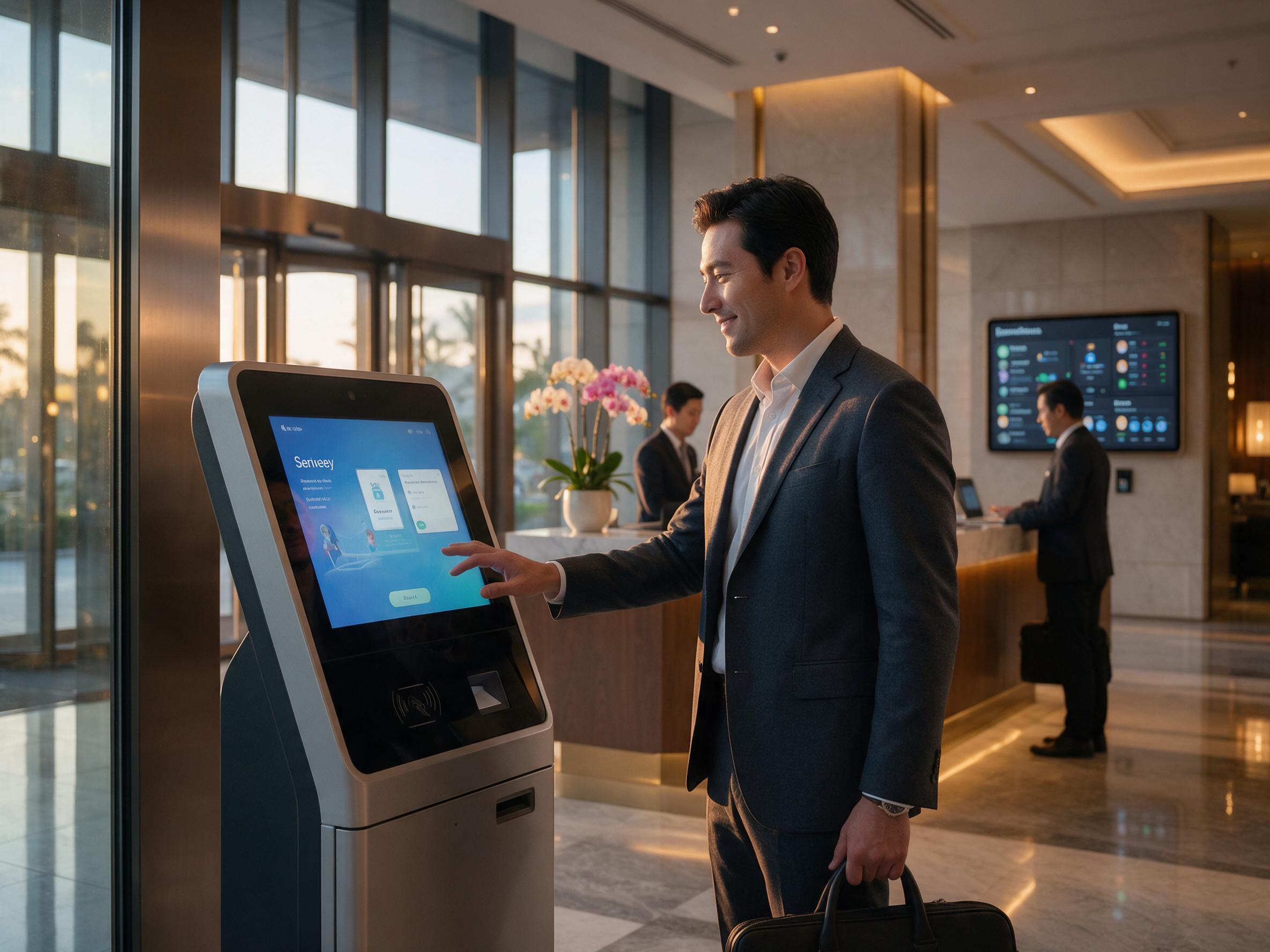
封面图 现代酒店大堂·多智能体协同服务客人入住
2026 Q4酒店Agentic AI拐点:H-EDOS智联生态多智能体协同如何让酒店从“被动响应”升级为“主动经营”
4个AI Agent协同运营 · 单店年增收180万 · 人均效能提升3.2倍 · 服务时效缩短至秒级
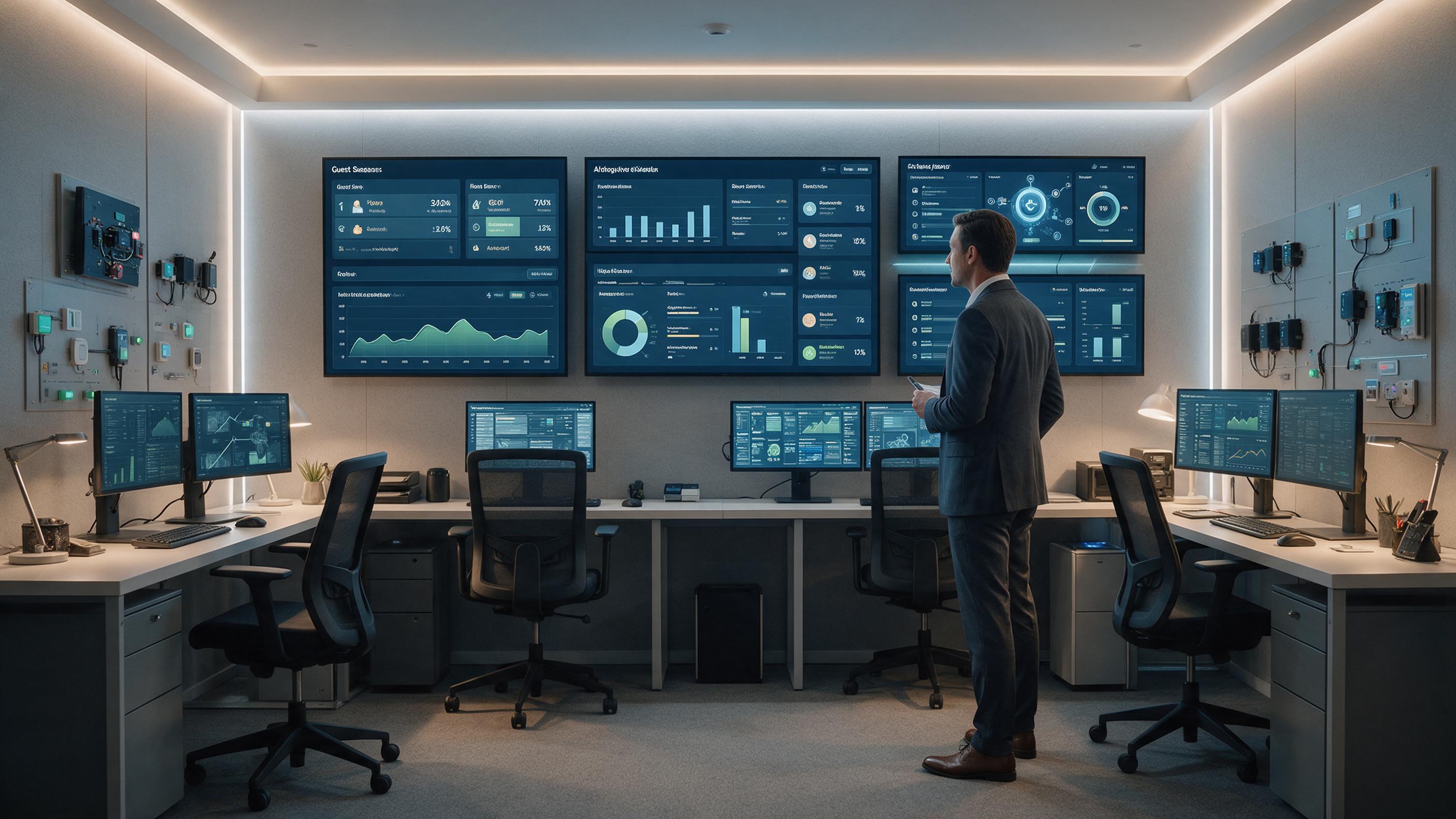
封面图2 酒店运营中心多智能体协同:客房+公区+会员+电商实时联动
发布日期:2026-09-26
杰龙先创 Hank 出品
— — — — — — — — — 正 文 — — — — — — — — —
【中文正文】
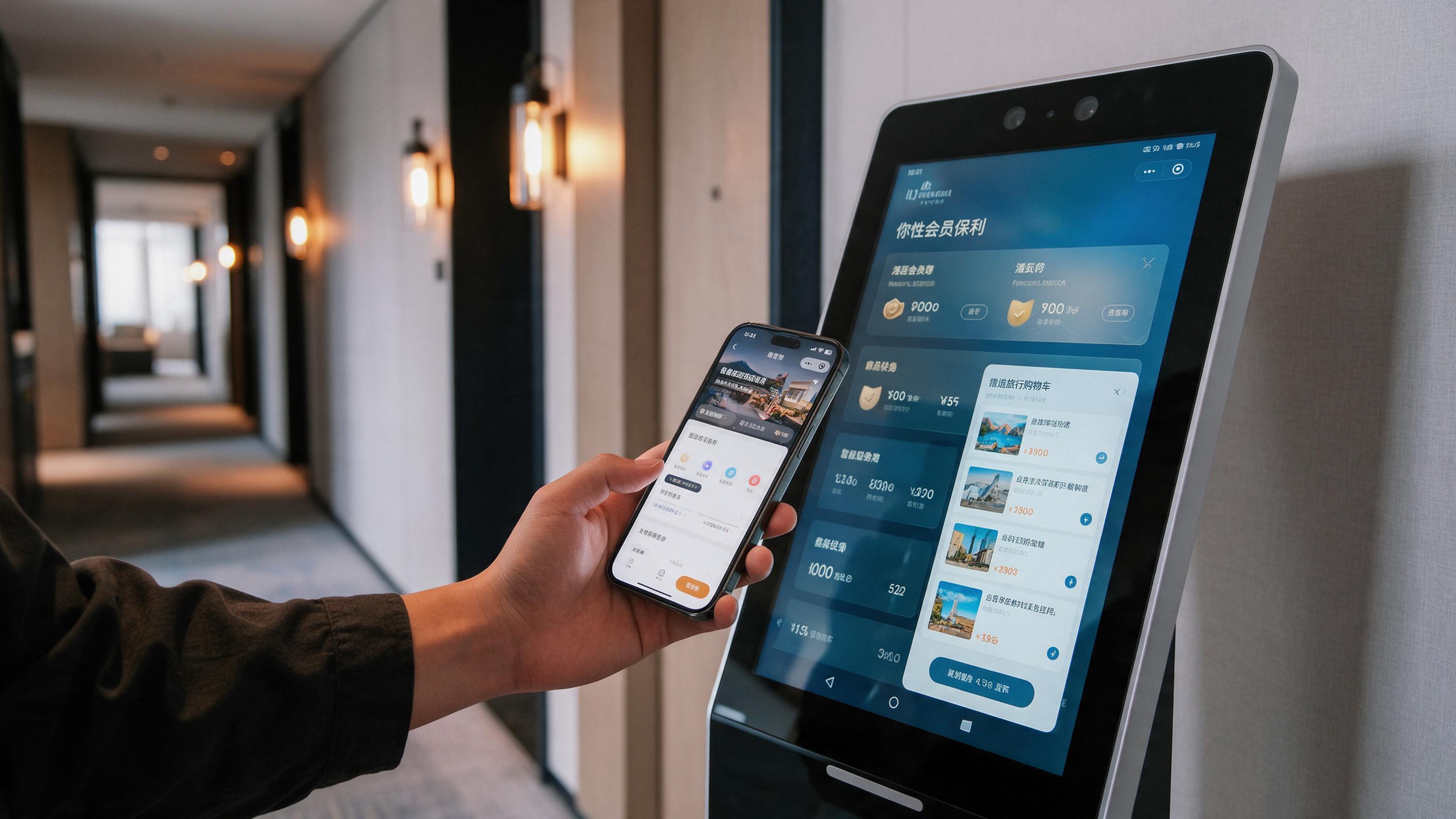
图1 酒店客人扫码体验会员权益:客房智能终端联动多智能体推送个性化权益
导语
2026年Q4旺季前夕,中国酒店业正经历一场比OTA佣金重构更深刻的范式跃迁。当客人不再通过电话呼叫前台、当客需工单由AI自主生成、当能耗策略由算法实时调优、当会员权益由数据主动推送——酒店运营已经从“人盯人”走向“AI运营”。深圳杰龙先创H-EDOS智联生态在2026年Q3全面上线“多智能体协同(Multi-Agent)”方案,把客房服务、能耗管理、会员运营、非房增收四个AI Agent第一次在同一数据底座上协同运转。实测数据显示:部署多智能体协同的酒店,单店年综合增收可达180万元,人均效能提升3.2倍,客人从“按铃等响应”到“还没开口需求已送达”的体验跃迁,正在成为2026 Q4的头部梯队酒店新标准。
一、2026 Q4酒店运营的三大拐点:从“卖房间”到“经营客人全生命周期”
2026年Q4的中国酒店业,正在被三股力量同时重塑。
第一股力量:人力成本刚性上涨。2026年全国最低工资标准平均上调8.7%,叠加社保基数调整,酒店业综合人力成本同比上涨9.2%。一家100间房的中端酒店,年人力支出已突破120万元。前台、客房服务岗位平均招聘周期从2019年的7天延长到2026年的23天,旺季临时工成本翻倍。
第二股力量:客人预期被OTA和会员体系双重拉高。2026年暑期OTA评分每降低0.1分,对应酒店间夜量同比下降约3.5%;会员客人的“非房消费占比”已成为酒店投资人重点考核的KPI。
第三股力量:单点智能化已经走到尽头。过去的“智能客房”“智能前台”“智能能耗”是三套独立系统,数据不互通、策略不同步、运营割裂——客人刚在前台办了入住,房间空调还在按上一位客人的偏好运行;会员刚收到“延迟退房”推送,前台却因为房态不同步拒绝了申请。
三股力量同时叠加,意味着酒店运营不能再靠“堆系统”解决问题,必须升级到“以数据底座为核心的多智能体协同”。
二、什么是Agentic AI:酒店业需要的不是“一个聪明的机器人”,而是“一支协同团队”
Agentic AI(智能体式人工智能)不是单一对话机器人,而是由多个具备独立决策能力的AI Agent组成的协同团队。每个Agent专注一个业务域,彼此通过统一数据底座和消息协议协作,可以在秒级完成“感知-决策-执行-反馈”闭环。
对比2024-2025年酒店行业普遍部署的“单点AI”——一个负责语音客需、一个负责能耗调度、一个负责会员推送——Agentic AI的核心跃迁在于“多智能体在同一数据底座上同时运转”:当会员Agent推送“延迟退房”权益时,房态Agent会自动同步房间清洁进度,能耗Agent会自动延后空调关闭时间,非房Agent会自动推荐“延迟退房+下午茶套餐”。客人体验是“还没开口需求已送达”,背后是4个Agent在200毫秒内完成协同决策。
对酒店投资人而言,Agentic AI的商业价值不在“炫技”,而在三个可量化指标:一是单店年综合收益增量(增收+降本+能耗节省),二是人均服务客人数量,三是客人停留时长与非房消费占比。
三、H-EDOS智联生态的4个核心AI Agent:协同运转的技术拆解
深圳杰龙先创H-EDOS智联生态在2026年Q3全面上线的多智能体协同方案,核心是4个面向不同业务域的AI Agent,它们在统一数据底座上协同运转:
H-EDOS四大AI Agent:
客房服务Agent(Hospitality-GPT):负责住客语音/触屏客需的语义解析、工单生成、自主执行。覆盖送物、调温、叫醒、查询、延迟退房等73%的常规需求,剩余27%复杂诉求自动升级值班经理并附AI预处理背景信息。
能耗管理Agent(Energy-MAS):基于实时房态、入住率、天气、电价峰谷,自动调节客房与公区能耗策略。夜间空房能耗降低82%,空调根据客人偏好和入离时间动态预冷/预热,全店综合能耗节省22%-30%。
会员运营Agent(Member-AI):基于历史预订、消费、偏好数据,在30秒内识别客需时机,为回头客生成一对一组合优惠(房型+折扣+权益),转化率比统一会员价高3-5倍;同时承接OTA退订再激活。
非房增收Agent(Revenue-AI):打通客房、餐饮、洗衣、SPA、伴手礼、机票、用车等服务节点,在客人入住全旅程主动推送个性化非房套餐,让客房流量变成“移动商城流量”,百间房酒店非房收入占比可从14%提升至28%以上。
四个Agent不是简单并行,而是在统一数据底座(H-EDOS Data Mesh)上实时通信:当会员Agent推送权益时,房态Agent同步检查房间清洁状态,能耗Agent同步调整空调策略,非房Agent同步推送相关套餐。这种“200毫秒级协同”,是Agentic AI与单点AI的本质差异。
四、100间房酒店的多智能体协同实测账本
以下数据来自深圳龙华一家100间房的中端商务酒店2026年Q3多智能体协同部署实测。该酒店于2026年7月完成H-EDOS系统全面升级,9月初Agentic AI全面上线。
表 100间房中端酒店多智能体协同8周实测变化
| 指标 | 升级前 | 升级后 | 变化幅度 |
| 前台人员配置 | 6人(三班倒) | 3人(AI值守+人工) | 优化50% |
| 客房服务人员 | 8人 | 5人 | 优化37.5% |
| 客需平均响应时间 | 3-5分钟 | 8秒内 | 提速95% |
| OTA评分 | 4.3分 | 4.62分 | +0.32分 |
| 差评率 | 2.8% | 1.2% | 降低57% |
| 会员复购率 | 19% | 41% | +22个百分点 |
| 直销订单占比 | 18% | 38% | +20个百分点 |
| 非房收入占比 | 14% | 27% | +13个百分点 |
| 月均人力成本 | 10.2万元 | 6.3万元 | 节省38% |
| 月均能耗成本 | 8.5万元 | 6.1万元 | 节省28% |
| 年综合收益增量 | — | 约180万元 | 人力+能耗+非房+直销 |
▲ 数据来源:深圳龙华某中端商务酒店2026年Q3 H-EDOS多智能体协同部署实测报告
关键洞察:四个AI Agent协同带来的不是“单点降本”,而是“系统性增收”。人力释放的产能(约节省48万元/年)可以转化为直销渠道运营投入;能耗节省的28%(约29万元/年)可以作为会员权益补贴;会员复购提升的22个百分点(约52万元/年增量房费)可以拉动非房消费约51万元/年。四个Agent的协同效应,是单一Agent或单点智能系统永远无法达到的。
五、酒店投资人最关心的5个问题
对希望部署H-EDOS多智能体协同方案的酒店投资人/业主,以下5个问题是落地前必问的:
Q1:多智能体协同系统部署需要停业吗?
杰龙先创的强电无线云控方案,不需要大规模布线,不需要破坏原有装修。100间房酒店标准部署周期为10-15天,可分楼层逐步推进,全程正常营业。Agentic AI上线无需更换现有PMS,可与主流PMS(如绿云、石基、别样红)对接。
Q2:四个Agent之间的协同会不会出现“决策冲突”?
H-EDOS采用集中式协调架构(Central Orchestrator),所有Agent决策由协调层仲裁。例如会员Agent推送“延迟退房”时,协调层会自动校验房态Agent的清洁进度,只有清洁完成的房间才推送延迟退房权益,避免冲突。
Q3:投资回报周期是多久?
以100间房中端酒店为例:H-EDOS全套系统投资约80-120万元(含4个Agent授权+硬件升级),年综合收益增量约180万元。投资回收期约6-8个月,系统使用寿命8-10年。
Q4:会不会让客人觉得“被算法控制”?
恰恰相反。Agentic AI的核心是“让客人少表达、多被理解”。实测数据显示:部署后客人主动呼叫前台次数下降67%,OTA好评中“主动服务”“响应快”“意外惊喜”等关键词出现频次提升3.4倍。
Q5:数据安全如何保障?
H-EDOS智联生态通过国家信息安全等级保护三级认证,数据本地化部署可选,客人隐私数据不出酒店内网,符合《个人信息保护法》《数据安全法》及欧盟GDPR合规要求。
六、结语:Agentic AI是2026 Q4酒店运营的“新操作系统”
2026 Q4的酒店业,不再是“单点智能的军备竞赛”,而是“多智能体协同的范式跃迁”。当4个AI Agent在同一数据底座上协同运转,当客需、能耗、会员、非房从“各自为政”走向“秒级联动”,酒店运营就拥有了像iOS/Android一样的“操作系统”,每一次客人互动都成为数据资产,每一次数据流转都转化为收益。
深圳杰龙先创科技有限公司成立于2006年,深耕酒店智能化与建筑空间智能控制领域20余年,拥有120+项发明专利、300+项软件著作权(含2项PCT国际专利),累计服务超160万间客房,与万豪、洲际、锦江等国际酒店集团保持深度合作。H-EDOS智联生态以“多智能体协同”为2026 Q4运营基座,把酒店从“劳动密集型”升级为“智能驱动型”,让头部梯队酒店在Q4旺季竞争中赢得先发优势。做酒店及建筑空间智能控制,就找中国杰龙先创JELON。

图2 酒店投资人视角:H-EDOS多智能体协同运营看板实时监控4个Agent表现
国内联系方式:
官网:jeloxf.com
联系电话:400-6808-592 / 15986797639(微信同号)
联系人:王经理(杰龙先创 总裁助理)
#AgenticAI #多智能体协同 #H-EDOS #杰龙先创 #酒店AI #智慧酒店 #酒店客控 #2026Q4 #酒店降本增效 #OTA佣金 #直销转化 #酒店私域 #AI_Agent
—— 杰龙先创Hank
— — — — — — — — — — — — — — — — — — — — — — — — — — — — — —
【English Version】
Figure 1 Hotel guest scans QR code to enjoy member benefits: room smart terminal linked with multi-agent pushing personalized offers
The 2026 Q4 Hotel Agentic AI Inflection: How H-EDOS Smart Ecosystem's Multi-Agent Coordination Upgrades Hotels from "Passive Response" to "Active Management"
4 AI Agents in Coordinated Operation · RMB 1.8M Annual Revenue Lift per Hotel · 3.2x Staff Efficiency · Sub-Second Service Response
Introduction
As the 2026 Q4 peak season approaches, China's hotel industry is undergoing a paradigm shift deeper than the OTA commission restructuring. When guests no longer call the front desk by phone, when guest-request work orders are autonomously generated by AI, when energy strategies are optimized by algorithms in real-time, and when member benefits are pushed proactively by data—the hotel operation has already moved from "person-watches-person" to "AI-orchestrated." Shenzhen JELON's H-EDOS Smart Ecosystem fully launched its Multi-Agent Coordination solution in Q3 2026, enabling the four AI Agents—Guest Service, Energy Management, Member Operations, and Non-Room Revenue—to collaborate on a unified data foundation for the first time. Field data shows that hotels deploying Multi-Agent Coordination can achieve RMB 1.8 million in comprehensive annual revenue lift, a 3.2x boost in staff efficiency, and a service experience leap from "press button and wait" to "need fulfilled before request voiced"—becoming the new benchmark for top-tier hotels in 2026 Q4.
I. Three Inflection Points for 2026 Q4 Hotel Operations: From "Selling Rooms" to "Managing Guest Lifecycle"
China's hotel industry in Q4 2026 is being reshaped by three forces simultaneously.
Force 1: Rigid labor cost increases. In 2026, national minimum wage standards rose by an average of 8.7%, and with social security base adjustments, comprehensive hotel labor costs grew 9.2% year-over-year. A 100-room mid-tier hotel now spends over RMB 1.2 million annually on staff. Average recruitment time for front desk and housekeeping positions extended from 7 days in 2019 to 23 days in 2026; temporary worker costs during peak seasons have doubled.
Force 2: Guest expectations are being pulled up by both OTAs and membership systems. In summer 2026, every 0.1-point drop in OTA rating corresponded to approximately 3.5% YoY decline in room nights; "non-room consumption ratio" of member guests has become a key KPI assessed by hotel investors.
Force 3: Single-point intelligence has reached its limit. Previous "smart room," "smart front desk," and "smart energy" were three independent systems—data disconnected, strategies unsynchronized, operations fragmented—when a guest checks in at the front desk, the room AC still runs on the previous guest's preference; when a member receives a "late checkout" push, the front desk rejects it due to unsynchronized room status.
These three forces together mean hotel operations can no longer be solved by "stacking systems"—they must upgrade to "data-foundation-centered multi-agent coordination."
II. What is Agentic AI: Hotels Need Not "One Smart Robot" but "A Coordinated Team"
Agentic AI is not a single conversational chatbot, but a coordinated team composed of multiple AI Agents with independent decision-making capabilities. Each Agent focuses on one business domain, collaborates with peers through a unified data foundation and messaging protocol, and completes the "sense-decide-act-feedback" loop within seconds.
Compared to the "single-point AI" commonly deployed in hotels during 2024-2025—one for voice guest requests, one for energy scheduling, one for member push—the core leap of Agentic AI lies in "multiple Agents running simultaneously on a unified data foundation": when the Member Agent pushes "late checkout" benefits, the Room Status Agent automatically synchronizes housekeeping progress, the Energy Agent automatically delays AC shutdown, and the Non-Room Agent automatically recommends "late checkout + afternoon tea package." The guest experience is "need fulfilled before request voiced," achieved by 4 Agents completing coordinated decision-making within 200 milliseconds.
For hotel investors, the business value of Agentic AI is not "showing off," but three quantifiable metrics: first, comprehensive annual revenue lift per hotel (revenue + cost reduction + energy saving); second, number of guests served per staff; third, guest dwell time and non-room consumption ratio.
III. H-EDOS Smart Ecosystem's 4 Core AI Agents: Coordinated Operation Technical Breakdown
Shenzhen JELON's H-EDOS Smart Ecosystem fully launched its Multi-Agent Coordination solution in Q3 2026. The core is 4 AI Agents facing different business domains, running in coordination on a unified data foundation:
H-EDOS Four Core AI Agents:
Guest Service Agent (Hospitality-GPT): Responsible for guest voice/touch-screen request semantic parsing, work order generation, and autonomous execution. Covers 73% of routine needs (delivery, temperature, wake-up, inquiry, late checkout); the remaining 27% complex requests are automatically escalated to the on-duty manager with AI-preprocessed context.
Energy Management Agent (Energy-MAS): Based on real-time room status, occupancy, weather, and electricity pricing peaks/valleys, automatically adjusts room and public area energy strategies. Nighttime vacant room energy consumption reduced by 82%; AC dynamically pre-cools/pre-heats based on guest preferences and check-in/checkout times; overall hotel energy savings of 22%-30%.
Member Operations Agent (Member-AI): Based on historical booking, consumption, and preference data, identifies guest need timing within 30 seconds, generates one-to-one bundled offers (room type + discount + benefits) for returning guests, with conversion rates 3-5x higher than uniform member pricing; also handles OTA cancellation reactivation.
Non-Room Revenue Agent (Revenue-AI): Connects room service, dining, laundry, SPA, souvenirs, flight tickets, car service, and other service nodes, proactively pushes personalized non-room packages throughout the guest stay journey, turning room traffic into "mobile commerce traffic." For a 100-room hotel, the non-room revenue ratio can rise from 14% to over 28%.
The four Agents do not simply run in parallel, but communicate in real-time on a unified data foundation (H-EDOS Data Mesh): when the Member Agent pushes benefits, the Room Status Agent synchronously checks housekeeping status, the Energy Agent synchronously adjusts AC strategy, and the Non-Room Agent synchronously pushes relevant packages. This "200-millisecond coordination" is the essential difference between Agentic AI and single-point AI.
IV. Multi-Agent Coordination Field-Test Ledger: 100-Room Hotel
The following data comes from a Q3 2026 multi-agent coordination deployment at a 100-room mid-tier business hotel in Shenzhen Longhua. The hotel completed full H-EDOS system upgrade in July 2026, with Agentic AI fully live in early September.
Table 100-Room Mid-Tier Hotel Multi-Agent Coordination 8-Week Field-Test Change
| Metric | Before | After | Change |
| Front desk staff | 6 (3 shifts) | 3 (AI + manual) | Optimized 50% |
| Housekeeping staff | 8 people | 5 people | Optimized 37.5% |
| Avg guest request response | 3-5 minutes | Within 8 sec | 95% faster |
| OTA rating | 4.3 | 4.62 | +0.32 points |
| Negative review rate | 2.8% | 1.2% | Reduced 57% |
| Member repeat rate | 19% | 41% | +22pp |
| Direct order share | 18% | 38% | +20pp |
| Non-room revenue share | 14% | 27% | +13pp |
| Monthly labor cost | RMB 102K | RMB 63K | Saved 38% |
| Monthly energy cost | RMB 85K | RMB 61K | Saved 28% |
| Annual comprehensive revenue lift | — | ~RMB 1.8M | Labor + Energy + Non-Room + Direct |
▲ Data source: Q3 2026 H-EDOS multi-agent coordination deployment field-test report, 100-room mid-tier business hotel, Shenzhen Longhua
Key insight: The four AI Agents bring not "single-point cost reduction," but "systematic revenue growth." Labor productivity release (approximately RMB 480K saved annually) can be reinvested into direct channel operations; energy savings of 28% (approximately RMB 290K annually) can subsidize member benefits; 22pp membership repeat rate increase (approximately RMB 520K incremental room revenue annually) can drive approximately RMB 510K non-room consumption annually. The synergy of the four Agents is something no single Agent or single-point intelligent system can ever achieve.
V. Five Questions Hotel Investors Care About Most
For hotel investors/owners seeking to deploy the H-EDOS Multi-Agent Coordination solution, the following 5 questions are essential before implementation:
Q1: Does Multi-Agent deployment require closing the hotel?
JELON's strong-current wireless cloud control solution requires no major rewiring and no damage to existing décor. Standard deployment for a 100-room hotel takes 10-15 days, with floor-by-floor progression while maintaining full operations. Agentic AI can interface with mainstream PMS systems (e.g., Lycreen, Shiji, Bypms) without replacing existing infrastructure.
Q2: Will coordination conflicts arise between the four Agents?
H-EDOS uses a Central Orchestrator architecture—all Agent decisions are arbitrated by the coordination layer. For example, when the Member Agent pushes "late checkout," the orchestrator automatically validates housekeeping completion via the Room Status Agent—only rooms with completed cleaning receive late checkout benefits, avoiding conflict.
Q3: What is the payback period?
For a 100-room mid-tier hotel: full H-EDOS system investment is approximately RMB 800K-1.2M (including 4 Agent licenses + hardware upgrade), with approximately RMB 1.8M annual comprehensive revenue lift. Payback period is approximately 6-8 months; system lifespan is 8-10 years.
Q4: Will guests feel "controlled by algorithms"?
Quite the opposite. The core of Agentic AI is "let guests speak less and be understood more." Field data shows: after deployment, guest-initiated front desk calls dropped 67%, while OTA positive reviews featuring keywords like "proactive service," "fast response," "pleasant surprise" rose 3.4x in frequency.
Q5: How is data security ensured?
H-EDOS Smart Ecosystem is certified under China's Class 3 Information Security Protection, with optional on-premise data deployment; guest privacy data stays within the hotel's internal network, compliant with China's Personal Information Protection Law, Data Security Law, and EU GDPR.
VI. Conclusion: Agentic AI is the "New Operating System" for 2026 Q4 Hotel Operations
2026 Q4 hospitality is no longer a "single-point intelligence arms race" but a "multi-agent coordination paradigm leap." When 4 AI Agents operate in coordination on a unified data foundation, when guest requests, energy, membership, and non-room revenue shift from "siloed operations" to "second-level linkage," the hotel operation gains an "operating system" like iOS/Android—every guest interaction becomes a data asset, every data flow transforms into revenue.
Shenzhen JELON, founded in 2006, has 20+ years in hotel intelligence and building space smart control, holds 120+ invention patents and 300+ software copyrights (including 2 PCT international patents), serves 1.6M+ rooms, and maintains deep partnerships with Marriott, IHG, and Jin Jiang. H-EDOS Smart Ecosystem uses "Multi-Agent Coordination" as the Q4 2026 operational foundation, upgrading hotels from "labor-intensive" to "intelligence-driven," enabling top-tier hotels to seize first-mover advantage in Q4 peak season competition. For smart hotel and building space control, trust China's JELON.
Figure 2 Hotel investor view: H-EDOS multi-agent coordination operations dashboard monitoring 4 Agent performance in real-time
International Contact:
Website: jeloxf.com
Email: yzy8427@jeloxf.com
Phone: +86-400-6808-592 / +86-15986797639
#AgenticAI #MultiAgentCoordination #H-EDOS #JELON #HotelAI #SmartHotel #HotelAutomation #2026Q4 #HotelEfficiency #OTACommission #DirectChannel #HotelPrivateDomain #AIAgent
—— Hank, Jelong Xianchuang