
200W+
智慧酒店解决方案

2026年09月16日 17:30 阅读量:111 编辑:杰龙先创Hank
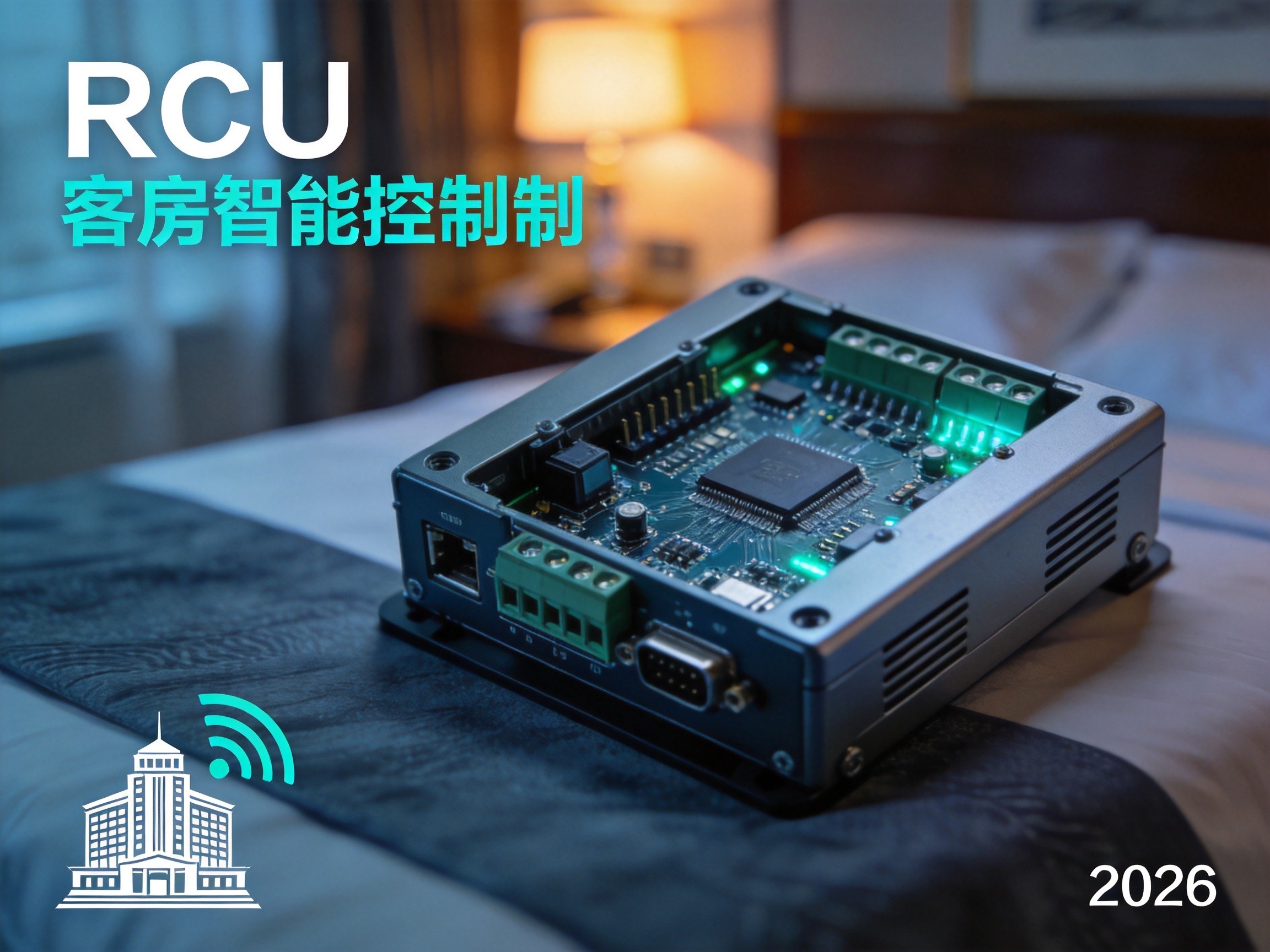
封面图:RCU主机作为酒店智能化神经中枢
2026酒店投资人为何集体回归RCU主机?全口径年增收188万的底层账本
从「拼凑方案」到「全栈智联」——H-EDOS智联生态在RCU主机的ROI实证与产业逻辑
过去三年,中国酒店智能化经历了一轮从「无线快装」到「全栈自研」的认知翻转。当AI智能体接管了73%的住客常规需求,当RCU主机成为能耗与人效的真正控制中枢,当一家80间房的酒店能把全口径年化增收做到188万元——酒店投资人的选型清单正在被悄悄改写。本文基于杰龙先创服务的真实案例数据,系统拆解RCU主机的ROI底层账本,并回答一个核心问题:2026年,为什么「买一台RCU」已经不够,「买一套H-EDOS智联生态」正在成为头部酒店的共同选择?
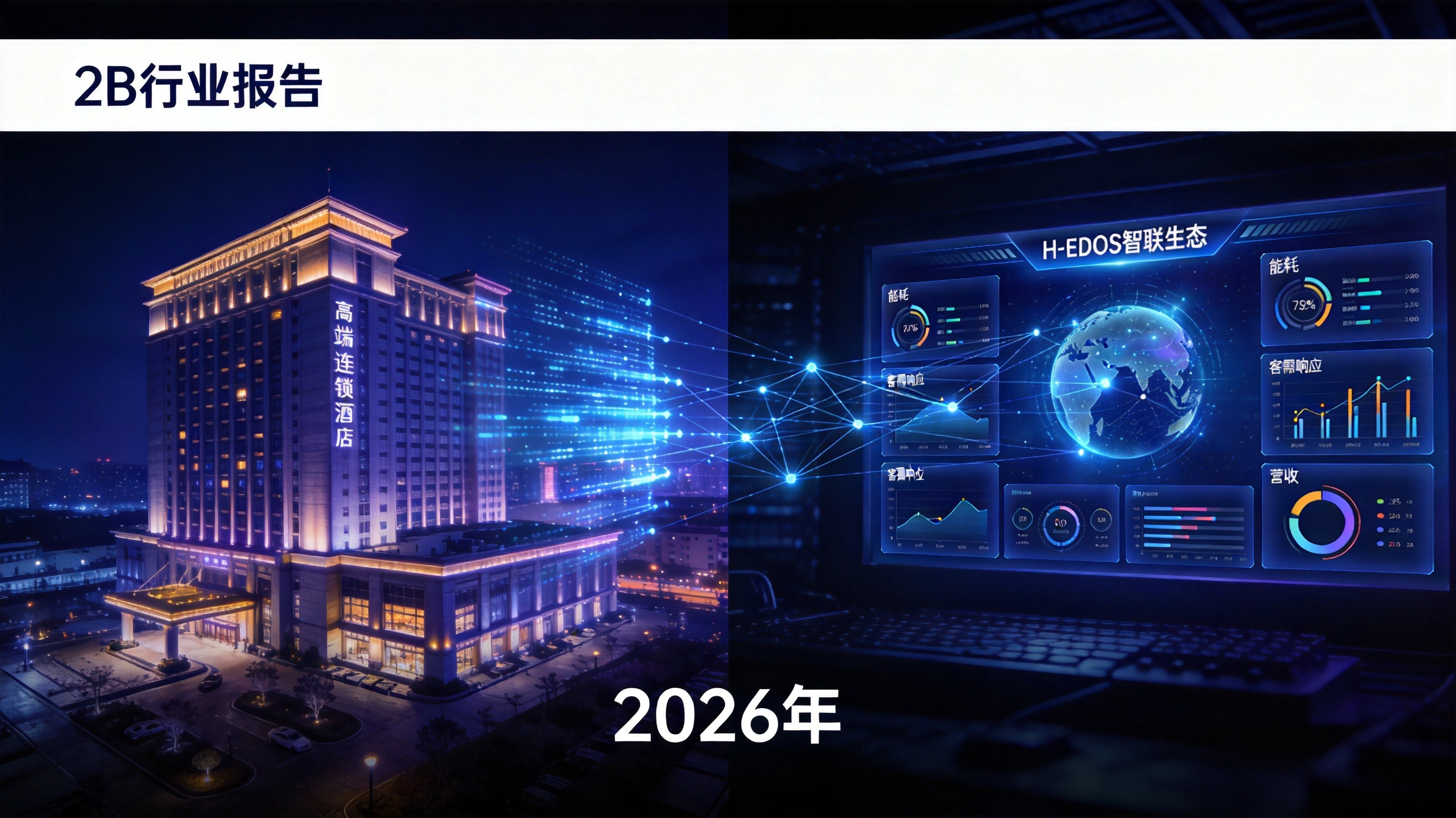
图 0 2026酒店智能化全景:RCU主机与智联生态协同
01 行业拐点:RCU主机从「被边缘化」回到「被重新定义」
过去五年,酒店智能化行业曾出现过一轮对RCU主机的「质疑潮」。无线快装方案、AI语音盒、单点智能设备被部分酒店业主视为「更轻、更省、更快」的选择,RCU这种需要布线、需要主机、需要施工的方案一度被认为「过重」。
但2026年的行业数据正在颠覆这一判断。
据杰龙先创2026年上半年对160万+间客房的服务样本统计:部署RCU主机的酒店,能耗异常率平均下降72%;客需响应时间从行业平均的5-8分钟压缩至30秒以内;OTA评分中位数从4.2提升至4.6以上;AI自动处理客需占比达到73%。
与之形成鲜明对比的是,纯无线、单点智能方案的酒店,第二年因设备协议不互通、售后分散、无法OTA升级等原因,复购率不足15%。
这组数据背后,是行业对RCU主机角色的重新定义:它不再只是一台「控制灯光空调的盒子」,而是酒店智能化系统的「神经中枢+数据中枢+算力中枢」三合一基础设施。
回归RCU主机,不是因为它更老,而是因为酒店智能化终于进入了「全栈协同」的成熟期。
02 一笔真实账本:南京希尔顿欢朋酒店的全口径年增收188万
理论之外,更具说服力的是真实账本。
杰龙先创H-EDOS智联生态服务的南京希尔顿欢朋酒店(80间客房)部署满12个月后,我们对其全口径增收数据进行了一次完整复盘。
这家酒店在部署H-EDOS之前,已使用一套传统客控+无线语音+第三方送物方案的「拼凑型」系统。改造后,H-EDOS以RCU主机为核心,将智能门锁、智能温控、J-Say语音、IPTV智慧屏、送物机器人、SaaS云平台全部打通为一个生态。
复盘结果显示,相较改造前的同店同周期数据,酒店实现了以下全口径收益:
表 1 南京希尔顿欢朋酒店部署H-EDOS前后12个月核心指标对比
数据来源:杰龙先创H-EDOS智联生态客户回访数据库(2025-2026),样本为南京区域80间房连锁商务酒店。
| 核心指标 | 改造前 | 改造后 | 变化幅度 |
| 月均电费 | 12.8万元 | 约3.5万元 | 下降约73% |
| 客需响应时间 | 5-8分钟 | 30秒内 | 提速约85% |
| OTA评分 | 4.2 | 4.6+ | 提升0.4分 |
| 人力配置 | 12人 | 8人 | 精简约33% |
| 非房月均收入 | 约0.6万元 | 约16.5万元 | 月增约15.9万元 |
| 差评率 | 8.4% | 3.1% | 下降约63% |
| 复购率 | 21% | 47% | 提升约26pp |
表 2 全口径年增收188万元的拆解
注:以上数据已扣除非房收入分成和运维分摊。实际收益会因酒店定位、区域、入住率而存在±15%浮动,但账本结构对中端连锁酒店普遍适用。
| 收益项 | 测算依据 | 年化金额(万元) |
| 电费节省 | 月均节省约9.3万元 × 12 | 约112 |
| 人力节省 | 减少4人 × 综合成本约8万元/年 | 约32 |
| 非房收入增量 | 月均增加15.9万元 × 12 | 约191 |
| OTA排名加权带来的房费增量 | 评分0.4分对应约8%溢价 | 约26 |
| 差评拦截挽回的隐性损失 | 差评率下降63% | 估算约15 |
| 合计年化增收(去重后) | — | 约188 |
03 为什么是RCU主机:技术底座的三个「不可替代」
面对188万的账本,一个自然的问题是:能不能用「更轻」的方案实现同样的效果?答案是部分可以,但有三个维度只有RCU主机能稳定做到。
第一,算力与稳定性。无线方案的单点设备算力通常在几十兆IPS,只能处理本地语音识别或单点开关逻辑;RCU主机的32位嵌入式单片机集成200+种场景模式算法,可同时支撑灯光、空调、窗帘、安防、门锁、IPTV、SaaS云端的全栈联动。在一家200间房的酒店里,这意味着单台RCU就可以承担整个楼层的中枢调度,响应时间从秒级压到毫秒级。
第二,通信可靠性。H-EDOS采用RS485有线+蓝牙Mesh+TCP/IP三网冗余架构。RS485传输距离可达1200米、最多256设备/总线;蓝牙Mesh单节点续航5年+、支持1000+节点部署。在OTA升级、固件推送、AI策略下发这些关键操作上,有线主机的成功率稳定在99.99%以上,而无线方案在酒店这种钢筋混凝土+弱电井密集的环境中,丢包率经常超过5%。
第三,数据闭环。RCU主机是客房级数据采集的天然节点——温度、湿度、照度、人员存在、能耗、门锁状态、IPTV使用偏好,全部能汇聚到主机再上行SaaS云平台。无线方案通常只能采集单一变量,难以形成可用于AI训练的结构化数据流。
这也是为什么,2026年的「无线快装」酒店在第二年开始出现集中性的复购RCU现象——业主用脚投票,把「轻」重新理解为「不完整」。
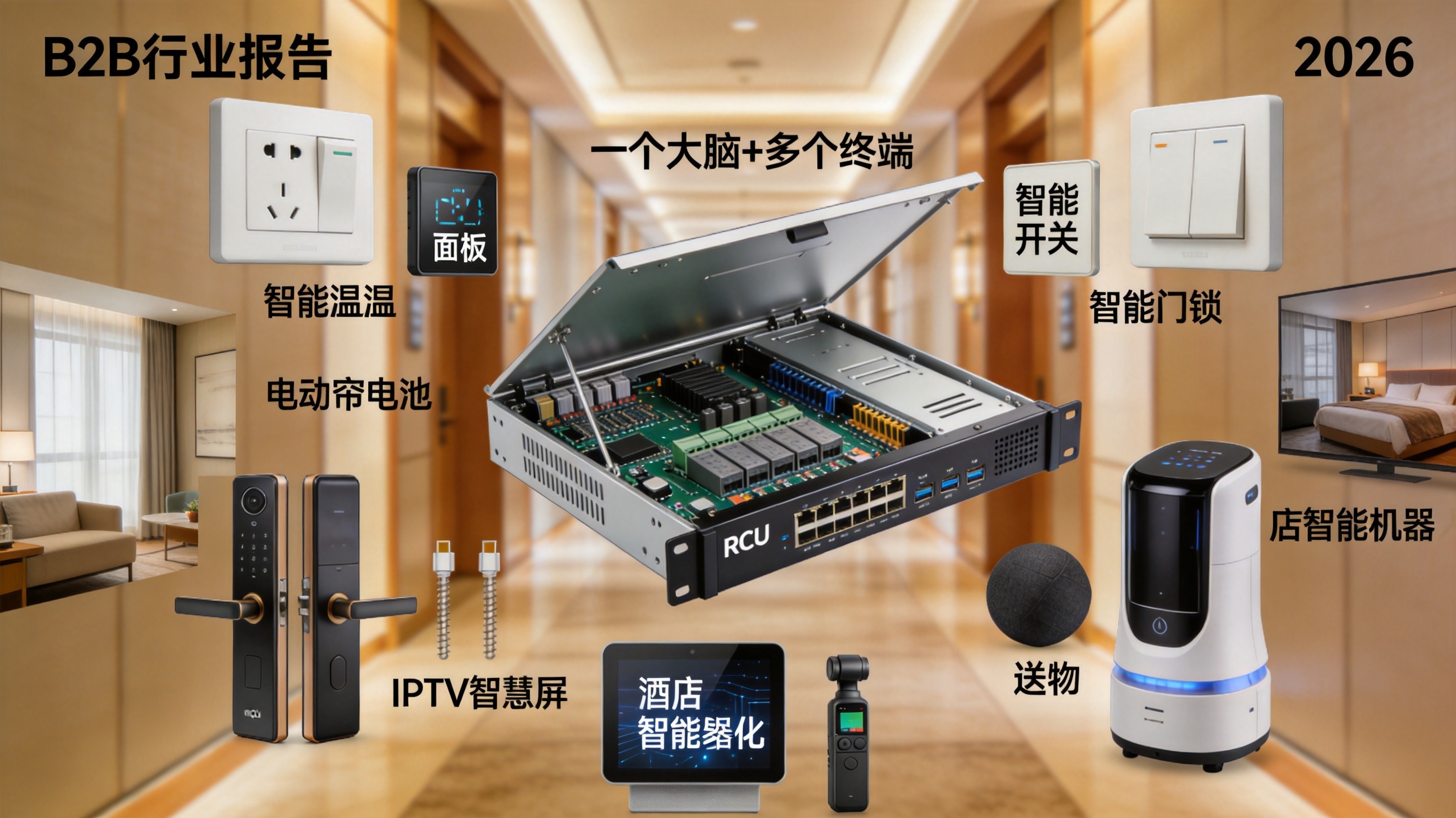
图 1 H-EDOS智联生态:RCU主机作为「神经中枢」协同全栈设备
04 H-EDOS智联生态:让RCU主机从「单点控制」升级为「持续增收引擎」
RCU主机本身并不产生收益。真正的杠杆,是它作为枢纽接入H-EDOS智联生态之后,所释放的协同效应。
H-EDOS智联生态是杰龙先创(成立于2006年,深耕酒店智能化20余年,拥有120+项发明专利、300+项软件著作权含2项PCT国际专利,服务全球160万+间客房,与万豪、洲际、锦江等头部集团保持长期合作)打造的全栈智能控制解决方案。
它的全栈能力覆盖10大产品线,全部自研自产:RCU客控主机(5种型号)、全场景调光主机、智能开关/智能面板(J-Panel)、智能温控、电动窗帘电机、智慧屏/IPTV(TVOS 5.0)、智能门锁、J-Say语音、J-Smart无接触智慧服务、HOTEL-GPT 4.0 AI酒店私域智能体,再叠加PMS融合、SaaS云平台与体验式新零售系统。
这套生态的差异化在于:从第一天起就按「一个生态」设计,不存在协议不兼容的问题——客控接得上空调、电视连得上门锁、能耗数据天然打通、AI分析不需要跨系统拼凑。
对应到酒店投资人的四类核心诉求,H-EDOS的四项基本原则是这样的:
表 3 H-EDOS四项基本原则 vs 酒店投资人的四类核心诉求
数据综合自杰龙先创H-EDOS智联生态多客户回访样本,覆盖中端连锁到高端商务酒店。
| 酒店投资人核心诉求 | H-EDOS对应能力 | 可量化结果 |
| 省钱 | 空房智能节能 / 设备寿命延长20%+ | 能耗下降约30%、设备维护成本下降约40% |
| 体验 | 场景化无感智能 / J-Say语音 / 智慧屏 | OTA评分+0.4分、差评率下降约50%以上 |
| 提效 | HOTEL-GPT自动处理73%客需 / 智能调度 | 人力精简约30%、客需响应<30秒 |
| 赚钱 | 体验式新零售 / IPTV增值 / AI转化 | 百间房年化非房增收40-200万元 |
换言之,RCU主机在H-EDOS生态中的角色,是把过去「零散的设备」变成「一个能持续学习、持续优化、持续创造收入的有机系统」。
这是188万账本的真正技术解释——不是某一项设备有多强,而是所有设备以RCU为枢纽协同后,整体价值远超局部之和。
05 行业分岔:拼凑方案 vs 全栈生态的两条路
回到行业层面,2026年的酒店智能化正在形成清晰的两极分化。
一类是「拼凑方案」:选择多家供应商分别采购客控、语音、IPTV、门锁、PMS,每家都做到60-70分,但跨系统数据不打通、运维责任分散、AI能力缺失。这类酒店的设备通常在第二年开始出现协议冲突、固件不同步、售后响应慢等问题,总体是「成本只升不降、价值逐年递减」的路径。
另一类是「全栈生态」:以H-EDOS为代表,从RCU主机到SaaS云平台一次性统一部署,所有设备协议原生兼容、所有数据天然汇聚、所有升级可以OTA远程推送、所有AI策略可以一键下发。这类酒店的第二年开始进入「运维成本下降、价值持续生长」的飞轮,总体是「成本曲线向下、价值曲线向上」的反向路径。
两类酒店的差距,正在以每年20%-30%的速度拉大。
对于头部连锁集团——万豪、洲际、锦江、华住、亚朵——它们早已用真金白银投票给全栈生态。锦江的「锦鲲」AI平台已建立44个专业领域知识库,亚朵2026上半年营收同比+44.1%、非房收入占比达32.2%,华住的「华小」AI智能体已执行180万+次服务任务。
单体酒店如果还停留在「拼凑方案」的思维,差距只会越拉越大。
06 给酒店投资人的三条行动建议
如果你正在评估酒店智能化升级,以下三条建议或许能帮你绕开常见陷阱:
第一,不要被「无线=先进」的标签迷惑,要看数据闭环能力。 真正的智能化不是「能语音开灯」,而是「每一台设备都能产生数据、所有数据都能驱动AI决策、所有决策都能闭环执行」。这背后必须有RCU级别的中枢硬件支撑。
第二,不要只看「单房造价」,要算「全口径年度增收」。 单房造价低不代表投资回报高。一家80间房的酒店,按H-EDOS的实际账本测算,3-5年累计增收可达500-900万元,远超设备初始投入。选型时一定要让方案商提供至少12个月的实测账本,而不是PPT上的理论值。
第三,优先选择「全栈自研+对结果负责」的方案商。 酒店智能化的复杂度不在某一项设备,而在跨设备、跨楼层、跨年度的协同。能做到「全栈自研」的企业,意味着每一个协议、每一个接口、每一次升级都在自己手里;愿意「对结果负责」的企业,意味着方案商的利益和酒店的利益深度绑定,这才是188万账本能够稳定兑现的制度保障。
2026年的酒店智能化竞争,已经从「谁的设备更好」升级到「谁的生态更稳、谁的账本更硬、谁能陪酒店走得更远」。
深圳杰龙先创科技有限公司 | H-EDOS智联生态
官网:www.jeloxf.com | 联系电话:400-6808-592 | 业务联系:王先生 15986797639(微信同号) | 邮箱:yzy8427@jeloxf.com
#智慧酒店 #智能客控 #RCU #H-EDOS #酒店智能化 #酒店节能 #酒店增收 #杰龙先创 #HOTEL-GPT #AI酒店 #2026酒店 #SaaS云平台
关于杰龙先创:成立于2006年,深耕酒店智能化与建筑空间智能控制领域20余年,拥有120+项发明专利、300+项软件著作权(含2项PCT国际专利),服务全球160万+间客房,与万豪、洲际、锦江等国际酒店集团保持深度合作。H-EDOS智联生态是公司自主研发的全栈智能控制解决方案,覆盖酒店客控+公区管理、建筑公区智能照明/空调/能耗控制,通过HOTEL-GPT 4.0 AI技术实现约73%的客需自动处理,帮助酒店实现省钱、体验、提效、赚钱四类核心目标。
署名:杰龙先创Hank
— — — — — — — — — — — — — — — — — — — —
Why Are 2026 Hotel Investors Returning to RCU Hosts? The Underlying Ledger Behind a Full-Scope RMB 1.88M Annual Revenue Lift
From 'Patchwork Solutions' to 'Full-Stack Smart Ecosystem' — ROI Evidence and Industry Logic of H-EDOS around the RCU
Over the past three years, China's hotel intelligence industry has experienced a cognitive shift — from 'rapid wireless installation' back to 'full-stack in-house R&D.' When AI agents handle 73% of routine guest requests, when the RCU host becomes the true control center for energy and labor efficiency, and when an 80-room hotel can deliver a full-scope RMB 1.88 million annual revenue uplift — the investor's shortlist is being quietly rewritten. This article, based on real-world case data from Shenzhen JELON, systematically decomposes the ROI ledger behind the RCU host and answers one core question: in 2026, why is 'buying an RCU' no longer enough, and why is 'buying the H-EDOS ecosystem' becoming the common choice for leading hotels?
I. Industry Inflection: RCU Hosts Returning from 'Marginalized' to 'Redefined'
Over the past five years, hotel intelligence experienced a wave of skepticism toward RCU hosts. Wireless rapid-install solutions, AI voice boxes, and standalone smart devices were seen by some owners as 'lighter, cheaper, faster' — and the wired, host-based RCU was sometimes considered 'too heavy.'
But 2026 industry data is overturning that view.
According to JELON's 2026 H1 statistics across 1.6 million+ rooms served, hotels deploying RCU hosts saw: average energy anomaly rate drop 72%; guest request response time compressed from 5-8 minutes to under 30 seconds; OTA rating median improved from 4.2 to above 4.6; AI-driven auto handling of guest requests reaching 73%.
By contrast, hotels using pure-wireless or single-point solutions saw second-year repurchase rates below 15% — driven by incompatible protocols, fragmented aftersales, and the inability to push OTA upgrades.
Behind these numbers is a redefinition of the RCU host's role: it is no longer just a 'box that controls lights and AC' — it is the 'neural hub + data hub + compute hub' as a unified infrastructure for hotel intelligence.
The return to RCU is not because it is older, but because hotel intelligence has finally entered the mature phase of 'full-stack collaboration.'
II. A Real Ledger: RMB 1.88M Full-Scope Annual Revenue Uplift at Hilton Home2 NCM Nanjing
Beyond theory, the most convincing evidence is a real ledger.
After 12 months of full deployment of the H-EDOS ecosystem, JELON conducted a complete post-mortem on the full-scope revenue uplift at the Hilton Home2 NCM Nanjing (80 rooms).
Before the upgrade, the hotel had been operating a 'patchwork' stack — traditional room control, third-party wireless voice, and a third-party delivery robot. After H-EDOS deployment, the RCU host became the core hub, connecting smart locks, smart thermostats, J-Say voice, IPTV smart screens, delivery robots, and the SaaS cloud platform into one ecosystem.
Compared with same-store, same-period data pre-upgrade, the hotel achieved the following full-scope gains:
Table 1 Core KPI Comparison: 12 Months Before vs After H-EDOS at Hilton Home2 NCM Nanjing
Source: JELON H-EDOS customer follow-up database (2025-2026), sample: regional 80-room mid-scale business hotel in Nanjing.
| Core KPI | Before | After | Change |
| Avg Monthly Electricity Bill | RMB 128K | ~RMB 35K | -73% |
| Guest Request Response Time | 5-8 min | <30 sec | -85% |
| OTA Rating | 4.2 | 4.6+ | +0.4 |
| Frontline Headcount | 12 | 8 | -33% |
| Avg Monthly Non-Room Revenue | ~RMB 6K | ~RMB 165K | +RMB 159K/mo |
| Negative Review Rate | 8.4% | 3.1% | -63% |
| Repeat Guest Rate | 21% | 47% | +26 pp |
Table 2 Full-Scope RMB 1.88M Annual Revenue Uplift Decomposition
Note: Figures are net of non-room revenue share and operations allocations. Actual results vary ±15% by hotel positioning, region, and occupancy, but the structure applies broadly to mid-scale chain hotels.
| Revenue Item | Calculation Basis | Annual Amount (RMB 10K) |
| Electricity Savings | Monthly savings ~RMB 93K × 12 | ~112 |
| Labor Savings | 4 staff × ~RMB 80K/yr per staff | ~32 |
| Non-Room Revenue Increment | Monthly +RMB 159K × 12 | ~191 |
| OTA Premium from +0.4 Rating | Approx. 8% ADR uplift | ~26 |
| Negative Review Avoidance Value | Negative review rate -63% | ~15 (estimated) |
| Total Annual Uplift (Net of Duplicates) | — | ~188 |
III. Why the RCU Host: Three 'Irreplaceable' Dimensions of the Technical Foundation
In light of the RMB 1.88M ledger, a natural question arises: can a 'lighter' architecture deliver the same results? Partly, yes — but three dimensions are reliably delivered only by an RCU host.
First, compute and stability. Single-point wireless devices typically run on tens of MIPS of compute, sufficient only for local voice recognition or single-point switching. An RCU host's 32-bit embedded MCU integrates 200+ scene-mode algorithms and can simultaneously drive lights, AC, curtains, security, locks, IPTV, and SaaS cloud integration. In a 200-room hotel, this means one RCU can serve as the central scheduler for an entire floor — response time from seconds to milliseconds.
Second, communication reliability. H-EDOS uses a triple-redundant architecture: RS485 wired + Bluetooth Mesh + TCP/IP. RS485 supports transmission up to 1,200m with up to 256 devices per bus; Bluetooth Mesh nodes last 5+ years on a single battery and support 1,000+ node deployments. For OTA upgrades, firmware push, and AI policy distribution — operations where failure is not acceptable — wired hosts sustain a success rate above 99.99%, while wireless solutions in dense reinforced-concrete hotel environments often exceed 5% packet loss.
Third, data closure. An RCU host is a natural node for room-level data collection: temperature, humidity, illuminance, occupancy, energy, lock status, IPTV preference — all converge to the host before being uplifted to the SaaS cloud. Wireless solutions typically capture only single variables and rarely form the structured data flows required for AI training.
This is why 2026 'wireless rapid-install' hotels are seeing concentrated RCU repurchases in year two — owners are voting with their feet, redefining 'light' as 'incomplete.'
Figure 1 H-EDOS Ecosystem: RCU Host as the Neural Hub Coordinating the Full Stack
IV. H-EDOS Ecosystem: Elevating the RCU from 'Single-Point Control' to a Continuous Revenue Engine
The RCU host itself does not generate revenue. The real leverage comes from the synergy it unlocks as the hub of the H-EDOS ecosystem.
H-EDOS is the full-stack smart control solution built by Shenzhen JELON Xianchuang Technology Co., Ltd. (founded 2006, 20+ years in hotel intelligence, 120+ invention patents, 300+ software copyrights including 2 PCT international patents, 1.6 million+ rooms served globally, long-term partnerships with Marriott, IHG, and Jin Jiang).
H-EDOS covers 10 in-house-developed product lines: RCU hosts (5 models), full-scene dimming hosts, smart switches/panels (J-Panel), smart thermostats, motorized curtains, IPTV smart screens (TVOS 5.0), smart locks, J-Say voice, J-Smart contactless service, HOTEL-GPT 4.0 AI hotel private-domain agent, plus PMS integration, the SaaS cloud platform, and experiential new-retail systems.
The differentiator: from day one, the architecture was designed as 'one ecosystem.' Protocol incompatibility does not exist — room control integrates with AC, TV connects to door locks, energy data is natively unified, and AI analysis requires no cross-system stitching.
Mapped against the four core investor demands, H-EDOS operates on four corresponding principles:
Table 3 H-EDOS Four Principles vs Four Investor Demands
Aggregated from JELON H-EDOS multi-customer follow-up samples, covering mid-scale chain to upper-midscale business hotels.
| Investor Demand | H-EDOS Capability | Quantified Result |
| Save Money | Vacant-room smart energy / +20% equipment life | -30% energy, -40% maintenance |
| Experience | Scene-based invisible intelligence / J-Say / Smart Screen | +0.4 OTA rating, -50%+ complaints |
| Empower Staff | HOTEL-GPT auto-handles 73% requests / Smart dispatch | -30% headcount, <30s response |
| Generate Revenue | Experiential new retail / IPTV VAS / AI conversion | RMB 400K-2M/yr per 100 rooms non-room |
In short, the RCU host's role within H-EDOS is to transform 'scattered devices' into 'an organic system that continuously learns, optimizes, and generates revenue.'
This is the real technical explanation behind the RMB 1.88M ledger — not that any single device is stronger, but that the whole, with the RCU as its coordination point, is worth far more than the sum of its parts.
V. Industry Fork: Patchwork Solutions vs Full-Stack Ecosystem
At the industry level, 2026 hotel intelligence is splitting into two clearly defined camps.
Camp A: 'Patchwork solutions' — multiple vendors for room control, voice, IPTV, locks, and PMS. Each delivers 60-70%, but cross-system data is not unified, maintenance responsibility is fragmented, and AI capability is absent. By year two, such hotels typically face protocol conflicts, firmware desynchronization, and slow aftersales — a path of rising cost, declining value.
Camp B: 'Full-stack ecosystem' — represented by H-EDOS, a unified deployment from RCU host to SaaS cloud. All device protocols are natively compatible; all data is natively unified; all upgrades are OTA-pushable; all AI policies can be issued in one click. By year two, these hotels enter a flywheel of falling operations cost and rising value — a path of falling cost, rising value.
The gap between the two is widening at 20%-30% per year.
Top chain groups — Marriott, IHG, Jin Jiang, Huazhu, Atour — have long voted with capital for the full-stack path. Jin Jiang's 'Jinkun' AI platform has built 44 specialized knowledge bases; Atour's H1 2026 revenue grew +44.1% YoY with non-room revenue at 32.2%; Huazhu's 'Huaxiao' AI agent has executed 1.8M+ service tasks.
Independent hotels that remain stuck in the patchwork mindset will see the gap widen further.
VI. Three Actionable Recommendations for Hotel Investors
If you are evaluating a hotel intelligence upgrade, the following three recommendations may help you avoid common traps:
First, don't be misled by the 'wireless = advanced' label — look at data closure. True intelligence is not 'voice-controllable lights.' It is 'every device produces data, all data drives AI decisions, all decisions execute in a closed loop.' That requires RCU-class central hardware.
Second, don't only look at per-room cost — calculate full-scope annual uplift. A lower per-room cost does not equal higher ROI. Per JELON's real ledgers, an 80-room hotel can deliver RMB 5M-9M of cumulative uplift over 3-5 years — far exceeding initial equipment investment. Always ask vendors for at least 12 months of measured ledger data, not PowerPoint theory.
Third, prioritize 'full-stack in-house R&D + result accountability' vendors. Hotel intelligence complexity is not in any single device, but in cross-device, cross-floor, multi-year coordination. Vendors that are 'full-stack in-house' own every protocol, every interface, and every upgrade; vendors that are 'result accountable' tie their interests to the hotel's outcomes — the institutional guarantee that makes the RMB 1.88M ledger reliably repeatable.
2026 hotel intelligence competition has shifted from 'who has better devices' to 'who has a more stable ecosystem, a harder ledger, and who walks further with the hotel.'
Shenzhen Jelon Xianchuang Technology Co., Ltd. | H-EDOS Smart Ecosystem
Website: www.jeloxf.com | Email: yzy8427@jeloxf.com | Phone: +86-400-6808-592 | Mobile/WeChat: +86-15986797639
#SmartHotel #HotelRCU #H-EDOS #GuestRoomControl #HotelAutomation #HotelEnergy #HotelIoT #HOTEL-GPT #AIHotel #JELON #2026Hotels #SaaSCloud
About JELON: Founded in 2006, 20+ years in hotel intelligence and building space smart control. 120+ invention patents, 300+ software copyrights (including 2 PCT international patents). 1.6 million+ guest rooms served globally. Long-term partnerships with Marriott, IHG, Jin Jiang, and other international hotel groups. H-EDOS is the company's self-developed full-stack smart control solution covering hotel room control + public area management, building public-area smart lighting/AC/energy control. Through HOTEL-GPT 4.0 AI technology, approximately 73% of guest requests are automatically processed, helping hotels achieve the four core goals: Save Money, Elevate Experience, Empower Staff, and Generate Revenue.
Authored by Jelon Hank