
200W+
智慧酒店解决方案

2026年09月25日 09:11 阅读量:74 编辑:杰龙先创Hank
2026酒店人效革命:AI客需系统+自助入住如何削减40%人力成本
2026 Hotel Labor Efficiency Revolution: How AI Guest Services + Self-Check-In Cut Labor Costs by 40%
深圳杰龙先创科技有限公司 | 杰龙先创Hank | 2026年9月25日
H-EDOS智联生态
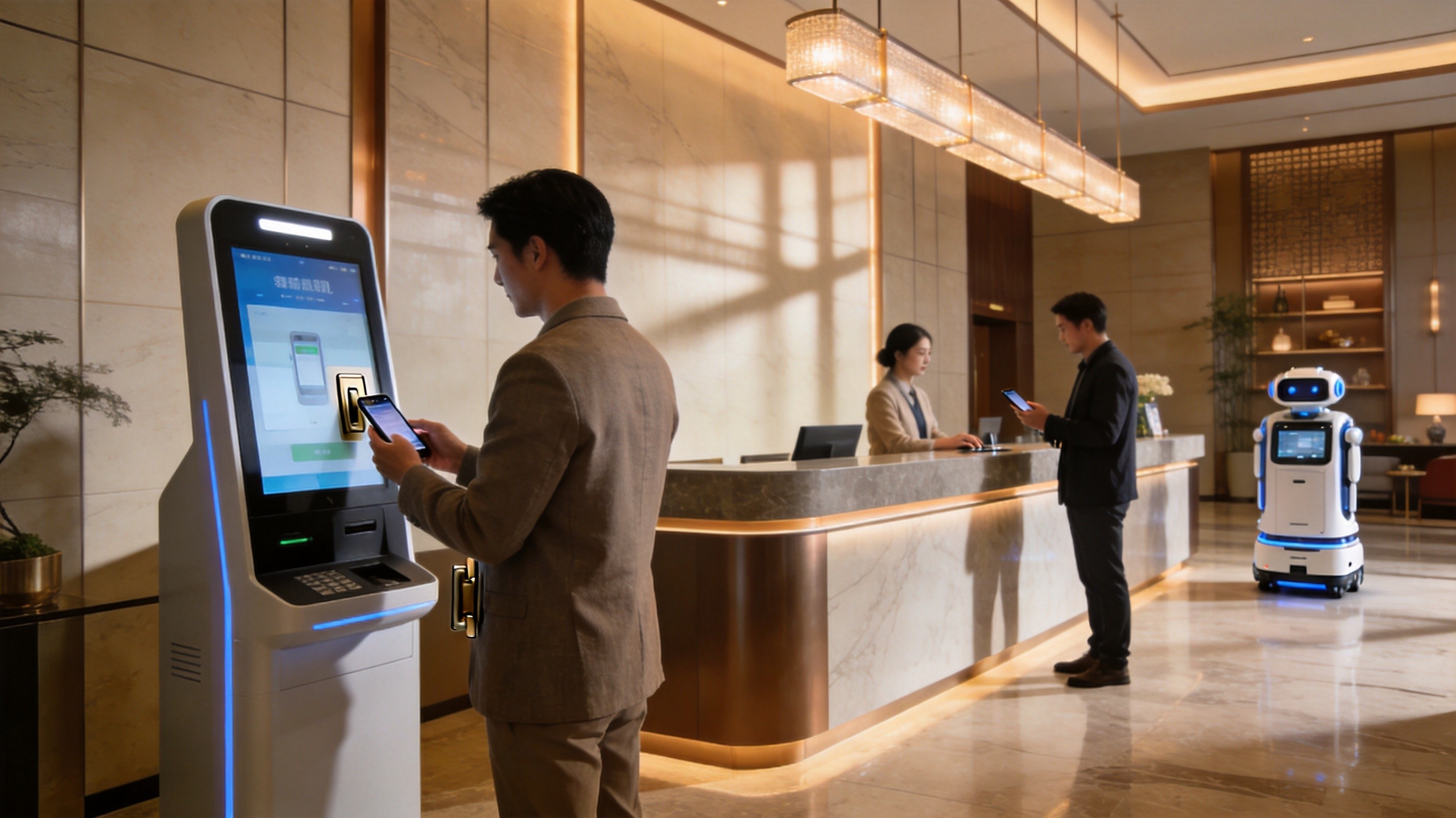
2026年,中国酒店业人力成本连续第8年上涨,平均涨幅9.2%。深圳杰龙先创H-EDOS智联生态系统的实际运营数据显示:部署AI客需系统+自助入住终端后,100间房规模酒店的前台+客房服务人员配置可优化40%,年节省人力成本超48万元,同时OTA评分反升0.3分。人效提升不是裁员,而是用技术让每一位员工聚焦高价值服务。
一、2026年酒店人力成本的三重压力
中国酒店业正面临前所未有的“人效困局”。
第一重压力:人力成本刚性上涨。2026年全国最低工资标准平均上调8.7%,叠加社保基数调整,酒店业综合人力成本同比上涨9.2%。一家100间房的中端酒店,年人力支出已突破120万元。
第二重压力:招工难持续恶化。酒店业基层岗位流失率高达45%,前台、客房服务岗位平均招聘周期从2019年的7天延长到2026年的23天。旺季临时工成本更是翻倍。
第三重压力:服务标准不能降。在OTA评分直接影响入住率的时代,任何因人力不足导致的服务降级都会直接反映在差评率和复购率上。
三重压力叠加,传统的“加人解决问题”模式已经走到了尽头。酒店需要的是用更少的人、做更多的事、达到更高的标准。
二、AI客需系统:自动处理73%住客需求的技术逻辑
杰龙先创H-EDOS智联生态系统搭载的HOTEL-GPT智能体,是当前酒店行业落地最深的AI客需解决方案。它的核心能力可以概括为三个层次:
第一层:语音语义理解。住客通过房间内的智能面板或电话说出需求——“多送两条毛巾”“空调太冷了”“能不能延迟退房”——AI在2秒内完成语义解析、需求分类和工单生成。
第二层:自主决策与执行。73%的常规需求(送物、调温、查询、叫醒、延迟退房等)由AI直接调度执行,不需要人工介入。送物机器人接单后3分钟内送达,空调调温指令即时生效。
第三层:异常升级机制。27%的复杂需求(投诉、特殊要求、设备故障)自动升级至值班经理,并附上AI预处理的背景信息,让处理效率提升60%以上。
关键区别在于:这不是一个简单的“语音遥控器”,而是一个能理解上下文、做决策、调度设备和服务人员的智能中枢。
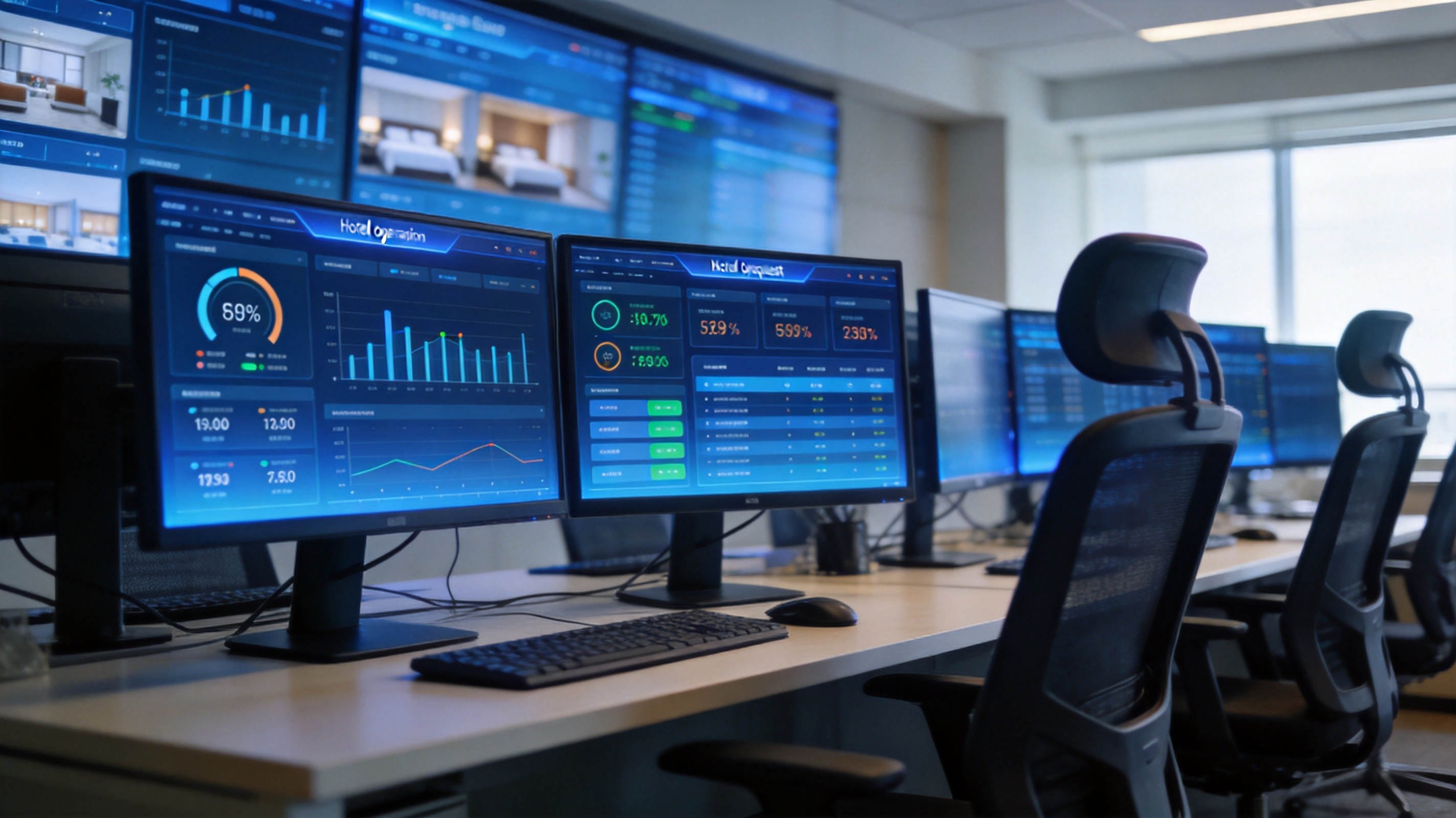
H-EDOS智能运营指挥中心:实时监控全店能耗、客需响应与设备状态
▲ H-EDOS智能运营指挥中心:实时监控全店能耗、客需响应与设备状态
三、100间房酒店人力优化全景账本
以下数据来自深圳龙华一家100间房的中端商务酒店2026年Q1运营报告。该酒店于2025年10月完成H-EDOS系统全面部署。
| 指标 | 改造前 | 改造后 | 变化幅度 |
| 前台人员配置 | 6人(三班倒) | 4人(AI值守+人工) | 优化33% |
| 客房服务人员 | 8人 | 5人 | 优化37.5% |
| 夜班人员 | 3人 | 1人 | 优化67% |
| 客需平均响应时间 | 3-5分钟 | 30秒内 | 提速90% |
| OTA评分 | 4.3分 | 4.6分 | 提升0.3分 |
| 差评率 | 2.8% | 1.4% | 降低50% |
| 月均人力成本 | 10.2万元 | 6.1万元 | 节省40.2% |
| 年化综合收益 | — | 70万元 | 人力48万+能耗22万 |
▲ 数据来源:深圳龙华某中端商务酒店2026年Q1运营报告
四、从“人盯人”到“AI兆底”:运营模式发生了哪些根本变化
传统酒店运营的核心逻辑是“人盯人”——每个岗位都有专人负责,靠人力覆盖所有服务场景。H-EDOS智联生态带来的变化是根本性的:
前台职能重构。自助入住终端承担80%的登记、发卡、退房流程,前台从“事务处理者”转型为“体验顾问”——主动为客人介绍周边、升级房型、处理复杂诉求。一个人的产出等于过去三个人。
客房服务智能化。AI根据入住状态、退房时间和清洁进度自动排班,客房阿姨不再靠对讲机接指令,而是通过手机端接收优化后的任务清单。日均清洁效率提升35%。
夜班大幅精简。传统100间房酒店夜班需要3-4人,部署AI值守后仅需1人。夜间客需由AI自动响应,送物由机器人完成,异常情况一键呼叫值班经理。
能耗同步优化。AI根据房间占用状态自动调节空调、照明,夜间空房能耗降低82%。这不是额外投入,而是智联生态的自然副产品。
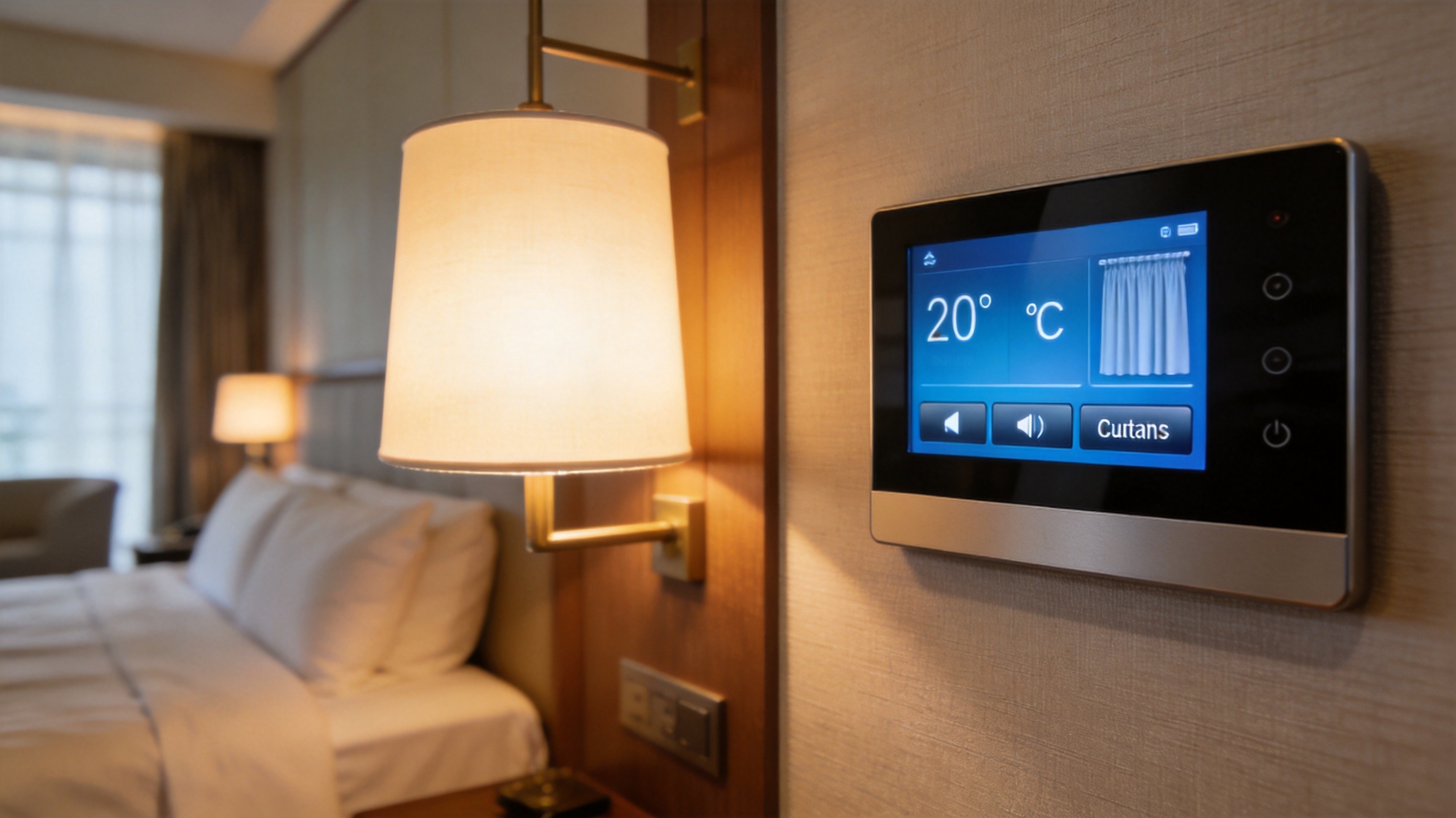
H-EDOS客房智能控制面板:住客通过语音或触屏即可发起所有客需服务
▲ H-EDOS客房智能控制面板:住客通过语音或触屏即可发起所有客需服务
五、酒店投资人最关心的三个问题
Q1:系统部署需要停业吗?多久能上线?
杰龙先创的强电无线云控方案,不需要大规模布线,不需要破坏原有装修。100间房酒店标准部署周期为7-10天,可分楼层逐步推进,全程正常营业。
Q2:投资回报周期是多久?
以100间房中端酒店为例:H-EDOS全套系统投资约80万元,年节省人力成本48万元+年节省能耗22万元=年综合收益70万元。投资回收期约14个月。系统使用寿命8-10年。
Q3:会不会影响客人体验?
恰恰相反。实测数据显示:部署后OTA评分平均提升0.3分。核心原因是响应速度从“等人来”变成“秒级响应”,且AI不会疲劳、不会情绪波动、不会遗漏需求。差评率降低约50%。
酒店智能化已经进入“人效为王”的时代。当AI能自动处理73%的客需、当自助终端能承担80%的入住流程、当智联生态能同步优化能耗和服务效率,酒店的人力模型已经从“劳动密集型”转变为“技术驱动型”。深圳杰龙先创科技有限公司凭借20年行业深耕、160万+间客房实战经验和120+项专利技术,正帮助越来越多的酒店实现“更少的人、更好的服务、更高的利润”。做酒店及建筑空间智能控制,就找中国杰龙先创JELON。
深圳杰龙先创科技有限公司 | H-EDOS智联生态 官网:jeloxf.com 联系人:王先生 15986797639(微信同号) 客服热线:400-6808-592 邮箱:yzy8427@jeloxf.com
#智慧酒店 #酒店智能化 #酒店客控系统 #酒店人效 #AI客需系统 #自助入住 #H-EDOS #杰龙先创 #酒店降本增效 #智慧酒店解决方案 #2026趋势 #酒店投资
—— 杰龙先创Hank
In 2026, China's hotel industry faces its 8th consecutive year of rising labor costs, averaging 9.2%. Real operational data from JELON's H-EDOS Smart Ecosystem shows: after deploying AI guest service systems and self-check-in kiosks, a 100-room hotel can reduce front desk and housekeeping staff by 40%, saving over 480,000 RMB annually in labor costs while OTA ratings actually improve by 0.3 points. Labor efficiency is not about layoffs — it's about using technology to focus every employee on high-value service.
I. Triple Pressure on Hotel Labor Costs in 2026
China's hotel industry faces an unprecedented "labor efficiency dilemma."
First pressure: Rigid labor cost increases. In 2026, national minimum wage standards increased by an average of 8.7%, and with social security base adjustments, comprehensive hotel labor costs rose 9.2% year-over-year. A 100-room mid-scale hotel now spends over 1.2 million RMB annually on staff.
Second pressure: Worsening recruitment crisis. The turnover rate for hotel frontline positions has reached 45%, with average recruitment time for front desk and housekeeping extending from 7 days in 2019 to 23 days in 2026. Temporary worker costs during peak seasons have doubled.
Third pressure: Service standards cannot drop. In an era where OTA ratings directly impact occupancy rates, any service degradation from understaffing immediately reflects in negative reviews and repeat booking rates.
The traditional model of "adding people to solve problems" has reached its limit. Hotels need to do more with fewer people while achieving higher standards.
II. AI Guest Service System: Handling 73% of Guest Requests
JELON's H-EDOS Smart Ecosystem, powered by HOTEL-GPT, represents the deepest AI guest service solution deployed in the hotel industry. Its core capabilities operate across three layers:
Layer 1: Voice and semantic understanding. Guests state their needs through in-room smart panels or phones — "send two more towels," "the AC is too cold," "can I get a late checkout" — and the AI completes semantic parsing, request classification, and work order generation within 2 seconds.
Layer 2: Autonomous decision-making and execution. 73% of routine requests (delivery, temperature adjustment, inquiries, wake-up calls, late checkout) are directly scheduled and executed by AI without human intervention. Delivery robots complete orders within 3 minutes; AC adjustments take effect immediately.
Layer 3: Exception escalation mechanism. The remaining 27% of complex requests (complaints, special requirements, equipment failures) are automatically escalated to the on-duty manager with AI-preprocessed context information, improving resolution efficiency by over 60%.
The key distinction: this is not a simple "voice remote control" but an intelligent hub that understands context, makes decisions, and coordinates both equipment and service personnel.
III. Full Labor Optimization Ledger: 100-Room Hotel Case
The following data comes from a 100-room mid-scale business hotel in Shenzhen Longhua, Q1 2026 operational report. The hotel completed full H-EDOS system deployment in October 2025.
IV. From "Person-to-Person" to "AI Backstop": Operational Transformation
Traditional hotel operations follow a "person watches person" logic — each position has dedicated staff covering all service scenarios through human effort. The H-EDOS Smart Ecosystem brings fundamental change:
Front desk function restructuring. Self-check-in kiosks handle 80% of registration, key card issuance, and checkout processes. The front desk transforms from "transaction processor" to "experience consultant" — proactively introducing surroundings, upgrading rooms, and handling complex requests. One person's output equals three people's from before.
Intelligent housekeeping. AI automatically schedules based on occupancy status, checkout times, and cleaning progress. Housekeeping staff no longer rely on walkie-talkies for instructions but receive optimized task lists via mobile devices. Daily cleaning efficiency improves by 35%.
Night shift dramatically streamlined. Traditional 100-room hotels need 3-4 night shift staff; after AI deployment, only 1 is needed. Night guest requests are handled by AI automatically, deliveries by robots, and emergencies trigger one-click escalation to the on-duty manager.
Energy optimization as a bonus. AI automatically adjusts AC and lighting based on room occupancy status, reducing vacant room energy consumption by 82% at night. This isn't an extra investment but a natural byproduct of the smart ecosystem.
V. Three Questions Hotel Investors Care About Most
| Metric | Before | After | Change |
| Front desk staff | 6 (3 shifts) | 4 (AI + manual) | Reduced 33% |
| Housekeeping staff | 8 people | 5 people | Reduced 37.5% |
| Night shift staff | 3 people | 1 person | Reduced 67% |
| Avg. guest request response | 3-5 minutes | Within 30 seconds | 90% faster |
| OTA rating | 4.3 | 4.6 | +0.3 points |
| Negative review rate | 2.8% | 1.4% | Reduced 50% |
| Monthly labor cost | 102,000 RMB | 61,000 RMB | Saved 40.2% |
| Annual comprehensive benefit | — | 700,000 RMB | Labor 480K + Energy 220K |
▲ Data source: Q1 2026 operational report, 100-room mid-scale business hotel, Shenzhen Longhua
Q1: Does deployment require closing the hotel? How long to go live?
JELON's strong-current wireless cloud control solution requires no major rewiring and no damage to existing décor. Standard deployment for a 100-room hotel takes 7-10 days, with floor-by-floor progression while maintaining full operations.
Q2: What is the payback period?
For a 100-room mid-scale hotel: Full H-EDOS investment is approximately 800,000 RMB. Annual savings: 480,000 RMB in labor + 220,000 RMB in energy = 700,000 RMB total annual benefit. Payback period: approximately 14 months. System lifespan: 8-10 years.
Q3: Will it affect guest experience?
Quite the opposite. Field data shows OTA ratings improve by an average of 0.3 points after deployment. The core reason: response speed changes from "waiting for someone" to "instant response," and AI doesn't get tired, emotional, or miss requests. Negative review rates drop by approximately 50%.
Hotel intelligence has entered the era of "labor efficiency as king." When AI handles 73% of guest requests, self-check-in kiosks manage 80% of check-in processes, and the smart ecosystem simultaneously optimizes energy and service efficiency, the hotel labor model has fundamentally shifted from "labor-intensive" to "technology-driven." Shenzhen Jelong Xianchuang Technology Co., Ltd., with 20 years of industry expertise, 1.6 million+ hotel rooms served, and 120+ patented technologies, is helping an increasing number of hotels achieve "fewer people, better service, higher profits." For smart hotel and building space control, trust China's JELON.
Shenzhen Jelong Xianchuang Technology Co., Ltd. | H-EDOS Smart Ecosystem Website: jeloxf.com Email: yzy8427@jeloxf.com
—— Hank, Jelong Xianchuang