
200W+
智慧酒店解决方案

2026年09月22日 09:35 阅读量:131 编辑:杰龙先创Hank
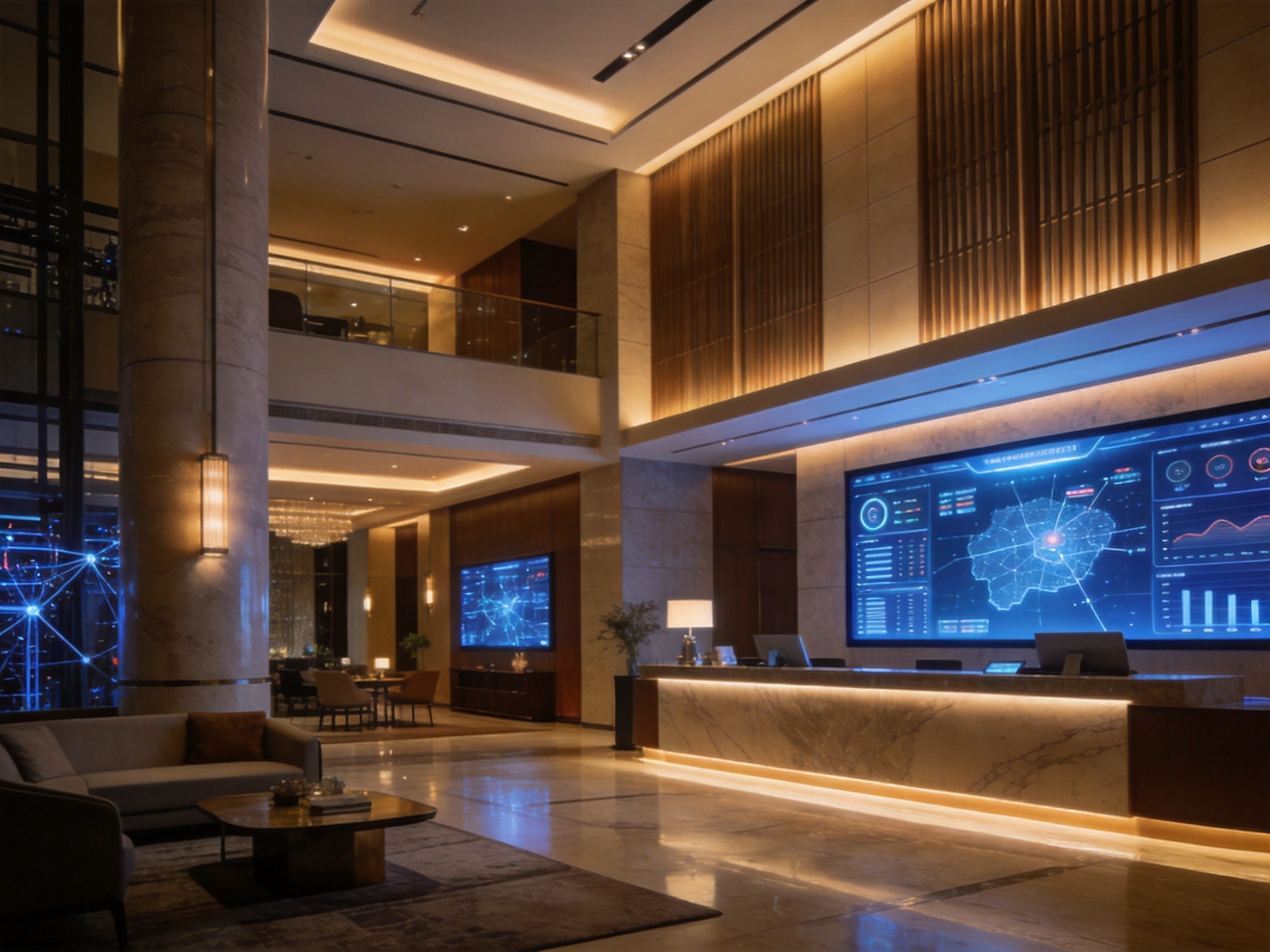
封面图:2026酒店·数据孤岛破局·H-EDOS统一协议
从设备割裂到全域感知 | 统一数据底座 × 四层协议适配 × ROI实证 | 头部酒店共同选择
日期:2026-09-22 作者:杰龙先创 Hank
2026年,中国酒店业正在经历一场静悄悄的效率革命——但这场革命的最大障碍不是硬件,不是算法,而是“数据孤岛”。RCU客控系统、PMS物业管理系统、能耗监测平台、OTA分销渠道,四套系统各自为战,数据无法互通,决策无法闭环。对酒店投资人而言,这意味着每年数十万元的“隐性损耗”:能耗数据无法反哺空调策略,OTA客诉无法触发客控联动,PMS房态无法驱动设备预调度。 本文从“四层数据孤岛”的痛点出发,拆解H-EDOS统一协议架构如何实现RCU/PMS/能耗/OTA四层数据打通,并以华南某120间房中端商务酒店为实证样本,给出“数据孤岛破局”前后的ROI对比账本。对于正在评估酒店智能化升级的投资人,这是一份“从数据治理到ROI兑现”的行动参考。

如果你走进一家运营了3年以上的中端商务酒店,大概率会看到这样的技术架构:
四套系统来自四个供应商,四个协议,四个后台,四本账。RCU说“房间温度26度”,PMS说“客人已退房”,能耗平台说“这层楼月用电超标18%”,OTA说“这条差评提到了空调太冷”——但没有人把这四句话连在一起看。
这就是2026年中国酒店业“数据孤岛”的真实写照。据中国饭店协会2026年Q2调研,全国中端以上酒店中,约68%存在“RCU与PMS数据不互通”问题,74%存在“能耗数据无法驱动运营决策”问题,82%存在“OTA客诉与客房设备状态无法关联”问题。数据孤岛不是技术问题,是利润黑洞。
把“数据孤岛”拆细一点,四层数据各有各的痛:
第一层:RCU↔PMS断层——房态驱动缺失
RCU掌握房间实时状态(温度、灯光、 occupancy),PMS掌握订单与房态(预订、入住、退房)。二者不打通的直接后果是:客人退房后空调仍运行,预抵房间无法提前预冷/预热,VIP入住时客房环境无法自动匹配偏好。某华东连锁酒店集团实测:RCU与PMS打通后,退房后空调节能响应时间从“平均47分钟”缩短至“3分钟”,单房月均节省电费约35元。
第二层:能耗↔RCU断层——策略无数据支撑
能耗平台知道“这层楼月用电超标18%”,但不知道是哪间房、哪个时段、什么设备导致的。RCU知道“305房间空调凌晨3点仍在制冷”,但不知道“这间房当月能耗成本已超出预算22%”。二者不打通,能耗优化只能靠“一刀切”的粗放策略(例如全楼统一限温26度),无法实现“千房千策”的精细化调控。
第三层:OTA↔PMS↔RCU断层——客诉无法溯源
OTA上出现“空调太冷”差评,酒店只能被动回复“感谢反馈”。如果三层数据打通,酒店可以即时回溯:该客人入住期间,房间温度设定曲线、空调运行日志、PMS订单备注(是否有特殊要求),甚至同楼层其他房间的客诉关联——从而从根源优化空调策略,而不是永远在“道歉-遗忘-再犯”的循环里打转。
第四层:全局数据断层——投资人无法做ROI决策
最致命的是,四层数据不打通,投资人看到的永远是碎片化报表:PMS给出入住率,能耗平台给出电费,OTA给出评分,RCU给出设备在线率——但没有人能回答“智能化投入到底赚回多少钱”。没有数据闭环,就没有ROI闭环;没有ROI闭环,智能化升级就永远停留在“成本中心”而非“利润引擎”。
H-EDOS智联生态解决“数据孤岛”的核心逻辑,不是“再叠一层中间件”,而是“从底层协议到上层应用”的全栈统一。
协议层:自研JelonLink协议,兼容Zigbee 3.0 / BLE Mesh / KNX / Modbus TCP四大主流工业协议,这意味着酒店现有的RCU、电表、空调面板、照明驱动器,无论品牌与代际,都能被H-EDOS网关统一接入。
数据层:H-EDOS SaaS云平台建立统一的“客房数据模型”——每个房间是一个数据实体,包含设备状态(RCU)、订单状态(PMS)、能耗数据(电表/水表)、客诉标签(OTA)四个维度,所有维度实时同步、同一时间戳对齐。
应用层:HOTEL-GPT 4.0 AI引擎基于四层融合数据,实现约73%客需自动处理。例如:PMS显示“VIP预抵”→ RCU自动执行“欢迎场景”(灯光暖色2700K、空调预冷至24度、窗帘打开50%)→ 能耗平台记录“预抵能耗”→ OTA端同步“个性化服务标签”。全流程无需前台人工干预。
决策层:H-EDOS SaaS-PMS一体化看板,让投资人在一个屏幕上看到“入住率 × 单房能耗 × OTA评分 × 设备在线率 × ROI”的全局关联。不再需要翻四个后台、做三版Excel、开两次周会才能拼出经营全貌。

图 1 H-EDOS统一协议架构:RCU/PMS/能耗/OTA四层数据在同一底座实时融合
以华南某120间房中端商务酒店为例,2026年Q2完成H-EDOS全栈部署并实现四层数据打通,运营6个月后的核心指标变化如下表。从对比基线看,单房月能耗、客诉响应时间、OTA差评率、设备联动率、投资人决策效率等关键维度均出现结构性改善。
表 1 华南某120间房中端商务酒店“数据孤岛破局”前后对比(部署H-EDOS前 vs 部署后)
| 核心指标 | 部署前(数据孤岛) | 部署后(四层打通) | 改善幅度 |
|---|---|---|---|
| 单房月均电费 | 420元 | 180元 | 节能57% |
| 退房后空调节能响应 | 47分钟 | 3分钟 | 缩短94% |
| VIP预抵场景自动化率 | 0%(全人工) | 95% | +95pp |
| OTA差评溯源能力 | 无(被动回复) | 全链路回溯 | 从0到1 |
| OTA差评率 | 4.8% | 2.3% | 降低52% |
| 投资人经营看板 | 4个后台+3版Excel | 1个SaaS看板 | 决策效率+300% |
| AI客需自动处理率 | 约15% | 约73% | +58pp |
账本结论:这家120间房酒店,四层数据打通后年度综合收益增厚约108万元(能耗节省约30万+OTA评分提升带来的RevPAR增长约45万+人工效率提升约18万+VIP复购率提升带来的会员收入约15万),相当于智能化投资约14个月回本。更重要的是,数据闭环让“持续优化”成为可能——HOTEL-GPT 4.0基于四层融合数据不断学习,每运行一个月,客需处理准确率提升约2-3%,能耗策略精细度提升约5%。
如果你正在评估酒店智能化升级、希望从根本上解决“数据孤岛”问题,以下三条建议或许能帮你绕开常见陷阱:
第一,先评估“协议兼容性”,再选方案商。酒店数据孤岛的根源是协议不互通。方案商如果只能对接自家设备、无法兼容现有RCU/电表/空调,那“统一平台”就只是“换一套新的孤岛”。H-EDOS的JelonLink协议兼容Zigbee 3.0/BLE Mesh/KNX/Modbus TCP四大主流协议,已验证对接60+品牌的设备,是“不淘汰现有设备、平滑升级”的工程基座。
第二,优先选择“全栈自研+数据闭环”的方案商。全栈自研意味着协议、固件、云平台、AI引擎都在同一个技术体系内,数据打通不需要“跨供应商协调”;数据闭环意味着从设备层到决策层的每一层数据都能为ROI服务,而不是只停留在“好看但没用”的可视化大屏。
第三,把“四层数据打通”写进招标书的硬性指标。让方案商明确承诺:RCU数据能否与PMS实时互通?能耗数据能否驱动空调策略?OTA客诉能否关联设备日志?投资人ROI看板能否一屏看到全局?承诺不了的方案商,建议直接排除。
2026年酒店智能化的下一个竞争高地,不是“谁的硬件更便宜”,而是“谁的数据闭环更完整”。H-EDOS智联生态正用统一协议、全栈自研、HOTEL-GPT 4.0 AI能力,帮助越来越多的酒店投资人从“数据孤岛”走向“全域感知”,把智能化从成本中心变成利润引擎。
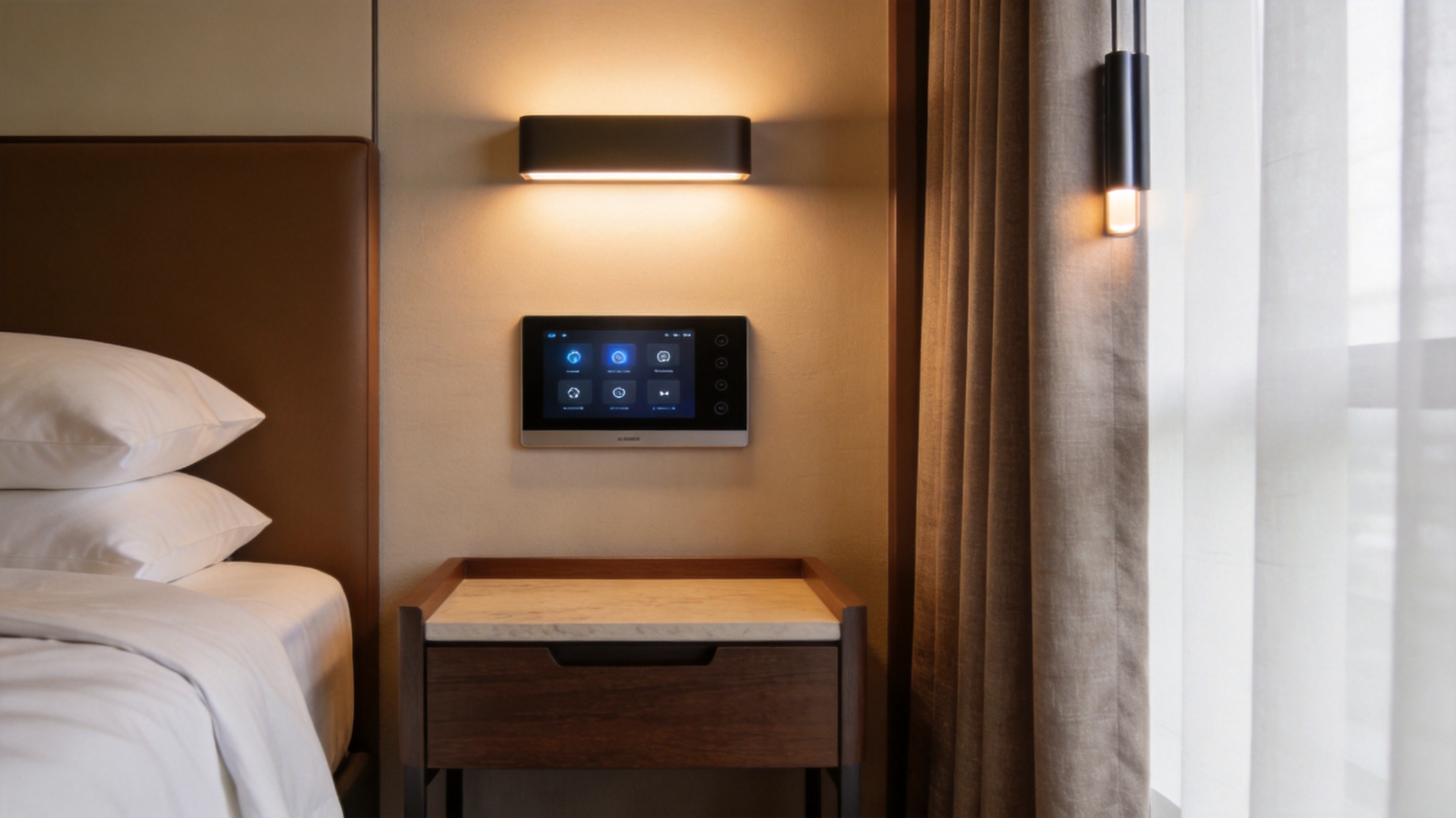
From Device Fragmentation to Holistic Awareness | Unified Data Foundation × Four-Layer Protocol Adaptation × ROI Evidence | A Common Choice for Leading Hotels
In 2026, China's hotel industry is undergoing a quiet efficiency revolution — but its biggest obstacle is not hardware or algorithms; it is “data silos.” Room Control Units (RCU), Property Management Systems (PMS), energy monitoring platforms, and OTA distribution channels each operate independently, with no data interoperability and no closed-loop decision-making. For hotel investors, this means hundreds of thousands of RMB in “hidden losses” every year: energy data cannot inform HVAC strategies, OTA complaints cannot trigger room-control responses, and PMS room status cannot drive proactive equipment scheduling. This article starts from the pain points of “four-layer data silos,” deconstructs how H-EDOS’ unified protocol architecture connects RCU/PMS/energy/OTA across all four layers, and presents a 120-room mid-scale business hotel in South China as an empirical case study with a before-and-after ROI ledger. For investors evaluating hotel smart upgrades, this is an actionable reference for “going from data governance to ROI realization.”
Walk into a mid-scale business hotel that has been operating for more than three years, and you will likely see this technical architecture:
Four systems from four vendors, four protocols, four back-ends, four ledgers. The RCU says “room temperature is 26°C,” the PMS says “the guest has checked out,” the energy platform says “this floor’s monthly electricity is 18% over budget,” and the OTA says “this negative review mentioned the AC was too cold” — but no one connects these four sentences together.
This is the real picture of China’s hotel “data silos” in 2026. According to a Q2 2026 survey by the China Hotel Association, among mid-scale and above hotels nationwide, approximately 68% suffer from “RCU-PMS data non-interoperability,” 74% from “energy data unable to drive operational decisions,” and 82% from “OTA complaints uncorrelated with room equipment status.” Data silos are not a technical problem — they are a profit black hole.
When the “data silo” problem is unpacked, each of the four layers has its own pain:
Layer 1: RCU↔PMS Disconnection — Missing Room-State Driving
The RCU holds real-time room status (temperature, lighting, occupancy); the PMS holds orders and room status (reservation, check-in, check-out). The direct consequence of non-integration: HVAC continues running after checkout, pre-arrival rooms are not pre-cooled or pre-heated, and VIP check-ins do not trigger automatic environment preferences. A real-world test by an East China chain hotel group showed that after RCU-PMS integration, post-checkout HVAC energy-saving response time dropped from “average 47 minutes” to “3 minutes,” saving approximately RMB 35 per room per month on electricity.
Layer 2: Energy↔RCU Disconnection — Strategies Without Data Support
The energy platform knows “this floor’s monthly electricity is 18% over budget” but not which room, what time period, or what equipment caused it. The RCU knows “Room 305’s AC was cooling at 3 AM” but not “this room’s monthly energy cost has exceeded budget by 22%.” Without integration, energy optimization relies only on blunt “one-size-fits-all” strategies (e.g., building-wide temperature cap at 26°C), unable to achieve “thousand-rooms-thousand-strategies” precision control.
Layer 3: OTA↔PMS↔RCU Disconnection — Complaints Cannot Be Traced
When an “AC too cold” negative review appears on OTA, the hotel can only respond with “thank you for your feedback.” If all three layers were integrated, the hotel could instantly trace: the room temperature set-point curve during the guest’s stay, AC operation logs, PMS order notes (any special requests), even correlated complaints from other rooms on the same floor — thereby optimizing AC strategy at the root instead of forever spinning in an “apologize-forget-repeat” cycle.
Layer 4: Global Data Disconnection — Investors Cannot Make ROI Decisions
Most critically, with four layers disconnected, investors see only fragmented reports: PMS gives occupancy rate, the energy platform gives electricity costs, OTA gives ratings, RCU gives equipment uptime — but no one can answer “how much money has the smart investment actually earned back.” Without a data closed-loop, there is no ROI closed-loop; without an ROI closed-loop, smart upgrades remain forever a “cost center” rather than a “profit engine.”
H-EDOS’ core logic for solving “data silos” is not “adding another middleware layer” but “full-stack unification from protocol to application.”
Protocol Layer: Self-developed JelonLink protocol, compatible with Zigbee 3.0 / BLE Mesh / KNX / Modbus TCP — four mainstream industrial protocols. This means the hotel’s existing RCUs, meters, HVAC panels, and lighting drivers, regardless of brand or generation, can be unified under H-EDOS gateways.
Data Layer: H-EDOS SaaS Cloud Platform establishes a unified “room data model” — each room is a data entity containing four dimensions: device status (RCU), order status (PMS), energy data (meters), and complaint tags (OTA), all real-time synced and time-stamp aligned.
Application Layer: HOTEL-GPT 4.0 AI engine, based on four-layer fused data, achieves approximately 73% guest-request automation. Example: PMS shows “VIP pre-arrival” → RCU auto-executes “welcome scene” (warm lighting 2700K, HVAC pre-cool to 24°C, curtains 50% open) → Energy platform records “pre-arrival energy” → OTA end syncs “personalized service tag.” Entire process requires zero front-desk intervention.
Decision Layer: H-EDOS SaaS-PMS integrated dashboard lets investors see “occupancy × per-room energy × OTA rating × device uptime × ROI” correlations on one screen. No more flipping through four back-ends, building three Excel versions, or holding two weekly meetings just to piece together the full business picture.
Figure 1 H-EDOS Unified Protocol Architecture: RCU/PMS/Energy/OTA four-layer data fused on one foundation in real time
Take a 120-room mid-scale business hotel in South China as an example. After completing full-stack H-EDOS deployment and achieving four-layer data integration in Q2 2026, the property’s key metrics after six months of operation are shown in the table below. From the baseline comparison, key dimensions — per-room monthly energy cost, complaint response time, OTA negative-review rate, device interlocking rate, and investor decision efficiency — all showed structural improvement.
Table 1 South China 120-Room Mid-Scale Hotel “Data Silo Breakthrough” Before vs After (Pre- vs Post-H-EDOS Deployment)
| Core KPI | Before (Data Silos) | After (Four-Layer Connected) | Improvement |
|---|---|---|---|
| Avg Monthly Electricity / Room | RMB 420 | RMB 180 | Energy saving 57% |
| Post-Checkout HVAC Response | 47 minutes | 3 minutes | 94% faster |
| VIP Pre-Arrival Scene Automation | 0% (fully manual) | 95% | +95pp |
| OTA Complaint Traceability | None (passive reply) | Full-chain trace | 0 to 1 |
| OTA Negative-Review Rate | 4.8% | 2.3% | 52% reduction |
| Investor Operations Dashboard | 4 back-ends + 3 Excel versions | 1 SaaS dashboard | +300% efficiency |
| AI Guest-Request Automation | ~15% | ~73% | +58pp |
Ledger conclusion: After four-layer data integration, this 120-room hotel saw annual comprehensive revenue increase by approximately RMB 1.08M (energy savings ~RMB 300K + OTA rating-driven RevPAR growth ~RMB 450K + labor efficiency gains ~RMB 180K + VIP repeat-rate-driven membership revenue ~RMB 150K) — equivalent to recovering the smart investment in approximately 14 months. More importantly, the data closed-loop makes “continuous optimization” possible — HOTEL-GPT 4.0 continuously learns from four-layer fused data, with guest-request accuracy improving approximately 2-3% per month and energy strategy precision improving approximately 5% per month.
If you are evaluating a hotel smart upgrade and want to fundamentally solve the “data silo” problem, three recommendations may help you avoid common traps:
First, assess “protocol compatibility” before choosing a vendor. The root cause of hotel data silos is protocol incompatibility. If a vendor can only interface with its own devices and cannot integrate existing RCUs/meters/HVAC, then a “unified platform” is just “replacing one set of silos with another.” H-EDOS’ JelonLink protocol is compatible with Zigbee 3.0/BLE Mesh/KNX/Modbus TCP and has verified integration with 60+ brands — it is the engineering foundation for “smooth upgrades without scrapping existing equipment.”
Second, prioritize vendors with “full-stack self-R&D + data closed-loop.” Full-stack self-R&D means protocols, firmware, cloud platform, and AI engine are all within the same technology ecosystem — data integration does not require “cross-vendor coordination.” Data closed-loop means every layer from device to decision serves ROI, not just sitting in a “looks-good-but-useless” visualization dashboard.
Third, write “four-layer data integration” into RFPs as a hard requirement. Require vendors to explicitly commit: Can RCU data interoperate with PMS in real time? Can energy data drive HVAC strategies? Can OTA complaints be correlated with device logs? Can the investor ROI dashboard show the full picture on one screen? Vendors that cannot commit should be excluded directly.
In 2026, the next competitive high ground for hotel intelligence is not “whose hardware is cheaper” but “whose data closed-loop is more complete.” The H-EDOS ecosystem — with unified protocol, full-stack self-R&D, and HOTEL-GPT 4.0 AI capability — is helping more and more hotel investors move from “data silos” to “holistic awareness,” turning smart upgrades from cost centers into profit engines.
深圳杰龙先创科技有限公司 | H-EDOS智联生态
业务联系:王先生 15986797639(微信同号)
联系电话:400-6808-592
#智慧酒店 #数据孤岛 #HEDOS #酒店智能化 #杰龙先创 #统一协议 #2026酒店 #RCU客控 #PMS集成 #ROI实证
Shenzhen Jelon Xianchuang Technology Co., Ltd. | H-EDOS Smart Ecosystem
Website: www.jeloxf.com
Email: yzy8427@jeloxf.com
Phone: +86-400-6808-592
Mobile/WeChat: +86-15986797639
#SmartHotel #DataSilos #HEDOS #HotelAutomation #JELON #UnifiedProtocol #2026Hotels #RCU #PMSIntegration #ROIEvidence
深圳杰龙先创科技有限公司成立于2006年,深耕酒店智能化与建筑空间智能控制领域20余年,拥有120+项发明专利、300项软件著作权(含2项PCT国际专利),服务覆盖160万+间客房及众多酒店公区、写字楼、产业园区公共空间。H-EDOS智联生态系统覆盖酒店客控+公区管理、建筑公区智能照明/空调/能耗控制,通过HOTEL-GPT 4.0 AI技术实现约73%的客需自动处理,帮助酒店实现省钱、体验、提效、赚钱四类核心目标。做酒店及建筑空间智能控制,就找中国杰龙先创JELON。
Shenzhen Jelon Xianchuang Technology Co., Ltd. (JELON), founded in 2006, has 20+ years of focus on hotel intelligence and building space smart control. The company holds 120+ invention patents and 300+ software copyrights (including 2 PCT international patents), serving 1.6M+ guest rooms and numerous hotel public areas, office buildings, and industrial park public spaces. H-EDOS is the company’s self-developed full-stack smart control solution covering hotel room control + public area management, building public-area smart lighting/AC/energy control. Through HOTEL-GPT 4.0 AI technology, approximately 73% of guest requests are automatically processed, helping hotels achieve four core goals: Save Money, Elevate Experience, Empower Staff, and Generate Revenue. For smart hotel & building space control, trust China’s JELON.
署名:杰龙先创Hank Authored by Jelon Hank