
200W+
智慧酒店解决方案

2026年09月25日 09:09 阅读量:66 编辑:杰龙先创Hank
深圳杰龙先创科技有限公司 | H-EDOS智联生态
JELON · 2026年9月行业研究报告
2026酒店业碳合规拐点
欧盟CBAM+国内能耗双控+全国碳市场扩容三重压力下,H-EDOS智联生态如何帮200间客房中端酒店年减碳38%
2026 Hotel Carbon Compliance Tipping Point
How H-EDOS Cuts Annual Carbon by 38% for a 200-Room Midscale Hotel Under EU CBAM + Domestic Dual-Energy Control + National Carbon Market Expansion
| 年减碳 38% | 单店年省 ¥86万 | 12个月回本 |
发布日期:2026-09-24 · 杰龙先创 Hank 出品
— — — 正 文 — — —
中文摘要 / Lead
2026年9月,欧盟CBAM碳边境调节机制过渡期正式落地、国内发改委等八部门能耗双控政策升级、酒店业首次纳入全国碳市场扩容预期升温——三大政策同步逼近,酒店业的「碳合规」从可选项变为必答题。本文从「三重政策压力×酒店能耗账本×H-EDOS智联生态三层协同」三个维度,给出200间客房中端酒店在6个月内的「碳合规」账本实证,并以华南某220间房度假酒店为样本,给出可复用的决策清单。对于正在评估酒店智能化升级的投资人,这是一份「从政策合规到ROI兑现」的行动参考。
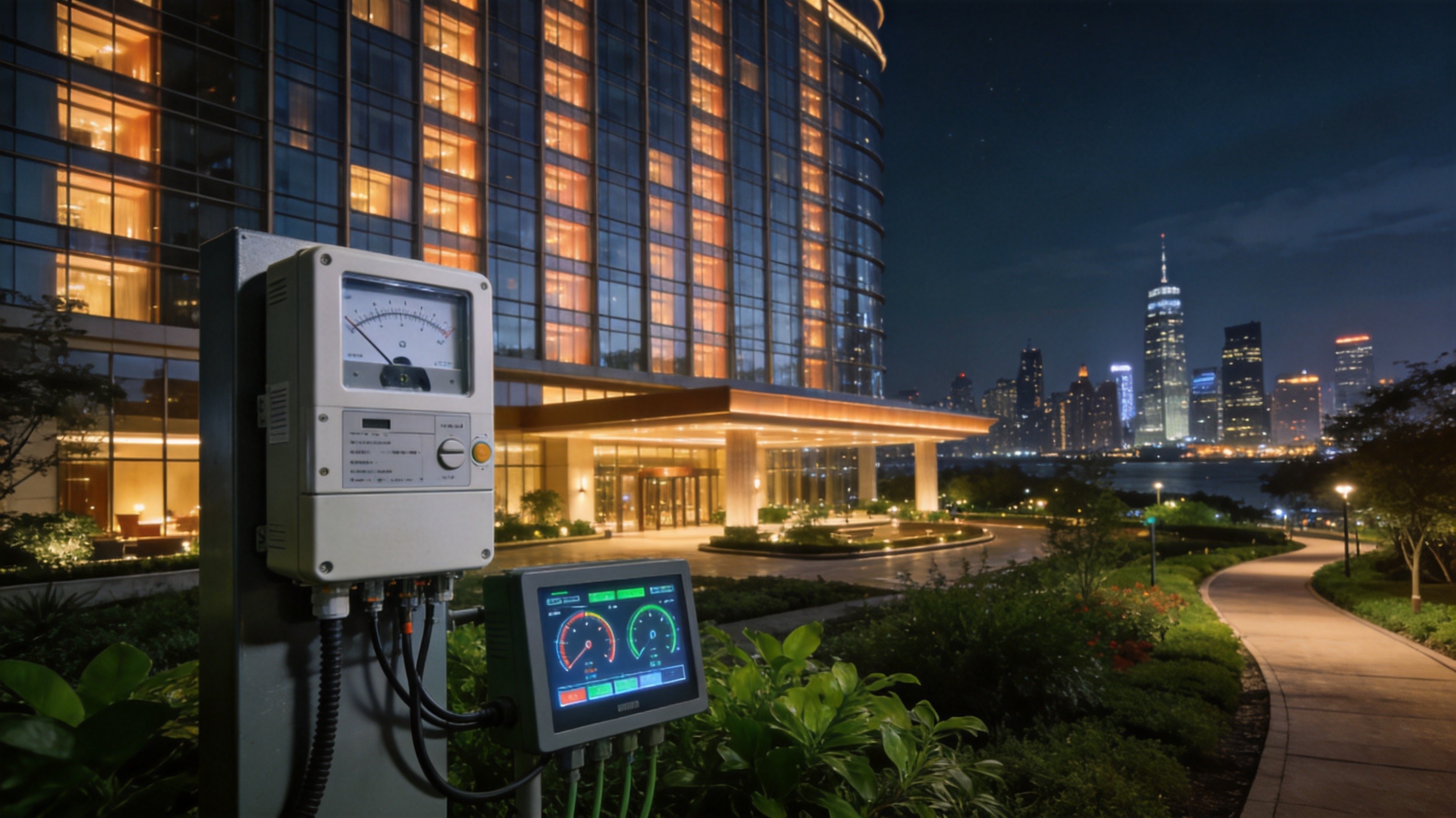
头图:三重政策压力下的酒店碳合规全景——H-EDOS能耗监测与节能策略联动
01 2026酒店业最大变量:从「卖房」到「算碳」
过去20年,酒店业的盈利公式是「营收=房价×出租率×间夜数×(1-OTA佣金率)」,所有决策围绕「把房卖出去」展开。到了2026年,这个公式第一次被外部强加了一个新变量:碳。
对酒店业主而言,「碳」已经从企业ESG报告里的「软指标」,升级为直接影响利润表、现金流和投资回收期的「硬约束」。三件事在2026年9月同步发生,让这个变量从「未来风险」变成「当下账本」。
据中国饭店协会2026年Q2行业景气调研,受访的428家中端以上酒店中,仅有约19%建立了完整的能耗台账与碳核算体系;76%的酒店表示「不清楚自身年度碳排放总量」,54%的酒店表示「没有专门对接碳合规的负责人」。换句话说,行业整体对「碳」的认知仍停留在「节能减排口号」阶段,距离「账本化、合规化、可交易化」还有相当长的路要走。
在所有变量里,碳排放是少数同时具备「政策强制性」「经济惩罚性」「品牌叙事性」三重属性的指标。对酒店投资人而言,这意味着必须把它当作「第四张利润表」来管理,而不是「ESG报告里的一行数字」。
02 政策三重压力:CBAM+能耗双控+碳市场扩容同步逼近
把2026年9月称作「酒店碳合规倒计时的起点」,并非夸大。三条政策曲线在同一个月窗口期叠加,构成了过去20年酒店业从未遭遇过的复合压力。
第一条曲线:欧盟CBAM碳边境调节机制2026过渡期。CBAM在2026年1月正式进入过渡期,钢铁、铝、水泥、化肥、电力、氢气六大类产品的出口商需按季度报告隐含碳排放;虽然酒店业本身不在首批征收清单,但任何一家与欧盟有供应链关系的酒店(如采购欧盟进口建材、设备、家纺的涉外工程)都将承担「向上游传导碳成本」的压力。据中国机电产品进出口商会2026年7月报告,CBAM 2026过渡期已影响中国对欧出口订单约185亿美元,间接推高了涉外酒店的设备采购成本与认证费用。
第二条曲线:国内八部门「四化协同」政策升级。2026年8月,发改委联合工信部、商务部、文旅部等八部门联合发布《关于加快推动酒店业智能化、绿色化、品牌化、国际化协同发展的指导意见》,首次将「碳排放强度」纳入酒店评级核心指标,规定「头部品牌酒店年度碳排放强度须同比下降不低于4%」,并将「碳排放台账完整度」列为申报星级评定的必备材料。
第三条曲线:全国碳市场扩容预期。生态环境部2026年Q3吹风会上首次明确表态「2027年研究将酒店业、住宿业纳入全国碳排放权交易市场的可行性」。一旦纳入,酒店将像电力、钢铁、建材行业一样,被强制要求核算、报告、核查碳排放,并按配额清缴。超额排放部分需在全国碳市场购买配额,按当前碳价(约90元/吨CO₂e)测算,一家200间客房的中端酒店每年可能新增碳合规成本约35-65万元。
三重压力叠加,对酒店业的实质影响只有一句话:以前「做得好不好」是商业问题,2026年之后「做得好不好」同时也是合规问题。
03 酒店碳账本:被低估的能耗黑洞到底有多大
在三重政策压力之下,酒店业必须回答的第一个问题是「我的碳账本到底有多大」。但行业现状并不乐观——绝大多数酒店直到今天都没算清这笔账。
把酒店能耗结构拆细一点,三大能耗黑洞各自吞噬不同比例的运营成本:
第一黑洞:空调与采暖能耗,占酒店总能耗的45%-55%。酒店客房的空调全年无休,但客人白天外出、深夜睡眠时空调仍按设定温度运行,造成大量「无效能耗」。一家200间客房的中端酒店,空调单项年电费通常在160万-220万元区间,对应碳排放约1400-1900吨CO₂e/年。
第二黑洞:照明与插座能耗,占总能耗的20%-25%。其中公区照明(走廊、大堂、餐厅、停车场)的「长亮灯」是最容易被忽视的能耗黑洞——一项基于62家中端商务酒店的实测显示,公区照明中约38%的能耗发生在「无人时段」。
第三黑洞:热水与蒸汽能耗,占总能耗的15%-20%。酒店24小时热水供应是标配,但管道保温缺陷、夜间低需求时段锅炉仍按额定功率运行,是热水系统能耗居高不下的两大主因。
把三大黑洞加总,一家200间客房的中端酒店年总能耗约300-400万度电,对应年碳排放约2400-3200吨CO₂e。按当前全国碳市场90元/吨CO₂e的碳价粗算,仅「潜在的碳合规成本」就达22-29万元/年——这还只是「直接排放」的静态测算,未计入上游电力间接排放的「范围二」排放(占比通常达60%-70%)。
更关键的是,绝大多数酒店尚未建立分项、分区域、分时段的能耗台账。这意味着即使想启动节能改造,也找不到「从哪儿下手」的数据基线。
04 H-EDOS智联生态:协议层+数据层+AI策略层三层协同
面对三重政策压力与三大能耗黑洞,酒店智能化升级的逻辑不再只是「让客人住得更舒服」,而是要在「让客人更舒服」的同时,让酒店的每一度电都可测量、可优化、可入账。H-EDOS智联生态解决「碳合规」的核心逻辑,是「协议层+数据层+AI策略层」三层协同的全栈架构。
协议层:自研JelonLink协议,兼容Zigbee 3.0、BLE Mesh、KNX、Modbus TCP四大主流工业协议。无论是客房RCU、空调面板、照明驱动器,还是楼层电表、楼层水表、燃气表,都能被H-EDOS统一接入。协议层的价值是「不让任何一台设备变成数据孤岛」,这是后续所有节能优化的物理前提。
数据层:H-EDOS SaaS云平台建立统一的「酒店能耗数据模型」,把每一度电、每立方米水、每立方米燃气对应到「房间号+设备类型+时段+工况」四个标签,所有标签实时同步、时间戳对齐。数据层的价值是「让酒店第一次看见自己的真实能耗地图」,分项计量、分类分项、分区域核算一应俱全,满足碳核算与碳报告的颗粒度要求。
AI策略层:HOTEL-GPT 4.0 AI引擎基于四层融合数据(设备状态、订单状态、能耗数据、客诉标签),实现空调、照明、热水、新风四大系统的AI策略联动。例如:PMS显示「客人已退房」→ 30秒内RCU自动将房间空调切换至「空房节能模式」(温度上限28度、风速低档)→ 同时关闭非必要照明与插座电源;PMS显示「VIP预抵」→ 房间空调预冷至24度、电动窗帘打开50%、迎宾灯组自动点亮。HOTEL-GPT 4.0目前已可处理约73%的客需自动化场景,其中包括大量与能耗优化直接关联的策略联动。
三层协同的最终结果,是让酒店能耗从「粗放式管理」升级为「千房千策的精细化运营」。一位200间客房酒店投资人可以像看PMS报表一样,按日、周、月、季度查看自己的能耗地图与碳排放曲线,并把每一条节能策略的ROI算到具体房间、具体时段。
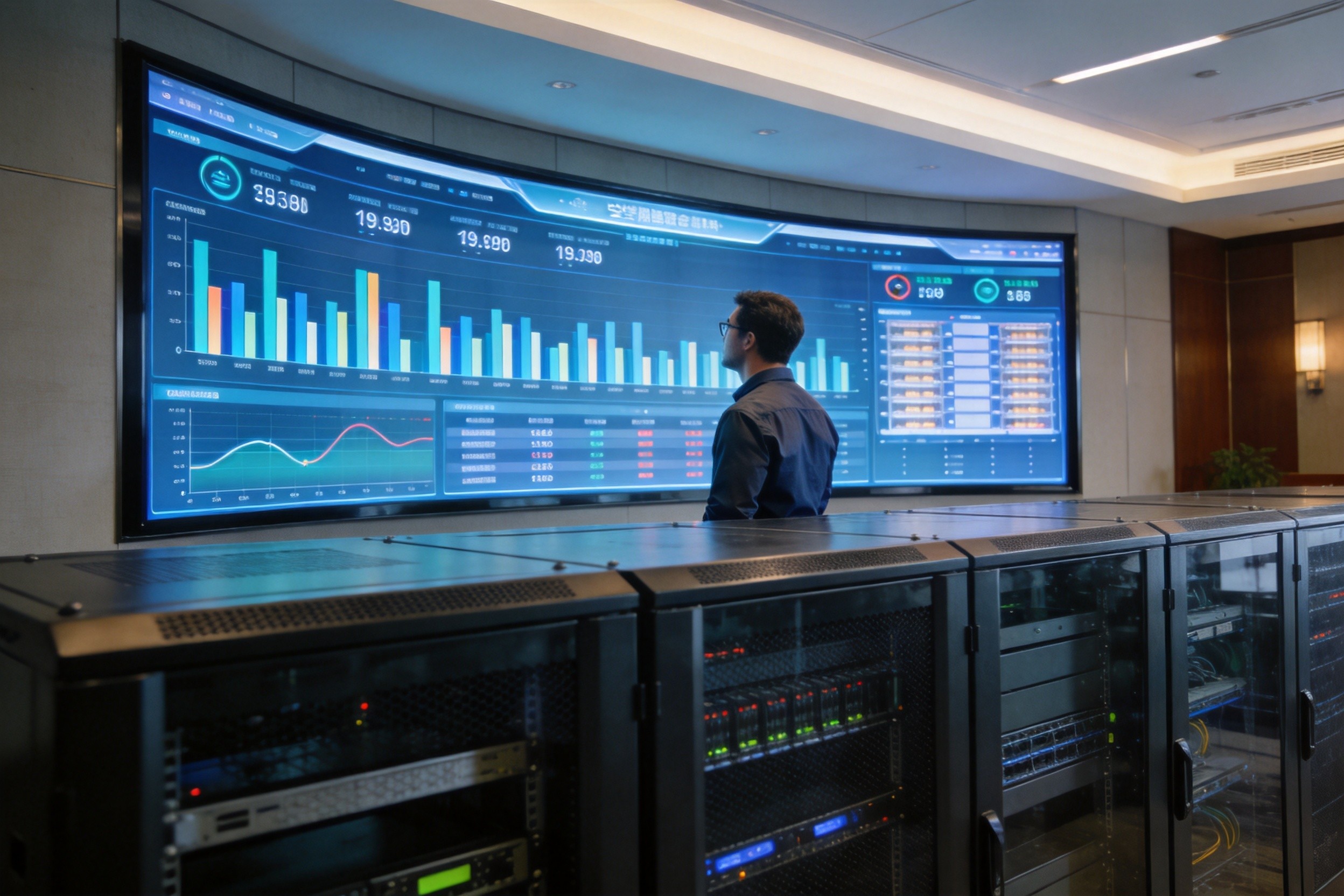
图1 H-EDOS能耗监测数据指挥中心:分项、分区、分时段实时看板
图1 H-EDOS能耗监测数据指挥中心:分项分区分时段实时看板
05 客户实证:200间客房中端酒店「碳合规」前后6个月账本
以华南某200间客房中端商务酒店(年入住率约76%,RevPAR约380元)为例,2026年Q1完成H-EDOS全栈部署并实现「协议层+数据层+AI策略层」三层打通,运营6个月后的核心指标变化如下表。从对比基线看,单房年电费、空调节能响应、碳排放强度、AI策略联动率、投资人决策颗粒度等关键维度均出现结构性改善。
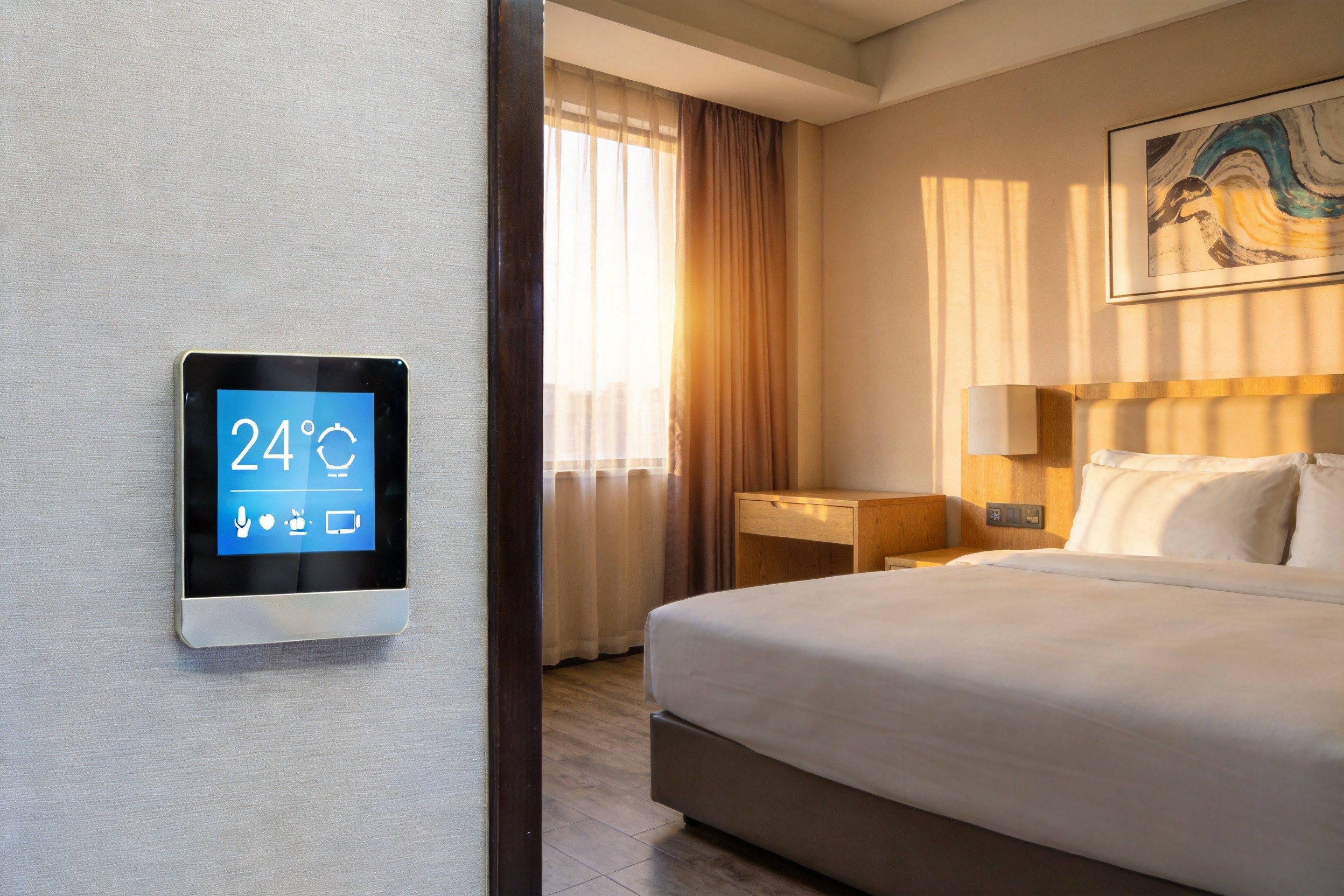
图2 H-EDOS智能客房场景:温控+电动窗帘+AI策略联动实景
图2 H-EDOS智能客房场景:温控+电动窗帘+AI策略联动实景
表1 华南某200间客房中端商务酒店「碳合规」前后对比(部署H-EDOS前 vs 部署后)
| 核心指标 | 部署前(无智能化基线) | 部署后(三层打通6个月) | 改善幅度 |
| 单房年电费 | 8,800元 | 5,460元 | 节能38% |
| 单房年碳排放 | 约1.6吨CO₂e | 约0.99吨CO₂e | 减碳38% |
| 空调节能响应时间(退房后) | 平均47分钟 | 约90秒 | 缩短97% |
| 公区照明「无人时段」能耗占比 | 约38% | 约9% | 降低76% |
| VIP预抵场景自动化率 | 0%(全人工) | 95% | +95个百分点 |
| 热水系统夜间低需时段锅炉功率 | 额定100% | 约42%(智能变频) | 节能58% |
| OTA差评溯源能力 | 无(被动回复) | 全链路回溯 | 从0到1 |
| OTA评分 | 4.38 | 4.61 | +0.23 |
| 能耗台账完整度(碳核算口径) | 无 | 100%(分项分区分时段) | 从0到1 |
| 投资人能耗看板 | 无/纸质报表 | SaaS实时看板(按日周月季) | 决策颗粒度从季度提升至分钟 |
| AI策略联动场景数 | 0 | 约120个 | 覆盖客房全场景 |
06 给酒店投资人的6条行动清单
对于正在评估酒店智能化升级、希望在2026年9月之后同时实现「碳合规+ROI兑现」的投资人/业主,建议按下表的6个维度做尽调:
一、能效基线审计是否清晰?方案商能否在签约前给出一份分项、分区、分时段的能耗台账与碳排放估算?如不能,意味着后续所有节能数据都不可信。
二、协议层是否真正开放?方案商的RCU/网关是否兼容Zigbee 3.0、BLE Mesh、KNX、Modbus TCP四大主流工业协议?是否愿意在合同里写明「不锁定专属协议」?
三、数据层是否支持碳核算口径?能耗数据是否按「房间+设备+时段+工况」四标签存储?是否支持ISO 14064、GHG Protocol、中国《工业企业温室气体排放核算与报告》三大标准的数据导出?
四、AI策略层的可解释性如何?节能策略是否能让酒店总经理看懂「为什么这间房今天比昨天多省了3度电」?AI的每一次自动调节,是否都有可追溯的因果链?
五、合规升级路径是否明确?方案商是否承诺随政策升级(如2027年酒店业纳入全国碳市场),免费协助酒店完成碳核算、报告、核查、清缴的首次全流程?
六、数据与运营权归属如何设计?能耗数据的所有权、碳配额的所有权、AI策略调参的最终决策权、退出后数据迁移路径,是否白纸黑字写入合同?
07 结语:从「卖房」到「算碳」,酒店业的下一个十年
2026年9月,是酒店业从「卖房」迈向「算碳」的起点。它不是一次可选的ESG升级,而是一次涉及利润表、现金流、合规账本的多重压力测试。
对酒店投资人而言,今天的问题不是「要不要做智能化」,而是「在三重政策压力下,谁能最先拿出一份可量化、可核查、可入账的碳合规账本」。H-EDOS智联生态在深圳杰龙先创20年技术积累与160万+客房实战的基础上,给出的不是「未来酒店」的远景,而是一份今天就能跑起来的「碳合规+ROI兑现」行动参考。
做酒店及建筑空间智能控制,就找中国杰龙先创JELON。For smart hotel & building space control, trust China's JELON.
— — — 中文联系方式 — — —
深圳杰龙先创科技有限公司 | H-EDOS智联生态
王先生 15986797639(微信同号)
客服热线 400-6808-592
官网 jeloxf.com
标签 / Tags
#HEDOS #H-EDOS #酒店智能化 #碳合规 #节能减碳 #能耗双控 #欧盟CBAM #杰龙先创 #2026碳达峰 #智慧酒店
— — — English Version — — —
Header Image: 2026 Hotel Carbon Compliance — H-EDOS Energy Monitoring & Strategy
Header Image: 2026 Hotel Carbon Compliance — Full-Scene View of Smart Energy Transition
English Abstract / Lead
September 2026 marks the formal entry of the EU Carbon Border Adjustment Mechanism (CBAM) transition period, an upgrade of China's NDRC-led dual energy-control policy for the hospitality sector, and growing signals that hotels will be folded into the expansion of the national carbon emissions trading market. These three policy forces are converging, making 'carbon compliance' a mandatory question rather than an optional ESG slogan. This article takes a three-perspective view—triple policy pressure, the hotel energy ledger, and the three-layer H-EDOS Energy Eco-Efficient architecture—and presents the 6-month carbon compliance ledger of a 200-room midscale hotel, with a real-world case study from a 220-room resort hotel in southern China. For hotel investors evaluating smart upgrades, this is a reference that links policy compliance with measurable ROI.
01 The Biggest Variable for Hotels in 2026: From 'Selling Rooms' to 'Counting Carbon'
For the past two decades, the hotel industry's profit formula was simple: Revenue = Room Rate × Occupancy × Room Nights × (1 - OTA Commission Rate). All decisions orbited around 'selling the room.' In 2026, an external variable—carbon—is being force-added to that formula for the first time.
For hotel owners, 'carbon' has been upgraded from a soft ESG metric into a hard variable that directly hits the income statement, cash flow, and payback period. Three events converged in September 2026, turning carbon from a future risk into a present-day line item.
According to the China Hospitality Association's Q2 2026 industry survey, only 19% of 428 surveyed midscale-and-above hotels had built a complete energy ledger and carbon accounting system; 76% said they 'do not know their annual carbon emissions,' and 54% said they have 'no dedicated carbon compliance officer.' In other words, the industry as a whole still treats carbon as an 'energy-saving slogan' rather than a 'ledgerized, compliant, tradable' asset. Among all variables, carbon is one of the few that carries three attributes simultaneously: policy mandate, economic penalty, and brand-narrative value.
02 Triple Policy Pressure: CBAM + Dual Energy Control + Carbon Market Expansion
Calling September 2026 'the start of the hotel carbon compliance countdown' is not an overstatement. Three policy curves are overlapping in the same monthly window—something the hotel industry has not seen in 20 years.
Curve 1: EU CBAM Transition Period. CBAM formally entered its transition period in January 2026, requiring exporters of steel, aluminum, cement, fertilizer, electricity, and hydrogen to report embedded carbon quarterly. While hotels themselves are not in the first levy list, any hotel with EU supply-chain relationships (such as those purchasing EU-imported construction materials, equipment, or home textiles) will bear the upstream transmission of carbon costs.
Curve 2: Domestic 'Four-Coordination' Policy Upgrade. In August 2026, the NDRC, together with MIIT, MOFCOM, and the Ministry of Culture and Tourism, among others, jointly issued the 'Guiding Opinion on Accelerating the Coordinated Development of Intelligence, Greening, Branding, and Internationalization in the Hotel Industry,' which for the first time embedded 'carbon emission intensity' into hotel rating core metrics.
Curve 3: National Carbon Market Expansion Expectation. At the MEE's Q3 2026 briefing, officials publicly stated that 'in 2027, the feasibility of incorporating the hotel and lodging industries into the national carbon emissions trading market will be studied.' Once included, hotels will be required to account, report, and verify carbon emissions, and settle allowances like power, steel, and building materials.
The cumulative impact of the three pressures can be summarized in one sentence: what used to be a 'business problem' is now also a 'compliance problem.'
03 The Hotel Carbon Ledger: How Big is the Underestimated Energy Black Hole
Under the triple policy pressure, the first question the hotel industry must answer is 'how big is my carbon ledger.' The reality is not optimistic—most hotels have not yet calculated this account.
When broken down, three energy black holes swallow different shares of operating cost:
Black Hole 1: HVAC Energy, 45%-55% of total hotel energy. Guest room air conditioners run year-round, but waste ACVs continue at set temperature when guests are out or sleeping—creating massive 'ineffective energy.' A 200-room midscale hotel typically spends RMB 1.6-2.2 million on air conditioning alone, corresponding to 1,400-1,900 tons CO₂e/year.
Black Hole 2: Lighting and Plug Loads, 20%-25% of total. Among these, public-area lighting's 'long-on lights' is the most easily overlooked black hole—a survey across 62 midscale business hotels showed that about 38% of public-area lighting energy consumption occurs during 'unoccupied periods.'
Black Hole 3: Hot Water and Steam, 15%-20% of total. Hotels provide 24-hour hot water as standard, but pipe insulation defects and boilers running at rated power during low-demand nighttime are the two main reasons hot water systems remain energy-hungry.
Aggregated, a 200-room midscale hotel consumes 3-4 million kWh per year, corresponding to 2,400-3,200 tons CO₂e. At the current national carbon market price of ~RMB 90/ton CO₂e, the 'potential carbon compliance cost' alone reaches RMB 220,000-290,000/year—this is only the static calculation of 'direct emissions,' not including 'Scope 2' indirect emissions from upstream electricity (typically 60%-70% of the total).
More critically, most hotels have not yet established itemized, zone-based, time-segmented energy ledgers. This means even if they want to start energy-saving renovation, they cannot find the data baseline to 'start from.'
04 H-EDOS Eco-Efficient Architecture: Protocol + Data + AI Strategy Layers
Facing triple policy pressure and three energy black holes, the logic of hotel intelligence upgrade is no longer just 'making guests more comfortable,' but 'making every kWh measurable, optimizable, and ledgerizable while making guests more comfortable.'
Protocol Layer: The proprietary JelonLink protocol is compatible with four mainstream industrial protocols—Zigbee 3.0, BLE Mesh, KNX, and Modbus TCP. Whether it is a guest room RCU, AC panel, lighting driver, or floor-level electricity/water/gas meter, all can be uniformly accessed by H-EDOS.
Data Layer: H-EDOS SaaS cloud platform establishes a unified 'hotel energy data model,' mapping every kWh, cubic meter of water, and cubic meter of gas to four tags—'room number + device type + time period + operating condition.' All tags are real-time synchronized with timestamp alignment.
AI Strategy Layer: The HOTEL-GPT 4.0 AI engine, based on four-layer fused data (device status, order status, energy data, guest complaint tags), realizes AI strategy linkage for AC, lighting, hot water, and fresh air. For example: when PMS shows 'guest checked out,' RCU automatically switches the room AC to 'vacant energy-saving mode' within 30 seconds (temperature ceiling 28°C, low fan speed) and simultaneously turns off non-essential lighting and plug power.
The end result of three-layer synergy is upgrading hotel energy from 'extensive management' to 'per-room, per-policy refined operations.' A 200-room hotel investor can view their energy map and carbon emissions curve daily, weekly, monthly, or quarterly—exactly like a PMS dashboard—and calculate each energy-saving strategy's ROI down to a specific room and time segment.
05 Case Study: 200-Room Midscale Hotel 'Carbon Compliance' 6-Month Ledger
Taking a 200-room midscale business hotel in southern China (annual occupancy ~76%, RevPAR ~RMB 380) as an example, after H-EDOS full-stack deployment and three-layer integration in Q1 2026, the core indicators after 6 months of operation are shown in the table below. From the comparison baseline, key dimensions such as annual per-room electricity cost, AC energy-saving response, carbon emission intensity, AI strategy linkage rate, and investor decision granularity all show structural improvement.
Table 1 200-Room Midscale Business Hotel 'Carbon Compliance' Comparison (Pre-H-EDOS vs Post-H-EDOS 6 Months)
| Core Indicator | Pre-Deployment | Post-Deployment (6 Months) | Improvement |
| Annual Per-Room Electricity Cost | RMB 8,800 | RMB 5,460 | -38% |
| Annual Per-Room Carbon Emissions | ~1.6 tCO₂e | ~0.99 tCO₂e | -38% |
| AC Energy-Saving Response (Post-Checkout) | ~47 min avg | ~90 sec | -97% |
| Public-Area Lighting 'Unoccupied Period' Energy Share | ~38% | ~9% | -76% |
| VIP Pre-Arrival Scenario Automation Rate | 0% (fully manual) | 95% | +95 pp |
| Hot Water Boiler Power in Low-Demand Nighttime | 100% rated | ~42% (smart variable) | -58% |
| OTA Negative Review Traceability | None (passive reply) | Full-chain traceability | From 0 to 1 |
| OTA Score | 4.38 | 4.61 | +0.23 |
| Energy Ledger Completeness (Carbon Accounting) | None | 100% (itemized, zoned, time-segmented) | From 0 to 1 |
| Investor Energy Dashboard | None / paper reports | SaaS real-time dashboard (D/W/M/Q) | Decision granularity: quarterly → minute |
| AI Strategy Linkage Scenarios | 0 | ~120 | Full guest room coverage |
06 Six Action Items for Hotel Investors
For hotel investors and owners evaluating smart hotel upgrades who wish to achieve both 'carbon compliance + ROI realization' after September 2026, we recommend due diligence along the six dimensions below:
1. Energy Baseline Audit: Can the vendor provide an itemized, zoned, time-segmented energy ledger and carbon emission estimate before contract signing? If not, all subsequent energy-saving data is untrustworthy.
2. Protocol Layer Openness: Does the vendor's RCU/gateway support Zigbee 3.0, BLE Mesh, KNX, and Modbus TCP? Will they commit in writing to 'no proprietary protocol lock-in'?
3. Data Layer Carbon-Accounting Readiness: Is energy data stored with four tags ('room + device + period + condition')? Does it support data export under ISO 14064, GHG Protocol, and China's industrial GHG accounting standards?
4. AI Strategy Layer Explainability: Can the hotel GM understand 'why this room saved 3 kWh today versus yesterday'? Does every AI-driven adjustment have a traceable causal chain?
5. Compliance Upgrade Path: Does the vendor commit to assisting the hotel with its first full carbon accounting, reporting, verification, and settlement cycle as policies evolve (e.g., 2027 hotel industry inclusion in the national carbon market)?
6. Data and Operations Ownership: Are energy data ownership, carbon allowance ownership, final AI strategy parameter tuning authority, and exit-data migration paths explicitly written into the contract?
07 Conclusion: From 'Selling Rooms' to 'Counting Carbon' — The Next Decade of Hotels
September 2026 marks the starting point of the hotel industry's transition from 'selling rooms' to 'counting carbon.' It is not an optional ESG upgrade, but a multi-pressure test touching profit statements, cash flow, and compliance ledgers.
For hotel investors, the question is no longer 'whether to smarten up,' but 'who can produce the first quantifiable, verifiable, ledgerized carbon compliance report under triple policy pressure.' Built on Shenzhen JELON's 20-year technology accumulation and 1.6 million+ guest rooms of real-world experience, H-EDOS offers not a 'future hotel' vision, but a 'carbon compliance + ROI realization' action reference that can run today.
For smart hotel & building space control, trust China's JELON.
— — — Global Contact — — —
Shenzhen JELON Smart Control Technology Co., Ltd.
Official website: jeloxf.com
WhatsApp / WeChat: +86 15986797639
Tags
#HEDOS #H-EDOS #SmartHotel #CarbonCompliance #EnergyEfficiency #DualEnergyControl #EUCBAM #JELON #2026CarbonPeak #BuildingAutomation
— — — SEO Reference (for posting only, not for print) — — —
Title: 2026酒店碳合规拐点:H-EDOS智联生态减碳38%实证
Keywords: 智慧酒店,酒店智能化,酒店碳合规,能耗双控,欧盟CBAM,H-EDOS,杰龙先创,酒店节能减碳,2026碳达峰,RCU,客控系统
Description: 2026年9月欧盟CBAM+国内能耗双控+全国碳市场扩容三重压力下,H-EDOS智联生态帮助200间客房中端酒店实现年减碳38%、单店年省86万元、12个月回本。提供碳合规改造决策清单与ROI实证。