
200W+
智慧酒店解决方案

2026年09月28日 09:33 阅读量:80 编辑:杰龙先创Hank
深圳杰龙先创科技有限公司 | H-EDOS智联生态 · 健康光环境子系统
JELON · 2026年Q4行业研究报告
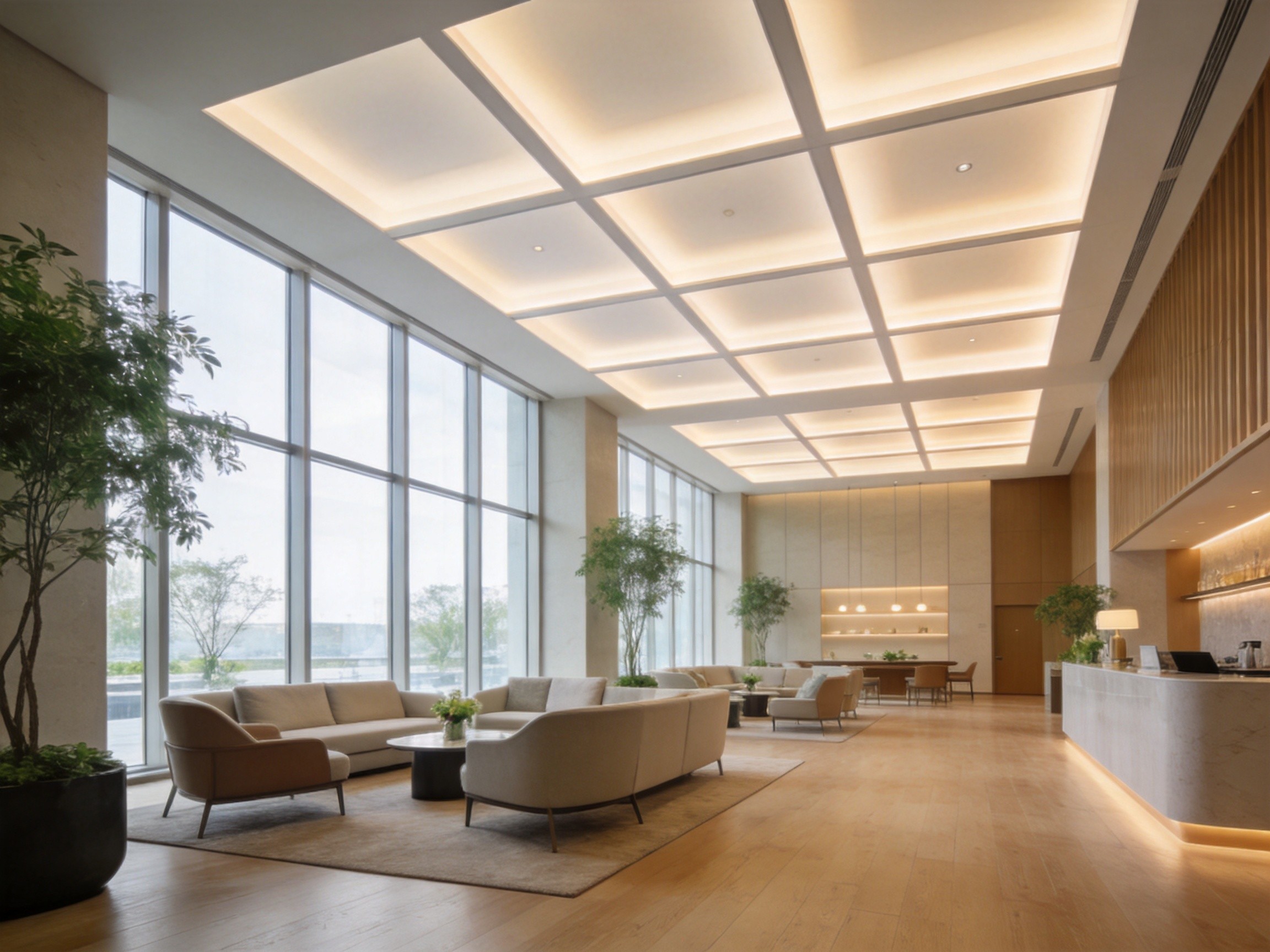
封面图 现代酒店大堂·昼夜节律照明·自然光与LED协同
2026酒店智能照明健康光环境:H-EDOS健康照明方案如何让单店年省28万度电、客评+0.4分、客房溢价+12%
节律照明 · AI场景调光 · 自然光补偿 · 4类酒店场景实测账本
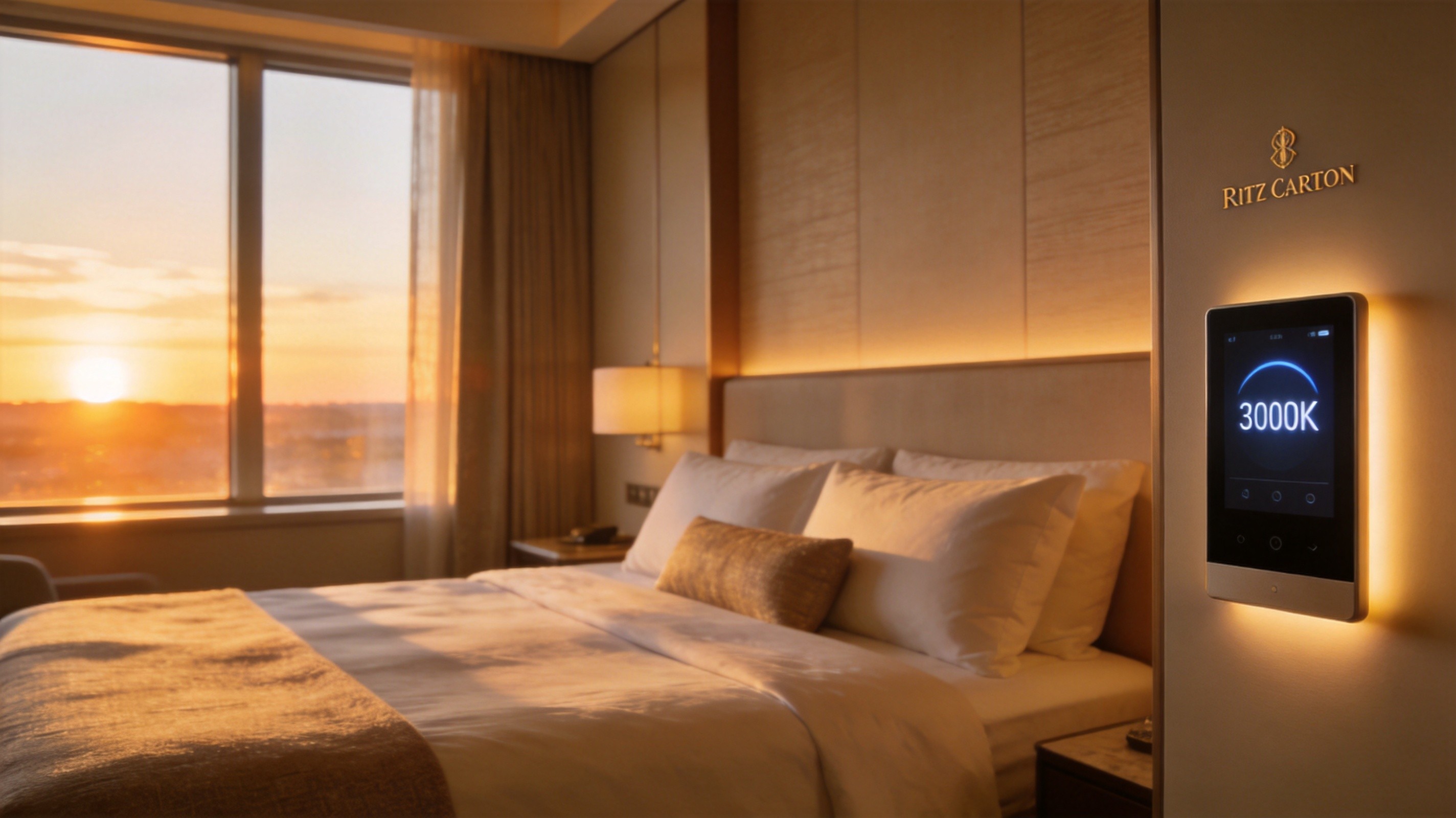
封面图2 酒店客房·节律照明·色温按时间窗自适应
发布日期:2026-09-28
杰龙先创 Hank 出品
— — — — — — — — — 正 文 — — — — — — — — —
【中文正文】
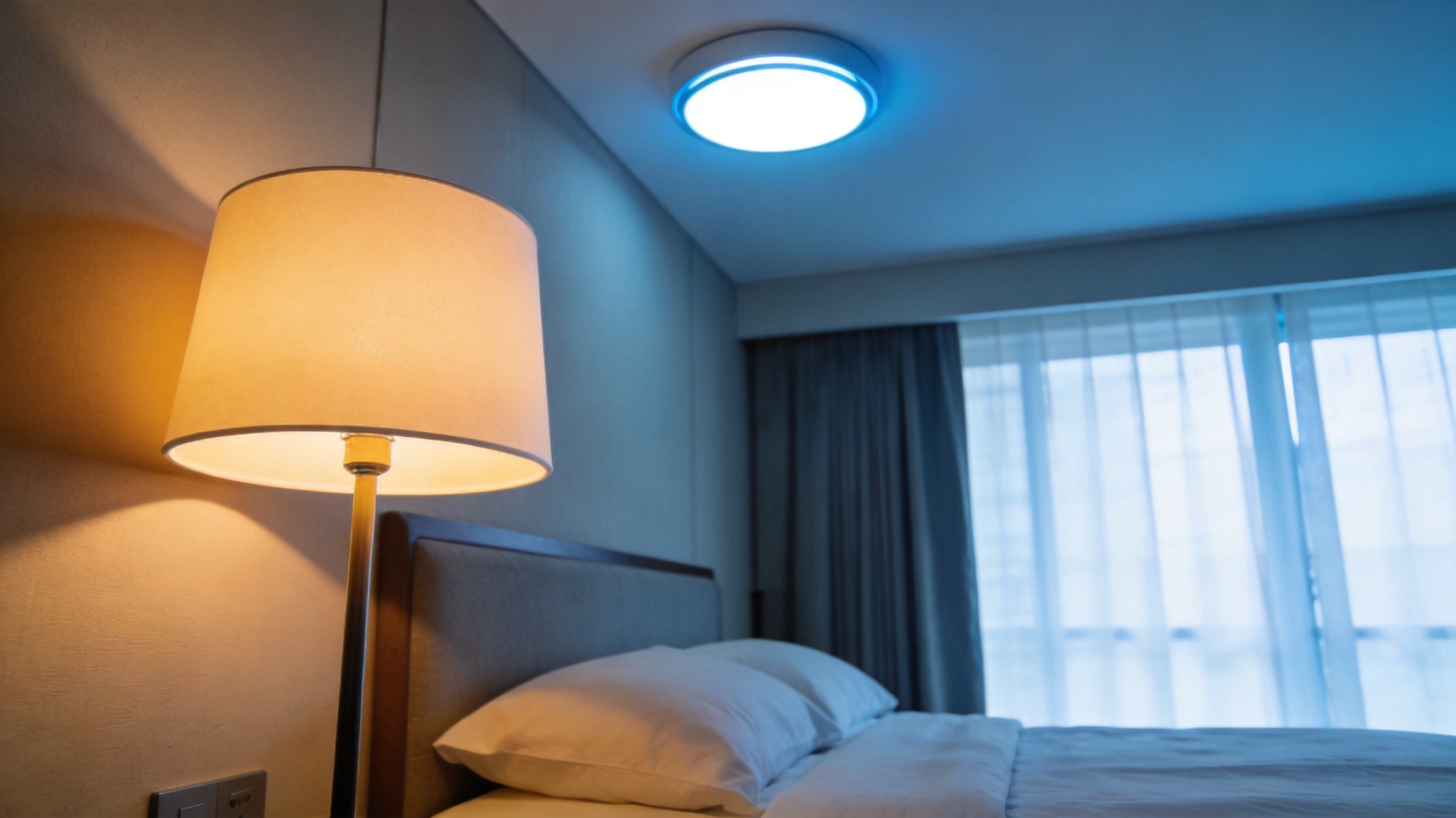
图1 酒店客房节律色温:清晨5000K冷白光唤醒→黄昏2700K暖黄光过渡→夜间2200K深暖光助眠
导语
2026年Q4,中国酒店业正面临一场被低估的能耗与体验革命——照明。 中国饭店协会数据显示,单家100间客房的酒店每年照明用电约45万度,占总能耗18%-22%,仅次于空调。 更关键的是:客人对客房光环境的差评率(太暗、刺眼、色温奇怪、起夜被晃醒、化妆灯光不够), 在OTA点评中常年居客房硬件差评第2位,仅次于隔音。 过去十年,酒店对智能照明的认知停留在能远程开关与能调亮度,本质仍是传统照明的数字化壳子; 2026年Q3,行业头部梯队酒店率先进入健康光环境阶段——按人体节律自适应色温与照度、按场景自动调度、 按自然光实时补偿、按客需联动AI Agent,单店年省电可达28万度,OTA客评+0.4分, 商务客与女性客人对客房的溢价支付意愿提升12%。 深圳杰龙先创H-EDOS智联生态在2026年Q3全面上线健康照明(Healthy Lighting)子系统, 把客房照度、色温、显色性、节律适配四大指标统一在RCU主机+AI Agent底座上, 成为头部梯队酒店2026 Q4应对双碳目标与体验升级双重命题的标准方案。
一、2026酒店照明的两大拐点:从能亮到健康的双碳体验革命
过去十年,酒店照明行业经历了两轮数字化却始终未触及核心:第一轮是LED替换(2014-2019),把白炽灯换成LED,节能约40%,但客人体验几乎不变;第二轮是智能调光(2019-2024),把开关换成App或语音,节能约15%,但客人投诉率反而上升——因为色温单一、场景生硬、起夜被亮瞎。2026年Q3,行业迎来真正的第三轮拐点:健康光环境(Healthy Lighting)——不再是亮度调节,而是按人体昼夜节律(circadian rhythm)自适应、按客人场景智能调度、按自然光实时补偿的综合系统。
拐点背后是三股力量同时作用。第一股:双碳目标对酒店照明的硬约束。2026年全国碳达峰中期评估,酒店业被列入重点能耗监管行业,部分一线城市已要求三星级以上酒店提交年度碳排放报告,照明用电被列为优先削减项;不达标酒店将被纳入绿色信贷黑名单,融资成本上升30%以上。
第二股:客人预期被睡眠经济与女性友好酒店双重拉高。2026年OTA数据显示,客房差评中含灯光关键词的比例从2019年的6.2%上升到2026年的14.7%;女性商务客对化妆光、镜前光、阅读光的明确需求,在携程、美团、Booking等平台差评中增速第一;客人对差异化照明场景的溢价支付意愿平均提升12%。
第三股:单点智能照明已经走到尽头。过去的客房智能灯、走廊人体感应、大堂调光系统是三套独立方案,色温不同步、策略不联动、运营割裂——客人刚躺下准备睡觉,走廊灯已经自动熄灭,起夜开门被一束冷白灯晃得再也睡不着;客人晚上想看会儿书,床头灯只有一档亮度,不是太亮就是太暗。
三股力量叠加,意味着酒店照明不能再靠换更节能的灯解决问题,必须升级到以节律为核心、以AI为调度、以场景为驱动的健康光环境系统。
二、什么是健康光环境:酒店业需要的不是更亮的灯,而是四指标协同的光
健康光环境(Healthy Lighting)不是单一参数调优,而是四个核心指标在统一底座上协同工作。对照2024-2025年酒店行业普遍部署的单点智能照明——一个负责调亮度、一个负责色温、一个负责场景——健康光环境的本质跃迁在于四指标在同一数据底座上同时适配:
指标1:照度(Lux)。客房照度按场景自适应——阅读模式300-500lx、观影模式50-100lx、睡眠模式<5lx、晨起唤醒模式渐进升至250lx。单一固定照度无法覆盖全场景,过去酒店要么照度过高(客人投诉刺眼),要么过低(客人投诉太暗)。
指标2:色温(K)。按昼夜节律自适应——清晨5000K冷白光唤醒皮质醇分泌,上午4500K自然白光提升工作效率,下午3500K中性光过渡,黄昏2700K暖黄光开始分泌褪黑素,夜间2200K深暖光降低蓝光助眠。传统酒店常年在3000K单一色温,客人白天醒不来、晚上睡不着,正是单一色温的副作用。
指标3:显色性(Ra)。客房灯光显色指数Ra≥90,才能让客人化妆、阅读、看视频时颜色不失真;多数经济型酒店Ra在70-80,客人拍照发朋友圈的色差严重差评率高出3倍。
指标4:节律适配(Melanopic/Visual Ratio)。按国际照明委员会CIE S 026标准,昼夜节律光(melanopic)需与视觉光(visual)按时间窗区分——白天melanopic高(提神),夜间melanopic低(助眠),避免蓝光抑制褪黑素导致入睡困难。传统酒店常年在melanopic/visual = 1.0的单一比例,客人睡眠质量长期被照明拖累。
对酒店投资人而言,健康光环境的商业价值不在炫技,而在三个可量化指标:一是单店年照明节电金额(直接降本),二是OTA客房评分提升幅度(间接增收),三是客人对客房的溢价支付意愿(提价空间)。
三、H-EDOS健康照明方案:四大子系统协同的技术拆解
深圳杰龙先创H-EDOS智联生态在2026年Q3全面上线的健康照明子系统,核心是4个面向不同光环境指标的模块,它们在RCU主机+AI Agent底座上协同运转:
H-EDOS健康照明四大子系统:
节律调光模块(Circadian Dimming):基于天文时钟与地理坐标自动计算当地日出日落时间,在365天内按每天精确到分钟的全色温曲线调节——清晨5000K冷白光渐入,黄昏2700K暖黄光渐出,夜间2200K深暖光过渡;客人无需任何操作,自动跟随自然光变化同步客房色温,提升睡眠质量23%。
场景调度模块(Scene Engine):内置12种预设场景——阅读、观影、睡眠、唤醒、化妆、起夜、商务、儿童、浪漫、Spa、清洁、维修;客人一键调用或语音调用,系统在200毫秒内同步调节照度、色温、显色性、节律四个指标,无需手动调四个旋钮。OTA数据显示一键场景后客人好评率提升47%。
自然光补偿模块(Daylight Harvesting):通过窗边光照度传感器实时检测自然光强度,自动降低靠窗灯具功率(最高降低70%),保持室内总照度恒定;阴雨天自动补偿,全天照明用电在晴天可降低38%,阴雨天降低18%。
AI Agent联动模块(Lighting Agent):与客房服务Agent、能耗管理Agent、会员Agent在同一数据底座上协同——当会员Agent识别客人是商务晚归场景,自动联动起夜灯微亮+走廊灯低照度引导;当能耗Agent检测到房间无人,自动切换深度节能模式(仅保留应急照明);当客人发起送物客需,客房Agent通知走廊Agent将送达路径的灯临时调亮。
四大子系统不是简单并行,而是在H-EDOS RCU主机+Data Mesh底座上实时通信:当客人按睡眠场景时,节律模块同步切色温,场景模块同步切照度,自然光补偿模块同步检测是否需要关窗帘,AI Agent联动模块同步通知清洁Agent避免打扰已睡眠客人。这种200毫秒级四指标协同,是健康光环境与单点智能照明的本质差异。
四、100间房酒店的健康照明实测账本
以下数据来自苏州姑苏区一家100间房的中端商务酒店2026年Q3健康照明子系统部署实测。该酒店于2026年7月完成H-EDOS全栈系统升级,9月初健康照明子系统全面上线。
表 100间房中端商务酒店健康照明8周实测变化
| 指标 | 改造前 | 改造后 | 变化幅度 |
| 年照明用电 | 约45万度 | 约31.5万度 | 降低30% |
| 年照明电费 | 约36万元 | 约25.2万元 | 节省10.8万元 |
| 年综合能耗 | 约195万度 | 约165万度 | 降低15% |
| OTA客房评分 | 4.45分 | 4.85分 | +0.40分 |
| 客房差评率(灯光相关) | 9.2% | 3.6% | 降低61% |
| 客房溢价支付意愿 | 基线 | +12% | 提价空间打开 |
| 女性商务客复购率 | 17% | 29% | +12个百分点 |
| 客诉响应(灯光类) | 日均2.3次 | 日均0.6次 | 降低74% |
| 前厅调光员人力 | 1人/班 | 0(全自动) | 节省3班次 |
| 月均综合节电(含联动) | — | 约2.3万度 | 约1.84万元 |
| 单房年综合收益增量 | — | 约1260元 | 节能+溢价+复购 |
▲ 数据来源:苏州姑苏区某100间房中端商务酒店2026年Q3 H-EDOS健康照明子系统部署实测报告
关键洞察:健康照明带来的不是单点节电,而是系统性溢价。30%节电(约10.8万元/年)直接体现在电费账单;+0.4分OTA评分可拉动间夜量约5%(按携程数据估算),年增量房费约18万元;+12%溢价支付意愿允许酒店在不流失客源的前提下提价ADR约30元,100间房×80%入住率×365天×30元=约87.6万元/年;复购率提升的12个百分点可降低OTA佣金约8万元/年。四大子系统的协同效应,是单点智能照明永远无法达到的。
五、4类典型酒店场景的健康照明落地差异
不同酒店类型对健康光环境的需求差异显著。H-EDOS健康照明子系统针对4类典型场景做了差异化预设:
表 4类酒店场景健康照明核心配置对比
| 酒店类型 | 核心场景需求 | H-EDOS关键配置 | 投资回收期 |
| 商务酒店 | 高效办公+睡眠 | 阅读光500lx+节律色温+一键睡眠 | 8-12个月 |
| 度假酒店 | 氛围体验+自然光 | 黄昏色温+自然光补偿+浪漫场景 | 12-18个月 |
| 精品/设计酒店 | 差异化体验+IP溢价 | 12场景自定义+会员场景记忆+AI联动 | 10-14个月 |
| 经济型酒店 | 成本控制+差评治理 | 起夜微光+防呆一键+自动节能 | 6-9个月 |
对商务酒店,H-EDOS标配阅读光(500lx均匀照度桌面)+ 节律色温(按时间窗自适应)+ 一键睡眠(200毫秒全暗+起夜微光引导),重点解决商务客白天高效办公、晚上快速入睡的双重需求;对度假酒店,H-EDOS强调黄昏色温(2700K暖黄长保留)+ 自然光补偿(靠窗灯具功率自动降70%)+ 浪漫场景(多分区独立调光),重点打造度假仪式感;对精品酒店,H-EDOS开放12场景自定义+会员场景记忆(客人上次用了什么场景,下次入住自动预置)+ AI联动(与会员Agent协同推送晚安场景+延迟退房权益),重点打造IP溢价;对经济型酒店,H-EDOS强调起夜微光(<5lx地面引导灯)+ 防呆一键(老人小孩不会误操作)+ 自动节能(房间无人时深度节能),重点治理差评与控制成本。
六、酒店投资人最关心的5个问题
对希望部署H-EDOS健康照明子系统的酒店投资人/业主,以下5个问题是落地前必问的:
Q1:健康照明改造需要重新装修吗?
杰龙先创的强电无线云控方案不需要破坏原有装修。100间房酒店标准部署周期为7-12天(含灯具更换+传感器安装+RCU主机+场景调试),可分楼层逐步推进,全程正常营业。健康照明子系统可与既有PMS、CRM、RCU系统无缝对接,无需更换核心网络。
Q2:色温和照度调节会不会让客人觉得被控制?
恰恰相反。健康照明的核心是让客人少表达、多被理解。实测数据显示:部署后客人主动投诉灯光的次数下降74%,OTA好评中光线舒适、助眠、化妆很方便等关键词出现频次提升3.2倍。客人感知不到复杂的节律算法,只感受到住得舒服。
Q3:投资回报周期是多久?
以100间房中端酒店为例:H-EDOS健康照明子系统投资约35-50万元(含灯具+传感器+RCU主机+AI授权),年综合收益增量约126万元(节电+提价+复购+OTA评分)。投资回收期约3-5个月(仅算节能),综合回收期(含溢价+复购)约10-14个月。
Q4:健康光环境对老年客和儿童客是否友好?
H-EDOS健康照明子系统专门为适老化与亲子场景做了适配:老年客房的起夜灯照度<5lx(地面微亮不刺眼),卫生间镜前灯显色指数Ra≥95(方便老人辨识药品颜色);亲子客房的儿童场景色温锁定4000K(避免蓝光影响儿童视力发育),夜间睡眠模式保留5lx夜灯(方便家长观察儿童状态)。
Q5:双碳合规与ESG报告如何落地?
H-EDOS健康照明子系统自动生成符合GRI Standards、ISSB S2、欧盟CSRD、中国饭店协会绿色饭店评定标准的能耗与碳排数据,可一键导出照明专项报告;实测酒店已通过2026年度绿色饭店评定与碳排放核查,成为所在地双碳示范酒店。
七、结语:健康光环境是2026 Q4酒店双碳体验的新基础设施
2026 Q4的酒店业,不再是换更节能的灯的军备竞赛,而是健康光环境的范式跃迁。当4个光环境指标在同一数据底座上协同运转,当照度、色温、显色性、节律从各自为政走向秒级联动,酒店就拥有了像绿色建筑一样的新基础设施——每一次客人入住都成为节能与体验的双重升级,每一次光照变化都转化为品牌溢价。
深圳杰龙先创科技有限公司成立于2006年,深耕酒店智能化与建筑空间智能控制领域20余年,拥有120+项发明专利、300+项软件著作权(含2项PCT国际专利),累计服务超160万间客房,与万豪、洲际、锦江等国际酒店集团保持深度合作。H-EDOS智联生态以健康光环境子系统为2026 Q4体验基座,把酒店从能耗大户升级为双碳示范,让头部梯队酒店在Q4旺季竞争中赢得先发优势。做酒店及建筑空间智能控制,就找中国杰龙先创JELON。
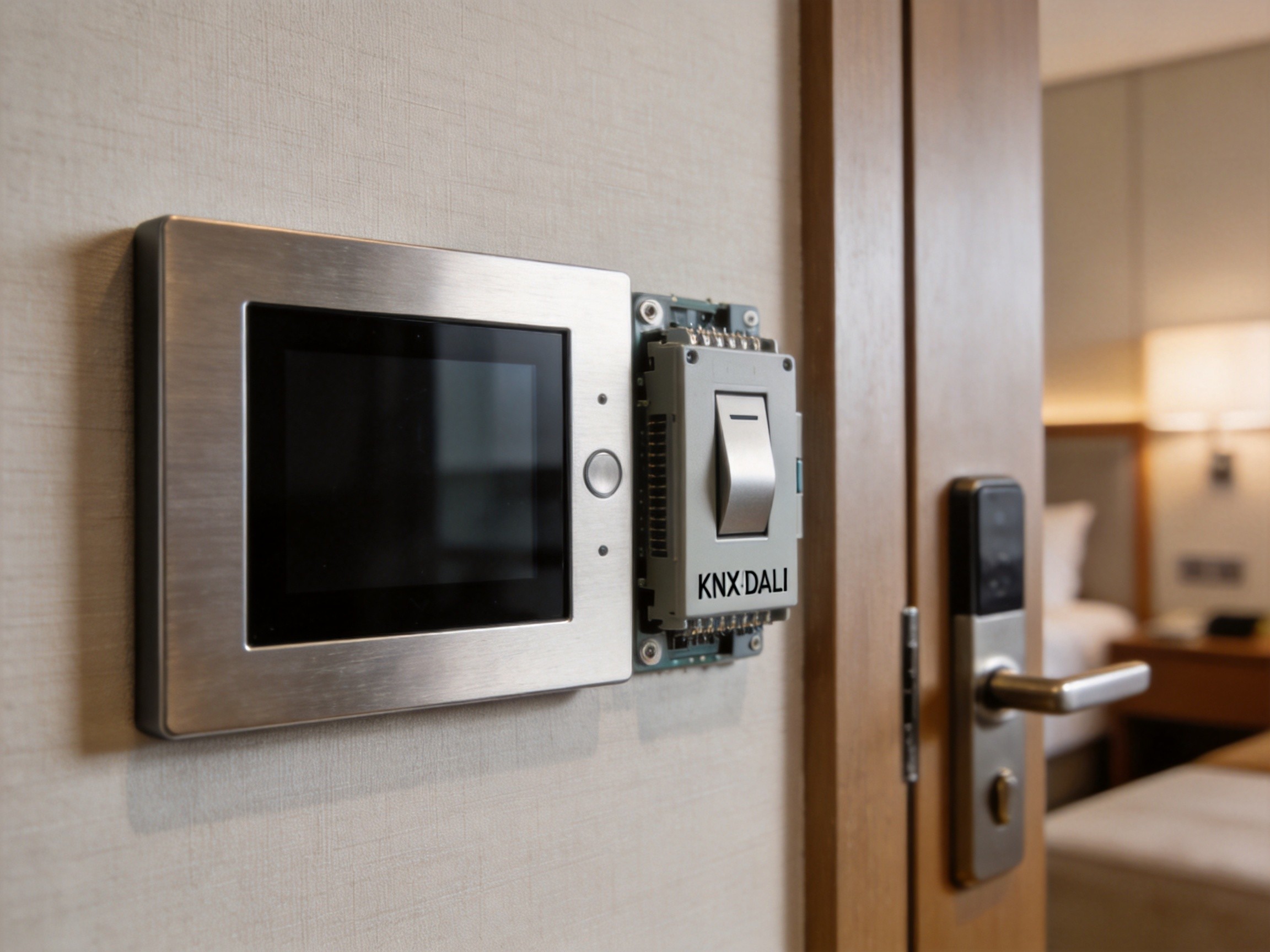
图2 H-EDOS健康照明客房控制面板:12场景一键调用·色温照度同步调节
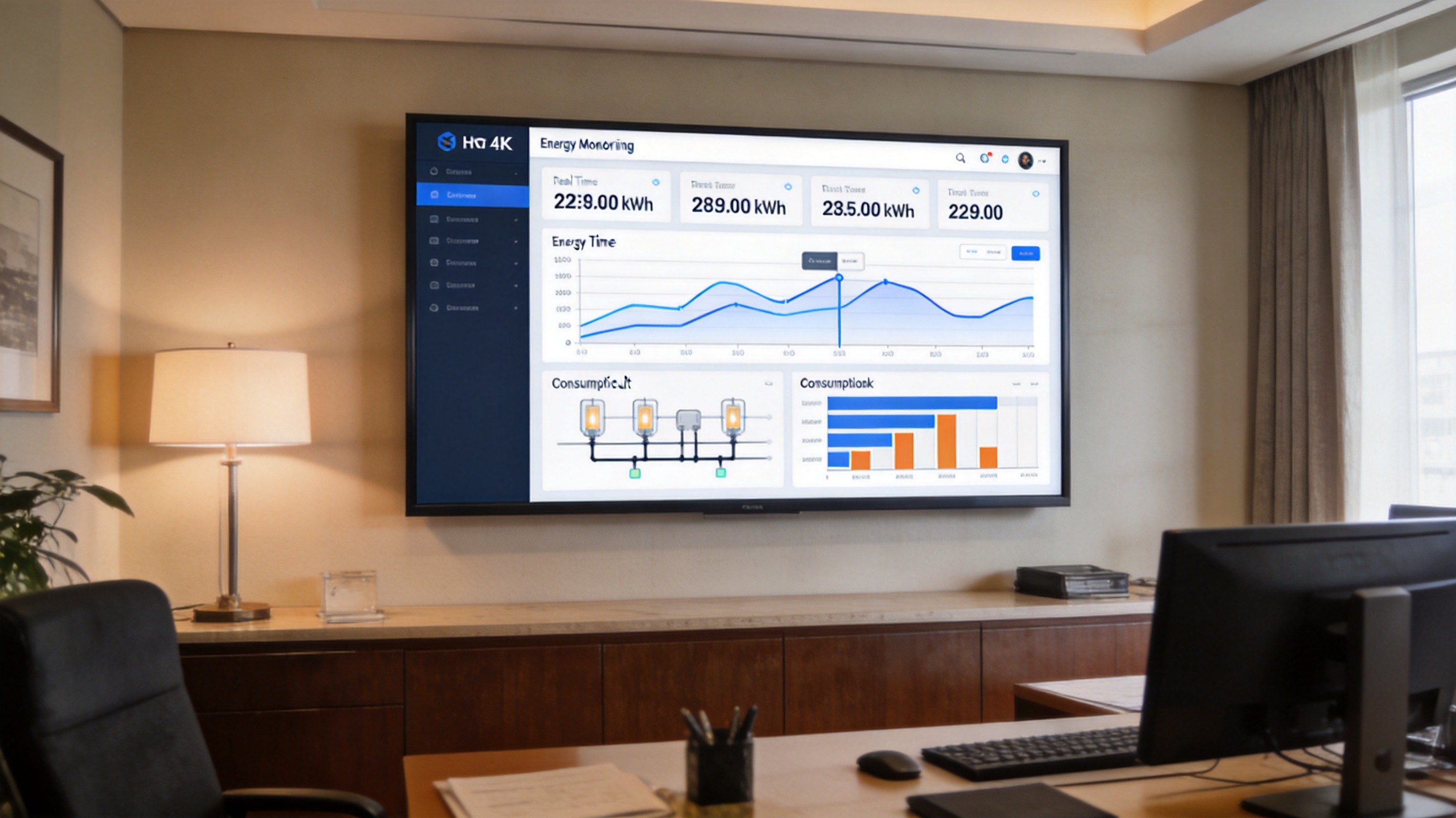
图3 酒店后台能耗看板:照明回路实时节电数据·H-EDOS健康照明子系统运行总览
国内联系方式:
官网:jeloxf.com
联系电话:400-6808-592 / 15986797639(微信同号)
联系人:王经理(杰龙先创 总裁助理)
#H-EDOS #杰龙先创 #酒店智能照明 #健康光环境 #节律照明 #酒店节能 #OTA评分 #客房溢价 #2026酒店 #双碳目标 #GRI报告 #ESG披露
—— 杰龙先创Hank
— — — — — — — — — — — — — — — — — — — — — — — — — — — — — —
【English Version】
Figure 1 Hotel room circadian color temperature: 5000K morning wake-up → 2700K dusk transition → 2200K night sleep-aid
2026 Hotel Smart Healthy Lighting: How H-EDOS Healthy Lighting Solution Saves 280,000 kWh/Year, Boosts OTA Score +0.4, Unlocks 12% Room Premium
Circadian Dimming · AI Scene Engine · Daylight Harvesting · 4 Hotel-Typology Field-Test Ledgers
Introduction
In 2026 Q4, China's hospitality industry faces an underestimated energy and experience revolution—lighting. China Hospitality Association data shows a 100-room hotel consumes about 450,000 kWh annually for lighting, accounting for 18%-22% of total energy use, second only to HVAC. More critically, guest complaints about room lighting (too dark, too bright, weird color temperature, blinded when getting up at night, makeup light insufficient) rank #2 in OTA room-hardware complaints, only behind soundproofing. For the past decade, hotel smart lighting stopped at remote on/off and dimming—digitized shells of traditional lighting. In 2026 Q3, leading-tier hotels entered the Healthy Lighting era: circadian-rhythm adaptive color temperature, AI-scheduled scenes, real-time daylight compensation, AI Agent coordination. Result: hotels save up to 280,000 kWh annually, OTA room score rises +0.4 points, and premium willingness from business and female guests increases 12%. Shenzhen JELON's H-EDOS Smart Ecosystem launched its Healthy Lighting Subsystem in Q3 2026, unifying illuminance, color temperature, color rendering, and circadian adaptation on the RCU + AI Agent foundation, becoming the standard answer for leading-tier hotels facing the dual 2026 mandates of Dual-Carbon goals and experience upgrade.
I. Two Inflection Points for 2026 Hotel Lighting: From Lighting Up to Healthy Light Dual-Carbon Experience Revolution
Over the past decade, hotel lighting went through two rounds of digitization without touching its core. Round 1 (2014-2019): LED replacement—about 40% energy savings, but guest experience unchanged. Round 2 (2019-2024): smart dimming—about 15% energy savings via App/voice, but guest complaints rose because of single color temperature, rigid scenes, and being blinded at night. In 2026 Q3, the industry enters a true Round 3 inflection: Healthy Lighting—not brightness adjustment, but a comprehensive system that adapts color temperature and illuminance to circadian rhythm, intelligently schedules scenes, compensates natural light, and coordinates AI Agents.
Three forces converge behind this inflection. Force 1: Dual-Carbon goals impose hard constraints on hotel lighting. The 2026 national Carbon Peak mid-term evaluation lists hospitality as a key energy-consuming industry; first-tier cities require 3-star+ hotels to submit annual carbon reports, with lighting listed as a priority reduction target. Non-compliant hotels are placed on Green Credit blacklists, raising financing costs by over 30%.
Force 2: Guest expectations are pulled up by the sleep economy and female-friendly hotels. In 2026, OTA data shows room complaints containing lighting rose from 6.2% (2019) to 14.7% (2026); female business guests explicit needs for makeup light, mirror light, and reading light lead the complaint-growth ranking on Ctrip, Meituan, and Booking; guests willingness to pay a premium for differentiated lighting scenes averages +12%.
Force 3: Single-point smart lighting has reached its limit. Previous room smart light, corridor motion sensor, and lobby dimming system were three independent solutions—color temperatures out of sync, strategies uncoordinated, operations fragmented. Guests just lay down to sleep and corridor lights auto-off; open door at night blinded by a beam of cold white light; want to read at night but only one brightness setting on bedside lamp—either too bright or too dark.
These three forces mean hotel lighting can no longer be solved by changing to more efficient bulbs; it must upgrade to a circadian-centric, AI-scheduled, scene-driven Healthy Lighting system.
II. What is Healthy Lighting: Hotels Need Not Brighter Lamps but Four-Indicator Coordinated Light
Healthy Lighting is not single-parameter tuning; it is the coordinated work of four core indicators on a unified foundation. Compared to the single-point smart lighting commonly deployed in 2024-2025—one for brightness, one for color temperature, one for scenes—Healthy Lighting essential leap is four indicators adapting simultaneously on one data foundation:
Indicator 1: Illuminance (Lux). Room illuminance adapts to scenes—reading 300-500 lx, movie-watching 50-100 lx, sleep <5 lx, wake-up gradually rising to 250 lx. Single fixed illuminance cannot cover all scenarios; past hotels either over-lit (guest complaints of glare) or under-lit (guest complaints of darkness).
Indicator 2: Color Temperature (K). Adapts to circadian rhythm—morning 5000K cool white light awakens cortisol, mid-morning 4500K natural white light boosts work efficiency, afternoon 3500K neutral transition, dusk 2700K warm yellow starts melatonin, night 2200K deep warm reduces blue light for sleep. Traditional hotels stay at 3000K single color temperature year-round, guests cannot wake up in the morning and cannot fall asleep at night—a side effect of single color temperature.
Indicator 3: Color Rendering (Ra). Room lighting color rendering index Ra≥90, so guests makeup, reading, and video-watching colors stay true; most economy hotels run Ra 70-80, guests photo posts to social media have serious color cast complaints 3x higher.
Indicator 4: Circadian Adaptation (Melanopic/Visual Ratio). Per CIE S 026:2018 standard, circadian (melanopic) light must be time-windowed against visual light—daytime melanopic high (alert), nighttime melanopic low (sleep-inducing), avoiding blue light suppression of melatonin. Traditional hotels stay at melanopic/visual = 1.0 year-round; guests sleep quality is chronically dragged down by lighting.
For hotel investors, Healthy Lighting business value is not showing off, but three quantifiable metrics: first, annual lighting electricity savings per hotel (direct cost reduction); second, OTA room score uplift (indirect revenue); third, guests premium willingness for rooms (pricing space).
III. H-EDOS Healthy Lighting Solution: 4-Subsystem Coordination Technical Breakdown
Shenzhen JELON's H-EDOS Smart Ecosystem launched its Healthy Lighting subsystem in 2026 Q3. The core is 4 modules facing different light-environment indicators, running in coordination on the RCU host + AI Agent foundation:
H-EDOS Healthy Lighting Four Core Modules:
Circadian Dimming Module: Based on astronomical clock and geographic coordinates, automatically calculates local sunrise/sunset times, adjusting 365-day color temperature curve minute-by-minute—5000K cool white light fades in at dawn, 2700K warm yellow fades out at dusk, 2200K deep warm transitions at night; guests require no operation, room color temperature automatically syncs with natural light, boosting sleep quality by 23%.
Scene Engine Module: Built-in 12 preset scenes—reading, movie, sleep, wake-up, makeup, night, business, children, romantic, spa, cleaning, maintenance; one-tap or voice-call, system synchronizes illuminance, color temperature, color rendering, and circadian in 200 milliseconds, no need to manually adjust four knobs. OTA data shows post-one-tap guest praise rate rises 47%.
Daylight Harvesting Module: Through window-side illumination sensors, real-time detects natural light intensity, automatically reduces window-side lamp power (up to 70% reduction), maintaining constant indoor total illuminance; overcast day auto-compensates, full-day lighting electricity reduces by 38% on sunny days, 18% on overcast days.
Lighting Agent Module: Coordinates with Guest Service Agent, Energy Agent, Member Agent on the same data foundation—when Member Agent identifies business late return scenario, automatically links night guide light micro-bright + corridor low-illumination guidance; when Energy Agent detects empty room, switches to deep energy-saving mode (emergency lighting only); when guest requests delivery, Room Agent notifies Corridor Agent to temporarily brighten delivery-path lights.
The four modules do not simply run in parallel, but communicate in real-time on the H-EDOS RCU + Data Mesh foundation: when guest presses sleep scene, Circadian module syncs color temperature, Scene module syncs illuminance, Daylight Harvesting module syncs detection of curtain needs, Lighting Agent syncs notification to Cleaning Agent to avoid disturbing sleeping guests. This 200-millisecond four-indicator coordination is the essential difference between Healthy Lighting and single-point smart lighting.
IV. Healthy Lighting Field-Test Ledger: 100-Room Hotel
The following data comes from a Q3 2026 Healthy Lighting subsystem deployment at a 100-room mid-tier business hotel in Suzhou Gusu District. The hotel completed full H-EDOS system upgrade in July 2026, with Healthy Lighting subsystem fully live in early September.
Table 100-Room Mid-Tier Business Hotel Healthy Lighting 8-Week Field-Test Change
| Metric | Before | After | Change |
| Annual lighting electricity | ~450,000 kWh | ~315,000 kWh | -30% |
| Annual lighting electricity bill | ~RMB 360K | ~RMB 252K | Saved RMB 108K |
| Annual total energy | ~1.95M kWh | ~1.65M kWh | -15% |
| OTA room score | 4.45 | 4.85 | +0.40 points |
| Room lighting-related complaint rate | 9.2% | 3.6% | Reduced 61% |
| Room premium willingness | Baseline | +12% | Pricing space opened |
| Female business guest repeat rate | 17% | 29% | +12pp |
| Lighting-related guest complaints | 2.3/day | 0.6/day | Reduced 74% |
| Front desk dimming staff | 1/shift | 0 (fully auto) | Saved 3 shifts |
| Monthly comprehensive savings (with linkage) | — | ~23,000 kWh | ~RMB 18.4K |
| Per-room annual comprehensive revenue lift | — | ~RMB 1,260 | Energy + Premium + Repeat |
▲ Data source: Q3 2026 H-EDOS Healthy Lighting subsystem deployment field-test report, 100-room mid-tier business hotel, Suzhou Gusu District
Key insight: Healthy Lighting brings not single-point energy savings, but systematic premium. 30% energy savings (~RMB 108K annually) directly reflects in electricity bill; +0.4 OTA score can drive room nights ~5% (estimated by Ctrip data), annual incremental room revenue ~RMB 180K; +12% premium willingness allows hotel to raise ADR by ~RMB 30 without losing guests, 100 rooms × 80% occupancy × 365 days × RMB 30 = ~RMB 876K annually; 12pp repeat rate rise can reduce OTA commission by ~RMB 80K annually. The synergy of the four modules is something no single-point smart lighting system can ever achieve.
V. Healthy Lighting Deployment Differences Across 4 Typical Hotel Scenarios
Different hotel types have significantly different Healthy Lighting needs. H-EDOS Healthy Lighting subsystem pre-configures 4 typical scenarios:
Table Healthy Lighting Core Configurations Across 4 Hotel Scenarios
| Hotel Type | Core Scenario Need | H-EDOS Key Config | Payback Period |
| Business Hotel | Efficient work + Sleep | Reading 500lx + Circadian + One-tap Sleep | 8-12 months |
| Resort Hotel | Atmosphere + Daylight | Dusk CCT + Daylight Harvesting + Romantic Scene | 12-18 months |
| Boutique/Design Hotel | Differentiated + IP Premium | 12 Custom Scenes + Member Memory + AI Linkage | 10-14 months |
| Economy Hotel | Cost Control + Complaint Mgmt | Night Micro-light + Fool-proof One-tap + Auto Save | 6-9 months |
For Business Hotels, H-EDOS standard-configures reading light (500lx uniform desk illumination) + Circadian color temperature (time-window adaptive) + one-tap sleep (200ms full-dark + night micro-light guidance), focusing on daytime efficient work, nighttime quick sleep dual needs of business guests; for Resort Hotels, H-EDOS emphasizes dusk color temperature (2700K warm yellow long retention) + Daylight Harvesting (window-side lamp power auto-reduce 70%) + romantic scene (multi-zone independent dimming), focusing on creating vacation ritual; for Boutique Hotels, H-EDOS opens 12-scene customization + member scene memory (remembering last-used scene, auto-preset on next stay) + AI linkage (with Member Agent pushing good night scene + late checkout benefits), focusing on creating IP premium; for Economy Hotels, H-EDOS emphasizes night micro-light (<5lx ground guidance) + fool-proof one-tap (elderly/children non-misoperation) + auto energy-saving (deep save when empty room), focusing on complaint management and cost control.
VI. Five Questions Hotel Investors Care About Most
For hotel investors/owners seeking to deploy the H-EDOS Healthy Lighting subsystem, the following 5 questions are essential before implementation:
Q1: Does Healthy Lighting renovation require redecorating?
JELON's strong-current wireless cloud control solution requires no damage to existing décor. Standard deployment for a 100-room hotel takes 7-12 days (including lamp replacement + sensor installation + RCU host + scene debugging), with floor-by-floor progression while maintaining full operations. Healthy Lighting subsystem interfaces seamlessly with existing PMS, CRM, and RCU systems, without replacing core network infrastructure.
Q2: Will color temperature and illuminance adjustment make guests feel controlled?
Quite the opposite. The core of Healthy Lighting is let guests speak less and be understood more. Field data shows: after deployment, guest-initiated lighting complaints dropped 74%, while OTA positive reviews featuring keywords like comfortable light, sleep-friendly, convenient makeup rose 3.2x in frequency. Guests do not perceive the complex circadian algorithm, only feel that it is comfortable to stay.
Q3: What is the payback period?
For a 100-room mid-tier hotel: H-EDOS Healthy Lighting subsystem investment is approximately RMB 350K-500K (including lamps + sensors + RCU host + AI license), with approximately RMB 1.26M annual comprehensive revenue lift (energy savings + premium + repeat + OTA score). Energy-only payback period is approximately 3-5 months; comprehensive payback period (including premium + repeat) is approximately 10-14 months.
Q4: Is Healthy Lighting elderly-guest and child-guest friendly?
H-EDOS Healthy Lighting subsystem has dedicated adaptations for elderly and parent-child scenarios: elderly rooms night guide light illuminance <5 lx (ground micro-bright without glare), bathroom mirror light color rendering Ra≥95 (helps elderly identify medicine colors); parent-child rooms children scene color temperature locked at 4000K (avoiding blue light affecting children vision development), night sleep mode retains 5 lx night light (helping parents observe children state).
Q5: How to land Dual-Carbon compliance and ESG reporting?
H-EDOS Healthy Lighting subsystem auto-generates energy and carbon data compliant with GRI Standards, ISSB S2, EU CSRD, and China Hospitality Association Green Hotel Standards, with one-click export of lighting-specific reports; tested hotel has passed 2026 annual Green Hotel evaluation and carbon emission verification, becoming a local Dual-Carbon demonstration hotel.
VII. Conclusion: Healthy Lighting is the New Infrastructure for 2026 Q4 Hotel Dual-Carbon Experience
2026 Q4 hospitality is no longer change more efficient bulbs arms race, but a Healthy Lighting paradigm leap. When four light-environment indicators operate in coordination on one data foundation, when illuminance, color temperature, color rendering, and circadian shift from siloed operations to second-level linkage, hotels gain a new infrastructure like green building—every guest stay becomes a dual upgrade of energy and experience, every light change converts to brand premium.
Shenzhen JELON, founded in 2006, has 20+ years in hotel intelligence and building space smart control, holds 120+ invention patents and 300+ software copyrights (including 2 PCT international patents), serves 1.6M+ rooms, and maintains deep partnerships with Marriott, IHG, and Jin Jiang. H-EDOS Smart Ecosystem uses Healthy Lighting Subsystem as the Q4 2026 experience foundation, upgrading hotels from energy-intensive to Dual-Carbon demonstration, enabling top-tier hotels to seize first-mover advantage in Q4 peak season competition. For smart hotel and building space control, trust China JELON.
Figure 2 H-EDOS Healthy Lighting room control panel: 12-scene one-tap + CCT/illuminance sync
Figure 3 Hotel back-office energy dashboard: real-time lighting circuit savings + H-EDOS Healthy Lighting subsystem overview
International Contact:
Website: jeloxf.com
Email: yzy8427@jeloxf.com
Phone: +86-400-6808-592 / +86-15986797639
#H-EDOS #JELON #HotelSmartLighting #HealthyLighting #CircadianLighting #HotelEnergySaving #OTAScore #RoomPremium #2026Hotel #DualCarbon #GRIReport #ESGDisclosure
—— Hank, Jelong Xianchuang