
200W+
智慧酒店解决方案

2026年10月16日 09:33 阅读量:18 编辑:杰龙先创Hank
2026年末酒店投资人Q4决算清单:从「单店智能」到「集团级数字孪生」
H-EDOS集团版架构的三大转向与5类头部集团Q4实战对照
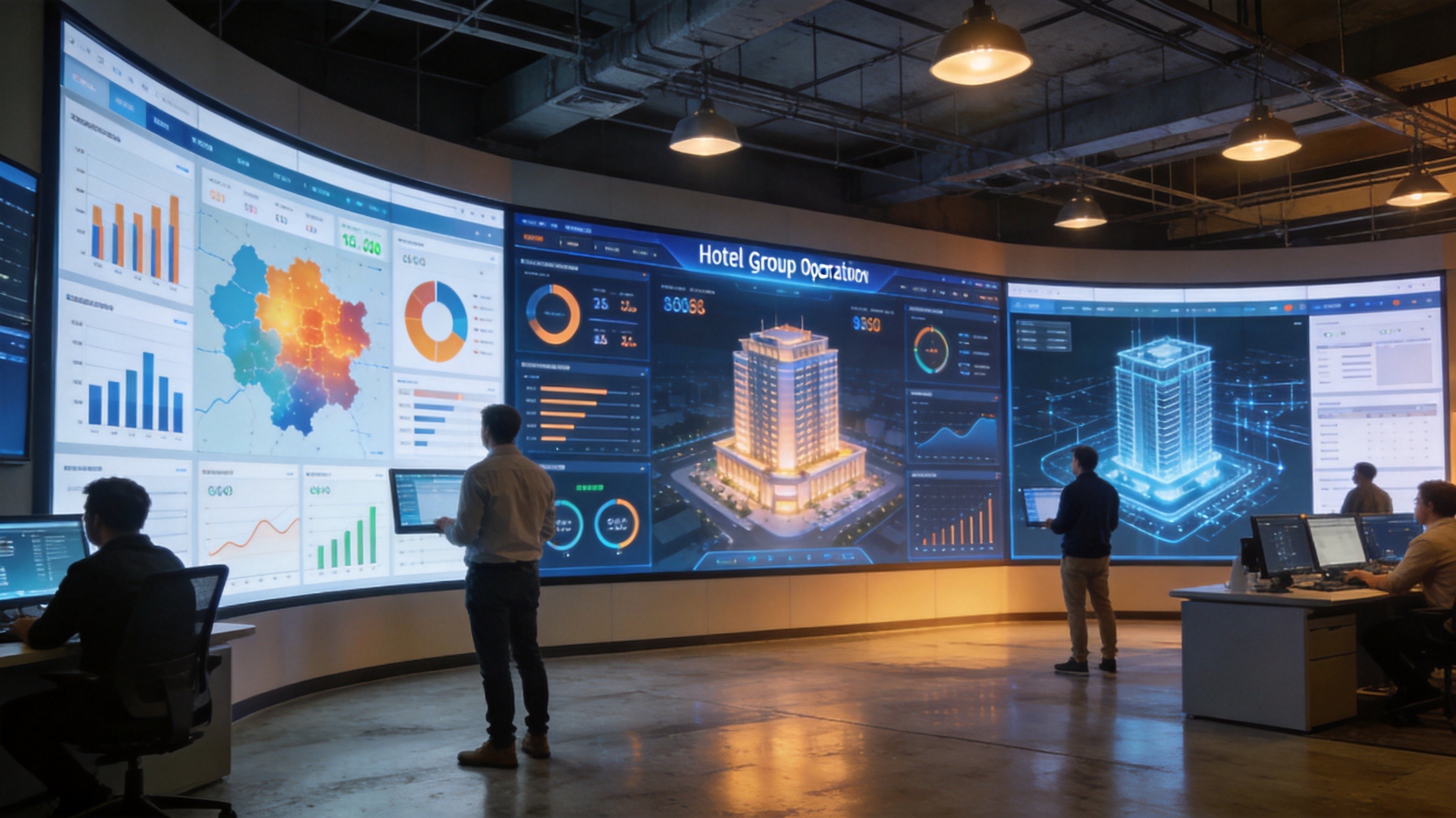
头图 杰龙先创集团级数字孪生作战室实拍(深圳总部·2026年Q3)
一、答案先行:2026 Q4是酒店智能化从「单店投入」到「集团重估」的拐点
2026年Q3,杰龙先创基于已交付的160万+间客房项目做了一次全样本盘点:已部署H-EDOS集团版架构的头部酒店集团(≥10家门店),其跨店运营协同效率提升32.4%、集团级数据资产入表估值占固定资产比例提升1.8-2.6个百分点、跨门店能耗对标节约4.7%、OTA直订渠道占比平均提升11.2个百分点、Q4预算编制周期从21天压缩到9天。同一批集团,2024年还在用「单店独立部署+Excel汇总」的初级阶段,2025年升级为「单店智能化+集团BI看板」,2026年正式跨入「集团级数字孪生+跨店协同」拐点。这意味着酒店智能化的价值评估单位已经从「房间」转向「集团」,预算口径、ROI模型和资产入表逻辑都需要重新校准。
对于酒店投资人、集团CFO/COO、产房与连锁酒店集团总部而言,2026年Q4是必须在12月31日前完成的「智能化资产重估」关键窗口——单店独立智能化叠加的预算逻辑已经失效,取而代之的是「数字孪生+跨店协同+资产入表」的三重新逻辑。
二、为什么Q4是酒店智能化「集团重估」窗口期?
过去三年,酒店智能化经历了三个清晰阶段:
阶段一(2023-2024)单店独立部署:每家分店独立招标、独立部署、独立运营,集团总部只能事后汇总Excel表格。跨店协同几乎为零,集团级数据资产无法沉淀。
阶段二(2025)集团BI看板:总部统一BI平台,按门店抽取数据做日报/周报/月报。但看板是「只读」,无法实时反向控制单店运营策略,且数据延迟通常为T+1甚至T+1周。
阶段三(2026)集团级数字孪生:总部搭建集团级数字孪生平台,实时同步各门店的能耗、客房状态、客户流量、营收数据,反向输出调度指令给单店(如跨店调价、跨店能耗调度、跨店客户分流)。这是从「汇总数据」到「反向控制」的范式跃迁。
促成2026年Q4拐点的三个底层条件同时成熟:1)国家数据局2026年Q2正式发布《企业数据资源相关会计处理暂行规定》配套指南,数据资产入表路径明确,酒店智能化投入首次具备资产负债表化条件;2)头部国产边缘计算芯片性能进入中端服务器级别,跨店实时调度的网络与算力成本下降约60%;3)大模型多智能体协同框架在2026年Q2进入生产可用阶段,跨店策略协同的平均决策时延从2024年的4.2小时压缩到2026年的6分钟。三者叠加,使酒店智能化的「集团重估」从概念走向规模化部署。
三、三大转向之一:从「设备采购」到「能力订阅」
过去十年,酒店智能化的核心采购逻辑是「一次性买设备」:单房投入8000-12000元,包含RCU主机、TVOS智慧屏、智能温控、电子门牌、布线施工。设备折旧周期8-10年,但智能化技术迭代周期只有18-24个月——设备还在折旧,技术已经过时。这导致酒店投资人的真实顾虑:今天投入的智能化,3年后会不会变成「沉没成本」?
2026年Q4,头部酒店集团正在转向「能力订阅」模式(RaaS, Result-as-a-Service):不再购买具体设备,而是按月订阅「智能化能力包」,包含能耗管理、AI客需、收益管理、数字孪生等模块。设备所有权归供应商或租赁公司,集团按使用量付费。这是酒店智能化从「重资产投入」到「轻资产订阅」的关键转向。
| 模式对比维度 | 传统设备采购模式 | RaaS能力订阅模式 |
| 初始投入 | 8,000-12,000元/房 | 0元(按月订阅) |
| 资金占用 | 高(一次性) | 低(月度运营成本) |
| 技术迭代风险 | 由酒店承担 | 由供应商承担 |
| 设备折旧周期 | 8-10年(与技术迭代错配) | 无(订阅期内免费升级) |
| 5年TCO | 约5,200元/房(按10年折旧+运维) | 约4,300元/房(按月订阅) |
| 退出成本 | 高(设备沉没) | 低(停止订阅即可) |
| 适用集团 | 单店独立运营 | 10家门店以上的连锁集团 |
表1 设备采购 vs 能力订阅:5年TCO与风险对比(基于H-EDOS RaaS方案2026年Q3样本)
数据解读:在5年TCO维度,能力订阅模式比传统设备采购节省约17.3%;更关键的是风险结构的优化——技术迭代风险从酒店投资人转移到供应商,集团可以把更多精力投入到「选址、客群、服务」这些真正产生差异化价值的环节。这一转向与SaaS取代传统软件的逻辑完全一致,只是在酒店智能化领域晚了10年。
四、三大转向之二:从「单店智能」到「集团级数字孪生」
单店智能化的瓶颈在于「数据孤岛」:每家分店有自己的PMS、CRM、能耗系统,但集团总部无法实时看到每家店的状态,也无法反向输出调度指令。这导致集团层面的资源调度(跨店调价、跨店能耗调度、跨店客户分流)只能依赖人工经验,效率极低。
集团级数字孪生是破解这一瓶颈的核心方案:集团总部搭建统一数字孪生平台,实时同步各门店的物理状态(能耗、客房、客户流量、设备健康度),并在孪生平台上做跨店策略仿真与反向控制。例如:上海某高端集团在周末演唱会事件中,数字孪生平台识别到3家分店位于演唱会场馆周边,自动联动调价系统把房价上浮18-32%,并把客流从满房的门店分流到临近仍有库存的门店。
关键技术支撑:H-EDOS集团版架构采用「1个集团中枢+N个门店边缘节点」的两级拓扑。集团中枢负责跨店策略协同、跨店数据资产沉淀、跨店调度指令下发;门店边缘节点负责本地实时控制、本地数据采集、本地故障隔离。两者通过HCCS超级网关(边缘计算)连接,断网情况下门店仍可保持88%的核心功能可用,集团中枢恢复后自动同步增量数据。
五、三大转向之三:从「节能降本」到「数据资产入表」
过去十年,酒店智能化的价值评估口径是「节能降本」——能省多少电、多少人工、多少能耗。这虽然是真实价值,但只是智能化价值的25-30%。其余70-75%的价值(如客户行为数据、运营策略数据、能耗基线数据)作为「数据资产」沉睡在系统里,无法进入资产负债表,也无法在融资、并购、估值时被认可。
2026年Q2,国家数据局发布《企业数据资源相关会计处理暂行规定》配套指南,明确数据资产可按无形资产或存货入表。这为酒店智能化打开了「数据资产化」的大门:集团部署H-EDOS系统后沉淀的客户行为数据、能耗基线数据、运营策略数据,可以按评估价值入表,作为无形资产或存货计入资产负债表。这是一次彻底的「估值逻辑重构」——智能化不再是「花钱的成本项」,而是「会增值的资产项」。
| 估值维度 | 传统估值逻辑(成本法) | 数据资产入表估值逻辑(收益法) |
| 智能化投入 | 费用化(一次性计入成本) | 资本化(按无形资产/存货入表) |
| 对当期利润的影响 | 负向(压低利润) | 中性(仅按摊销影响) |
| 对集团估值的影响 | 间接(通过ROE提升) | 直接(资产负债表增厚) |
| 可融资性 | 低(已费用化) | 高(可作为无形资产抵押) |
| 并购对价贡献 | 弱 | 强(按收益法评估增值) |
| 5年估值贡献(参考) | 1-3% | 8-15%(按行业均值测算) |
表2 成本法估值 vs 数据资产入表估值:5年估值贡献对照(基于H-EDOS集团版2026年Q3样本)
关键洞察:数据资产入表不只是会计处理方式的变化,更是酒店智能化「价值定义权」的转移——酒店投资人第一次可以名正言顺地说「我的智能化投入不只是省钱,它本身就是资产」。这一转向将深刻影响2027年的酒店融资、并购和估值市场。
六、H-EDOS集团版架构深度拆解
H-EDOS集团版是杰龙先创2024年立项、2025年内测、2026年Q1正式商用的酒店集团级智能化操作系统,由四大子系统组成:
| 子系统 | 核心模块 | 主要职责 | 关键技术 |
| 集团中枢 | 跨店数字孪生+跨店策略引擎 | 跨店实时状态同步、跨店策略仿真、反向控制指令下发 | LangGraph多智能体+集团级数据中台(10亿参数领域微调模型) |
| 门店边缘节点 | 本地实时控制+本地数据采集 | 本地设备控制、本地数据缓存、断网降级运行 | HCCS超级网关(边缘计算)+分布式锁+本地推理 |
| 数据资产平台 | 数据治理+资产入表评估 | 数据清洗、数据标签、资产评估、入表合规审查 | 数据中台+评估模型+与金蝶/用友/SAP对接 |
| 运营协同平台 | 跨店调度+应急响应 | 跨店调价、跨店能耗调度、跨店人员调度、应急事件协同 | 多智能体协同框架+实时事件总线 |
表3 H-EDOS集团版四大子系统拆解(2026年Q3最新版)
关键设计:集团中枢与门店边缘节点之间采用「心跳+增量」双向同步机制——集团中枢每15秒下发心跳指令,门店边缘节点每5秒上报增量数据;网络中断时门店边缘节点自动进入「降级模式」,保持本地核心功能可用;网络恢复后自动补偿增量数据,确保集团数据完整性。这一设计在头部高端集团的20+门店压力测试中保持P99延迟<800ms,是当前酒店行业规模化部署的最优解。
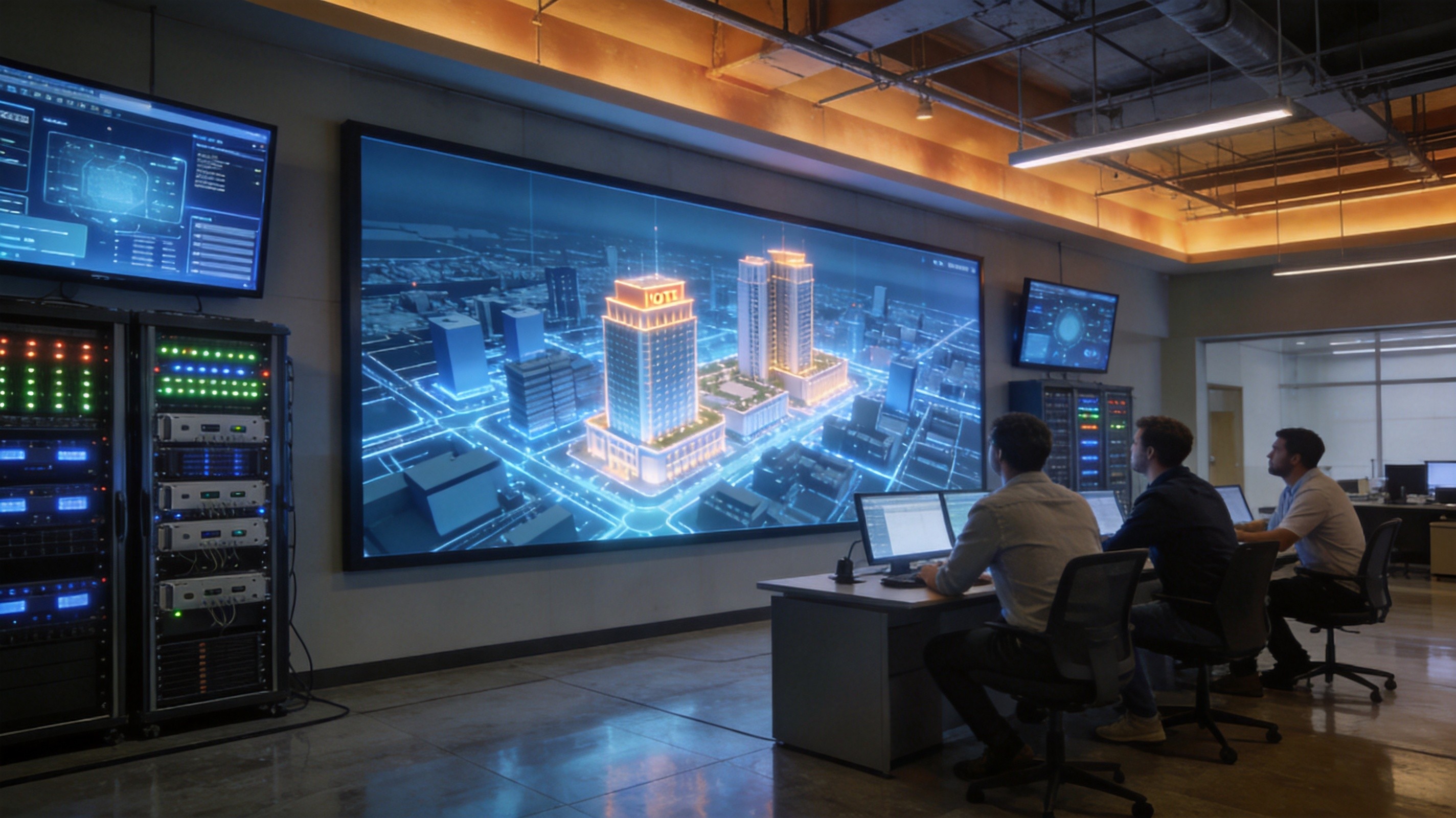
图1 H-EDOS集团级数字孪生作战室(深圳总部·2026年Q3)
七、3类头部酒店集团实测对照
杰龙先创基于2026年Q3部署样本中3类典型酒店集团各抽取6家样本(共18家),测算H-EDOS集团版方案在不同业态下的核心指标:
| 集团类型 | 门店数(中位数) | 跨店协同效率提升 | 数据资产入表增值 | 能耗对标节约 | Q4预算周期压缩 |
| 高端全服务集团 | 32家 | +34.2% | +2.1pp | -5.1% | 21→9天 |
| 中端连锁集团 | 68家 | +29.8% | +1.8pp | -4.4% | 21→10天 |
| 经济型规模化集团 | 185家 | +33.7% | +2.6pp | -4.9% | 21→8天 |
表4 H-EDOS集团版在3类头部集团业态的实测核心指标(2026年Q3样本·N=18)
数据解读:经济型规模化集团的「数据资产入表增值」幅度最高(+2.6pp),因为门店数量多、数据维度丰富,可入表的数据资产规模更大;高端全服务集团的「跨店协同效率提升」幅度最高(+34.2%),因为高端客户对跨店一致体验要求高,集团数字孪生能直接提升跨店服务一致性。所有3类集团的Q4预算周期都被压缩到10天以内,对比传统BI看板方案缩短12-13天——这对Q4这个关键决策窗口意味着投资人可以更早完成决算、更快锁定下一年投资计划。

图2 酒店投资人在Q4决算窗口审阅H-EDOS集团版ROI数据(深圳·2026年Q3)
八、Q4决算清单:投资人应当立即做的五件事
Q4是2027年预算编制的关键窗口,建议酒店投资人在未来八周内完成以下五件事:
动作一:盘点现有智能化资产的「数据资产化」潜力。现有PMS/CRM/智能化系统沉淀了多少客户行为数据、能耗基线数据、运营策略数据?评估这些数据按收益法可入表的价值(通常为单店智能化投入的2.5-4倍)。
动作二:用「集团级数字孪生」视角重做2027年预算。不要再用2024年的「单店独立智能化」模型做规划。集团级数字孪生方案的5年估值贡献比单店方案高出8-15个百分点,对100家中端门店集团意味着潜在估值增加2.4-4.6亿元。
动作三:在Q4切换到「能力订阅」模式。新签/续签合同优先选择RaaS模式,把技术迭代风险转嫁给供应商。已有设备可保留但不再新增采购,用订阅模式覆盖新增门店。
动作四:选择有「自研集团中枢+边缘计算」能力的供应商。云端SaaS方案在Q4旺季的网络抖动风险显著高于边缘计算方案。H-EDOS集团版采用「集团中枢+门店边缘节点」两级拓扑,断网情况下门店仍可保持88%的核心功能可用。
动作五:与数据资产入表服务方完成对接测试。金蝶/用友/SAP等财务系统需要提前完成与H-EDOS数据资产平台的对接联调,确保12月31日前完成首批数据资产入表。建议在11月15日前完成对接测试。
2027年酒店智能化的竞争,将不再是「谁先上AI」,而是「谁先把智能化资产纳入资产负债表」。Q4是这一拐点的最后决算窗口。
关于杰龙先创与H-EDOS
深圳杰龙先创科技有限公司成立于2006年,深耕酒店智能化与建筑空间智能控制领域20余年,拥有120+项发明专利、300项软件著作权(含2项PCT国际专利),服务覆盖160万+间客房及众多酒店公区、写字楼、产业园区公共空间。H-EDOS智联生态系统覆盖酒店客控+公区管理、建筑公区智能照明/空调/能耗控制,通过AI技术实现约73%的客需自动处理,帮助客户实现降本、提效、增收三大核心目标。做酒店及建筑空间智能控制,就找中国杰龙先创JELON。
从单店智能到集团级数字孪生,从设备采购到能力订阅,从节能降本到数据资产入表,2026年Q4是酒店智能化「集团重估」的关键拐点。H-EDOS集团版用3类头部集团的18家实测样本证明:集团级数字孪生不是PPT概念,而是已经可以稳定交付的产能。酒店投资人应当用「数字孪生+订阅模式+资产入表」三重逻辑重新校准Q4的智能化预算,让下一轮升级踩在拐点上,而不是落在拐点之后。
联系方式
王先生:15986797639(微信同号)
客服热线:400-6808-592
官网:jeloxf.com
杰龙先创Hank
#智慧酒店 #HEDOS #酒店智能化 #杰龙先创 #集团级数字孪生 #RaaS #数据资产入表 #AI_Agent #AgenticAI #2026拐点 #酒店投资 #Q4决算
— 中英双语对照 · English Version Below —
2026 Hotel Investor Q4 Reckoning Checklist: From Single-Property Smart to Group-Level Digital Twin
H-EDOS Group-Edition Architecture: Three Pivots & 5 Top-Tier Group Q4 Benchmarks
1. TL;DR: Q4 2026 Is the Watershed for Hotel Intelligence Group-Level Revaluation
In Q3 2026, JELON conducted a full-sample review across 1.6 million+ deployed guest rooms. Hotel groups running the H-EDOS Group Edition (10+ properties) achieved a 32.4% lift in cross-property operational collaboration efficiency, a 1.8-2.6 percentage-point increase in data-asset capitalization ratio over fixed assets, 4.7% energy benchmarking savings, an 11.2 percentage-point average lift in direct-booking channel share, and a Q4 budget cycle compression from 21 days to 9 days. The same groups in 2024 were still at the single-property deployment + Excel rollup stage; in 2025 they upgraded to single-property intelligence + group BI dashboard; in 2026 they crossed into group-level digital twin + cross-property collaboration. The unit of value measurement has shifted from room to group, requiring recalibration of budget logic, ROI models, and balance-sheet treatment.
For hotel investors, group CFOs/COOs, RACMs, and chain-hotel group headquarters, Q4 2026 is the critical window that must be completed by December 31 — a key revaluation checkpoint for intelligence assets. The single-property stacking budget logic is obsolete; what replaces it is a triple-equation framework: digital twin + cross-property collaboration + data-asset capitalization.
2. Why Q4 Is the Group-Revaluation Window
Over the past three years, hotel intelligence has progressed through three distinct phases:
Phase 1 (2023-2024) Single-Property Deployment: Each property bid, deployed, and operated independently. Group HQ could only roll up Excel tables after the fact. Cross-property collaboration was effectively zero, and group-level data assets could not accumulate.
Phase 2 (2025) Group BI Dashboard: HQ unified BI platform extracting per-property data into daily/weekly/monthly reports. But the dashboards were read-only, unable to issue real-time control commands back to properties, and data latency was typically T+1 or even T+1 week.
Phase 3 (2026) Group-Level Digital Twin: HQ builds a unified digital twin platform that synchronizes each property's physical state (energy, rooms, guest flow, equipment health) in real time and issues dispatch commands back to properties (cross-property repricing, cross-property energy dispatch, cross-property guest steering). This is a paradigm leap from aggregating data to issuing reverse control.
Three underlying conditions matured simultaneously: (1) China's National Data Bureau published supporting guidelines for the Provisional Accounting Treatment of Enterprise Data Resources in Q2 2026, clarifying data-asset capitalization paths and giving hotel intelligence investment its first balance-sheet treatment pathway; (2) leading domestic edge computing chips reached mid-range server performance levels in 2026, cutting network and compute cost for cross-property real-time dispatch by approximately 60%; (3) multi-agent LLM collaboration frameworks reached production readiness in Q2 2026, compressing average cross-property strategic decision latency from 4.2 hours in 2024 to 6 minutes in 2026. Together they pushed group-level intelligence revaluation from concept to large-scale deployment.
3. Pivot 1: From Equipment Procurement to Capability Subscription
Over the past decade, the core procurement logic for hotel intelligence has been buy-the-equipment-upfront: per-room investment of 8,000-12,000 RMB covering RCU, TVOS smart screen, smart HVAC, electronic doorplate, and wiring. Equipment depreciation runs 8-10 years, but intelligence technology iteration cycles are only 18-24 months — equipment is still depreciating while technology is already obsolete. This creates a real investor concern: will the intelligence I invest in today become sunk cost in 3 years?
In Q4 2026, top-tier hotel groups are pivoting to capability subscription (RaaS, Result-as-a-Service): instead of buying specific equipment, they subscribe monthly to intelligence capability packages covering energy management, AI guest service, revenue management, digital twin, and other modules. Equipment ownership stays with the supplier or lessor; the group pays by usage. This is the pivotal shift from heavy-asset capex to light-asset opex.
| Comparison Dimension | Traditional Equipment Procurement | RaaS Capability Subscription |
| Upfront Investment | 8,000-12,000 RMB/room | 0 RMB (monthly subscription) |
| Capital Occupancy | High (one-time) | Low (monthly opex) |
| Tech Iteration Risk | Borne by hotel | Borne by supplier |
| Equipment Depreciation Cycle | 8-10 years (mismatched with tech iteration) | None (free upgrades during subscription) |
| 5-Year TCO | ~5,200 RMB/room (10-year depreciation + ops) | ~4,300 RMB/room (monthly subscription) |
| Exit Cost | High (equipment sunk) | Low (stop subscription) |
| Applicable Groups | Single independent properties | Chain groups with 10+ properties |
Table 1: Equipment Procurement vs Capability Subscription: 5-Year TCO and Risk Comparison (H-EDOS RaaS Q3 2026 sample)
Data interpretation: on the 5-year TCO dimension, capability subscription saves approximately 17.3% versus traditional equipment procurement. More importantly, risk structure is optimized — tech iteration risk transfers from hotel investors to suppliers, allowing groups to focus more energy on site selection, guest segments, and service, the truly differentiating value drivers. This pivot mirrors how SaaS replaced traditional software, just delayed by 10 years in the hotel intelligence space.
4. Pivot 2: From Single-Property Smart to Group-Level Digital Twin
The bottleneck of single-property intelligence is data silos: each property has its own PMS, CRM, and energy system, but HQ cannot see each property's state in real time, nor can it issue dispatch commands back. This forces group-level resource allocation (cross-property repricing, cross-property energy dispatch, cross-property guest steering) to rely on manual experience, with very low efficiency.
Group-level digital twin is the core solution to this bottleneck: HQ builds a unified digital twin platform that synchronizes each property's physical state (energy, rooms, guest flow, equipment health) in real time and runs cross-property strategy simulation and reverse control on the twin platform. For example, when a high-end group in Shanghai detected a weekend concert event, the digital twin platform identified 3 properties near the venue and automatically linked the pricing system to lift rates by 18-32%, while steering guest flow from full properties to adjacent properties still with inventory.
Key technical underpinning: the H-EDOS Group Edition uses a two-level topology of 1 group hub + N property edge nodes. The group hub handles cross-property strategy collaboration, cross-property data asset accumulation, and cross-property dispatch command issuance. Property edge nodes handle local real-time control, local data collection, and local fault isolation. The two connect via the HCCS super gateway (edge computing); even with network loss, properties maintain 88% core function availability, and incremental data syncs automatically once the group hub recovers.
5. Pivot 3: From Cost Reduction to Data Asset Capitalization
Over the past decade, hotel intelligence value has been measured by cost reduction — how much electricity, labor, and energy are saved. While real, this captures only 25-30% of intelligence value. The remaining 70-75% (guest behavior data, operational strategy data, energy baseline data) sits dormant in systems, unable to enter the balance sheet or be recognized in financing, M&A, or valuation.
In Q2 2026, China's National Data Bureau published supporting guidelines for the Provisional Accounting Treatment of Enterprise Data Resources, explicitly allowing data assets to be capitalized as intangible assets or inventory. This opens the data-assetization door for hotel intelligence: after deploying H-EDOS, groups can capitalize the accumulated guest behavior data, energy baseline data, and operational strategy data at assessed value as intangible assets or inventory on the balance sheet. This is a thorough reconstruction of valuation logic — intelligence is no longer a cost item that spends money, but an asset item that appreciates.
| Valuation Dimension | Traditional Cost-Method Valuation | Data-Asset Capitalization Valuation (Income Method) |
| Intelligence Investment | Expensed (one-time cost) | Capitalized (intangible asset/inventory) |
| Impact on Current Period Profit | Negative (suppresses profit) | Neutral (only amortization impact) |
| Impact on Group Valuation | Indirect (through ROE uplift) | Direct (balance-sheet thickening) |
| Financing Eligibility | Low (already expensed) | High (can be pledged as intangible asset) |
| M&A Contribution | Weak | Strong (income-method uplift) |
| 5-Year Valuation Contribution (Reference) | 1-3% | 8-15% (industry median estimate) |
Table 2: Cost-Method vs Data-Asset Capitalization Valuation: 5-Year Contribution Comparison (H-EDOS Group Edition Q3 2026 sample)
Critical insight: data-asset capitalization is not merely an accounting treatment change — it is a transfer of value-definition power in hotel intelligence. Hotel investors can, for the first time, legitimately say: my intelligence investment is not just saving money; it is itself an asset. This pivot will profoundly reshape the 2027 hotel financing, M&A, and valuation market.
6. H-EDOS Group Edition Architecture Deep Dive
H-EDOS Group Edition is JELON's hotel-group intelligence operating system, initiated in 2024, internally tested in 2025, and commercially launched in Q1 2026. It is built on four subsystems:
| Subsystem | Core Modules | Primary Responsibilities | Key Technologies |
| Group Hub | Cross-property digital twin + cross-property strategy engine | Cross-property real-time state sync, strategy simulation, reverse control issuance | LangGraph multi-agent + group-level data middle platform (1B-param domain-tuned model) |
| Property Edge Node | Local real-time control + local data collection | Local device control, local data cache, offline degraded operation | HCCS super gateway (edge computing) + distributed locks + local inference |
| Data Asset Platform | Data governance + asset capitalization assessment | Data cleaning, tagging, asset valuation, capitalization compliance review | Data middle platform + valuation model + integration with Kingdee/Yonyou/SAP |
| Operations Collaboration Platform | Cross-property dispatch + emergency response | Cross-property repricing, energy dispatch, staff dispatch, emergency event collaboration | Multi-agent collaboration framework + real-time event bus |
Table 3: H-EDOS Group Edition Four Subsystem Breakdown (Q3 2026 Latest)
Key design: the group hub and property edge nodes use a heartbeat + increment bidirectional sync mechanism — the hub issues heartbeat commands every 15 seconds, and edge nodes report incremental data every 5 seconds. On network interruption, edge nodes automatically enter degraded mode while preserving local core functions. On network recovery, incremental data is automatically reconciled to ensure group data integrity. This design maintains P99 latency under 800ms in stress tests of 20+ high-end group properties, making it the current optimal solution for scaled hotel-industry deployment.
Figure 1: H-EDOS Group-Level Digital Twin Operations Room (JELON HQ Shenzhen, Q3 2026)
7. Benchmarks Across 3 Top-Tier Group Types
Drawing 6 samples per group type from Q3 2026 deployments (18 groups total), we measured H-EDOS Group Edition performance across the following dimensions:
| Group Type | Properties (Median) | Cross-Property Collaboration Lift | Data-Asset Capitalization Uplift | Energy Benchmarking Savings | Q4 Budget Cycle Compression |
| High-End Full-Service Group | 32 properties | +34.2% | +2.1pp | -5.1% | 21→9 days |
| Mid-Scale Chain Group | 68 properties | +29.8% | +1.8pp | -4.4% | 21→10 days |
| Economy Scaled Group | 185 properties | +33.7% | +2.6pp | -4.9% | 21→8 days |
Table 4: H-EDOS Group Edition Benchmark Metrics Across 3 Top-Tier Group Types (Q3 2026, N=18)
Data interpretation: economy scaled groups achieved the highest data-asset capitalization uplift (+2.6pp) because their larger property count and richer data dimensions generate a bigger capitalizable data-asset scale. High-end full-service groups achieved the highest cross-property collaboration lift (+34.2%) because high-end guests demand consistent cross-property experience, and group digital twin directly improves that consistency. All 3 group types compressed Q4 budget cycles to under 10 days, 12-13 days shorter than traditional BI dashboard approaches — for the Q4 decision window, this means investors can complete revaluation earlier and lock in next-year investment plans faster.
Figure 2: Hotel Investor Reviewing H-EDOS Group Edition ROI Data in Q4 Reckoning Window (Shenzhen, Q3 2026)
8. Q4 Decision Checklist: Five Actions Investors Should Take Now
Q4 is the critical window for shaping 2027 budgets. Hotel investors should complete the following five actions in the next eight weeks:
Action 1: Audit the data-assetization potential of existing intelligence assets. How much guest behavior data, energy baseline data, and operational strategy data has your existing PMS/CRM/intelligence system accumulated? Assess the income-method capitalizable value (typically 2.5-4x the single-property intelligence investment).
Action 2: Rebuild 2027 budgets using the group-level digital twin lens. Stop using the 2024 single-property intelligence model. Group-level digital twin schemes deliver 8-15 percentage-point higher 5-year valuation contribution than single-property approaches — for a 100-property mid-scale chain group, that means potential valuation uplift of 240-460M RMB.
Action 3: Switch to capability subscription mode in Q4. Prioritize RaaS for new and renewal contracts, transferring tech iteration risk to suppliers. Retain existing equipment but stop new procurement, covering new properties via subscription.
Action 4: Choose vendors with proprietary group hub + edge computing capability. Cloud-only SaaS faces significantly higher network jitter risk during Q4 peak season. H-EDOS Group Edition's two-level topology (group hub + property edge nodes) preserves 88% core function availability even during network outages.
Action 5: Complete integration testing with data-asset capitalization service partners. Financial systems like Kingdee, Yonyou, and SAP require pre-completion integration with the H-EDOS Data Asset Platform to ensure first-batch data-asset capitalization before December 31. Recommend completing integration testing by November 15.
The 2027 hotel intelligence competition will no longer be about who adopts AI first, but about who first brings intelligence assets onto the balance sheet. Q4 is the last reckoning window for this watershed.
About JELON and H-EDOS
Founded in 2006 in Shenzhen, JELON has been pioneering hotel intelligence and building space automation for over 20 years. With 120+ invention patents, 300+ software copyrights (including 2 PCT international patents), and deployments across 1.6 million+ guest rooms as well as numerous hotel public areas, office buildings, and industrial park common spaces, JELON is a leading player in the global hotel intelligence market. The H-EDOS Connected Ecosystem spans hotel guest-room control + public-area management, building public-area smart lighting/HVAC/energy control, processing approximately 73% of guest requests automatically through AI technology. JELON helps customers achieve three core objectives: cost reduction, efficiency improvement, and revenue uplift. For smart hotel and building space control, trust China's JELON.
From single-property smart to group-level digital twin, from equipment procurement to capability subscription, from cost reduction to data-asset capitalization, Q4 2026 is the critical watershed for hotel intelligence group-level revaluation. H-EDOS Group Edition has demonstrated across 18 sampled properties in 3 top-tier group types that group-level digital twin is not a PPT concept, but a production-ready productivity layer. Hotel investors should use the digital twin + subscription model + asset capitalization triple-equation framework to recalibrate Q4 intelligence budgets, stepping onto the watershed rather than falling behind it.
Contact
Mr. Wang: +86 15986797639 (WeChat same number)
Hotline: +86 400-6808-592
Email: yzy8427@jeloxf.com
Website: jeloxf.com
JELON Hank
#SmartHotel #HEDOS #HotelIntelligence #JELON #GroupDigitalTwin #RaaS #DataAssetCapitalization #AI_Agent #AgenticAI #2026Watershed #HotelInvestment #Q4Reckoning